Detailed Guide to Pea Cultivation: From Sowing to Field Management
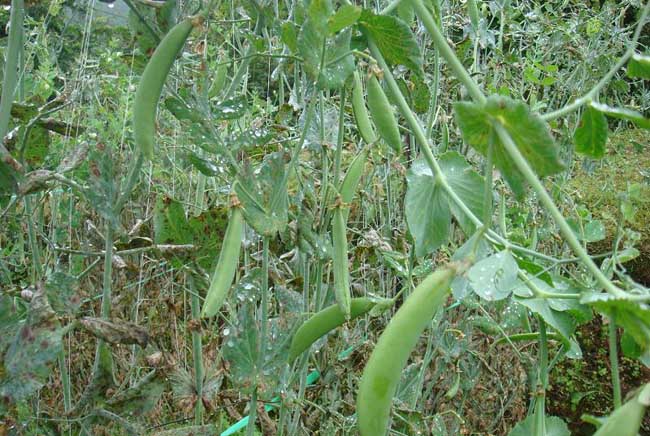
Peas are a cool-season, long-day crop. To grow them year-round, it is necessary to select varieties that are insensitive to light, cold- and heat-tolerant, early-maturing, and highly stress-resistant. After years of trials, from 8 varieties including the Zhongwan series, Zhenzhu Lu, and Baiyu Pea, Zhongwan No. 4 and Zhongwan No. 6 were selected. These 2 varieties show the advantages of being insensitive to light, having a short growth period, a flexible sowing window, high yield, and excellent quality. Supplemented by the use of cultivation facilities such as plastic film greenhouses, large plastic tunnels, and shade-net tunnels, year-round pea cultivation can be successfully achieved.
Timely Sowing
Since peas can be grown in all four seasons, vegetable growers can flexibly arrange the sowing date according to crop rotation and season, or determine the appropriate sowing date based on the desired time for pods to reach the market. Based on trial demonstrations and production practice, in the lower reaches of the Yangtze River region, the relationship between sowing period and harvest time is as follows: autumn cultivation under shade-net tunnels, early August to the end of August, before October 1; autumn open-field cultivation, late August to mid-September, mid-October; winter cultivation in plastic film greenhouses and large tunnels, October to February of the following year, New Year's Day; winter open-field cultivation, November to January of the following year, around May 1; spring open-field cultivation, February to April, mid-May; summer open-field cultivation, early May to the end of May, late June; summer cultivation under shade-net tunnels, mid-May to mid-June, early July.
Reasonable Close Planting
Zhongwan No. 4 and No. 6 are dwarf varieties with a plant height of 40-50 cm, and are suitable for appropriately close planting. For spring, summer, and autumn sowing, the row spacing is 35 cm, the hill spacing is 10 cm, with 3 seeds per hill, and the seeding rate per 667 sq m is about 10 kg. For winter sowing, the row spacing is 40 cm, the hill spacing is 15 cm, with 3 seeds per hill, and the seeding rate per 667 sq m is about 7 kg.
Scientific Fertilizer and Water Management
Choose fields with good soil fertility, convenient irrigation and drainage, and sufficient sunlight for planting. Apply 30-40 kg per 667 sq m of a compound fertilizer containing the three elements nitrogen, phosphorus, and potassium as a base fertilizer, along with a certain amount of organic fertilizer. During the flowering and podding stage, apply 10 kg of urea or 1000 kg of human and livestock manure per 667 sq m to promote pod setting and seed plumping. In the late growth stage, depending on the growth condition, a mixture of 0.5% urea solution and 0.2% potassium dihydrogen phosphate can also be used for foliar feeding. Water promptly during drought, especially during the flowering and podding stage when plants are particularly sensitive to water, so water should be replenished in time. In addition, peas grown in summer require even more attention to timely water supply, which can both meet the plant's water needs for growth and development and effectively lower the surface temperature, promoting normal growth.
Timely Application of Protective Facilities
1. Frost protection measures: Zhongwan No. 4 and No. 6 have relatively strong frost resistance at the seedling stage, but their frost resistance drops sharply after flowering, and the pods need a certain temperature during the seed-filling stage. Therefore, for winter greenhouse cultivation of peas, plastic film should be promptly closed and covered to do a good job of cold protection and heat preservation. Before the arrival of a short-term strong cold wave, frost protection materials should be temporarily added in an emergency manner so that the tender green pods are spared from frost damage.
2. Shade and cooling measures: In summer cultivation, due to high temperatures, fast growth, a short growth period, and small and few pods, timely covering with shade nets can effectively reduce direct sunlight, lower air temperature and soil temperature, increase soil moisture, promote individual plant growth, and increase yield.
Judging by the Plants and Skillfully Using Chemical Control Techniques
Peas of the Zhongwan series flower when they grow to 7-8 nodes (with 7 pinnately compound leaves) after emergence, entering the stage where vegetative growth and reproductive growth proceed simultaneously. At this time, if vegetative growth is too vigorous, it is easy for flowers and pods to drop. Peas grown in plastic film greenhouses and large tunnels are especially prone to excessive vegetative growth, growing only vines without setting pods. Therefore, at the 7-8 compound leaf stage, peas grown in greenhouses and large tunnels should have fertilizer and water appropriately controlled and the greenhouse temperature lowered, so as to facilitate the transition from vegetative growth to reproductive growth, ensure a reasonable distribution of photosynthetic products between vegetative growth and reproductive growth, and promote flowering and pod setting. For peas showing a tendency toward excessive vegetative growth, spray promptly with 15% paclobutrazol at a 1:1000 dilution for control.
Timely Harvesting
Due to differences in growing season and cultivation method, the number of days from flowering to picking of green pods varies greatly. In summer cultivation, because of high temperatures, pods grow quickly, and it is only 20 d from flowering to harvest, while in winter cultivation, it takes more than 30 days from flowering to harvest. Therefore, we should flexibly determine the harvest date according to the intended use of the pods and the degree of seed plumping in the pods. For those mainly used for eating green peas, harvest when the pods have fully bulged, the peas have reached 70% plumpness, and the pods are just about to begin changing color.