Detailed Explanation of Tomato Planting Techniques and Management Points
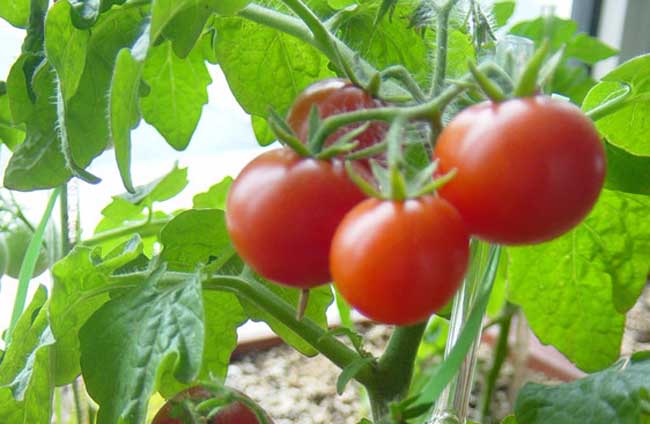
Tomato, also called tomato, foreign persimmon, with ancient names June persimmon and Xibao Sanyuan. In Peru and Mexico, it was initially called “wolf peach”. The fruit is rich in nutrients and has a special flavor. It has effects such as weight loss and body slimming, eliminating fatigue, increasing appetite, improving the digestion of protein, and reducing stomach bloating and food retention. Every 100 grams of fresh fruit contains about 94 grams of water, 2.5-3.8 grams of carbohydrates, 0.6-1.2 grams of protein, 20-30 milligrams of vitamin C, as well as carotene, mineral salts, organic acids, etc.
Requirements for Environmental Conditions
1. Temperature: The optimal temperature for tomato growth and development is 24-26°C. Under low-temperature conditions below 5°C or high-temperature conditions above 40°C, tomatoes will stop growing.
2. Light: Tomato is a light-loving crop and is sensitive to light. With sufficient light, the plants grow robustly, with thick stems and strong resistance; with insufficient light, they will become spindly, with fewer flowers, flower drop and fruit drop, etc.
3. Water: Tomato is a deep-rooted crop, afraid of both drought and waterlogging. The soil drainage should be good, the groundwater level should be low, and water must be supplied evenly.
Tomato Cultivation Techniques
1. Sowing period: Generally, spring sowing is from late January to February, and autumn sowing is from July to August; summer planting has high temperatures, weak plant growth, many dropped flowers, difficult fruit setting, severe diseases, and is very prone to failure; winter planting is only suitable for the southern plains or low-altitude hilly areas of our city, with sowing from October to early November.
2. Seed disinfection: Seed disinfection is an effective measure to reduce the spread of diseases. During disinfection, the seeds can be wrapped with gauze and placed in 50 warm water (keeping the temperature constant) for 10 minutes, or placed in a 10% sodium phosphate solution for 20 minutes, then taken out, rinsed clean with clear water, and then placed in 30°C warm water for 2-3 hours, taken out and dried in the shade.
3. Seedling-stage management: It should be determined according to different climatic conditions. For example, winter planting or early spring seedling raising should focus on cold protection, using small arched sheds covered with plastic film; while summer and autumn seedling raising should focus on preventing high temperatures and heavy rain, using shade nets in shed coverage. During the seedling raising process, appropriate topdressing should be applied, generally combined with watering, applying decomposed urine water or 0.1%-0.2% urea water. At the same time, during the seedling stage, 600-fold chlorothalonil solution plus 1000-fold dimethoate solution should be sprayed 2-3 times.
Soil Preparation and Field Planting
The tomato planting site should be selected where the previous crop was rice or where crops such as solanaceous plants, peanuts, soybeans, sesame, radishes, etc. have not been planted. Before planting, apply sufficient base fertilizer. Per mu, 1000 kg of decomposed pig and cattle manure and 50-100 kg of superphosphate can be used, mixed evenly and spread uniformly on the bed surface, and incorporated into the soil during land preparation. The bed-making specifications can use 1.3-1.7 m including furrows, two-row planting, plant spacing 40-50 cm, double-stem pruning. In the early crop, with sufficient sunlight, appropriate close planting can be done, with 1500-2000 plants per mu. Or single-stem pruning can be used, with plant spacing 20-25 cm, about 3000 plants per mu. Winter tomatoes should adopt plastic film mulching cultivation. Because topdressing is inconvenient, it is especially emphasized that sufficient base fertilizer should be applied at one time when preparing the land and making beds, mainly with slow-release organic fertilizer. Other measures are basically consistent with open-field cultivation.
Field Management
1. Fertilization: Tomato is a vegetable that grows and sets fruit successively. In addition to applying sufficient base fertilizer, there should also be sufficient topdressing. Generally, topdressing begins after field planting and recovery of growth (within 1 week after field planting), every 8-10 days. Before fruit setting, each topdressing should not exceed 5 kg of urea per mu. After the first cluster of fruit expands, appropriately apply heavy fertilizer. When the second and third clusters of fruit expand, more nutrients are required, and topdressing should be heavy, appropriately increasing the amount of phosphorus and potassium fertilizer. Later topdressing should ensure the needs of the fourth, fifth, and sixth clusters of fruit for continuous growth. On the basis of applying sufficient base fertilizer, generally each mu of tomatoes requires a total topdressing amount of 50 kg of urea, 70 kg of potassium fertilizer, or 100 kg of compound fertilizer plus 30 kg of potassium fertilizer.
2. Water management: Achieve deep-ditch and high-bed planting, with ring field ditches opened around. When watering, it is best to irrigate plant by plant, and avoid flooding the entire field. If irrigation is needed, it should be done in the evening, and horse-race water is preferable. After staying in the furrow for 1-2 hours, drain it dry, keeping the soil moist. Because irrigation can easily cause the spread of bacterial wilt, it should be used less.
3. Hilling and weeding: Hilling is an indispensable task in growing tomatoes. Generally, hilling is needed 2-3 times, combined with fertilization and weeding. Weeds can be covered by hilling to reduce root damage caused by pulling weeds.
4. Staking and vine tying: When tomatoes grow to 30-40 cm high, stakes should be inserted, and then vines should be tied.
5. Pruning, topping, flower thinning, and fruit thinning: Single-stem pruning keeps only one main stem, and all other side branches that grow out are removed; double-stem pruning, in addition to retaining the main stem, also retains the side branch drawn from the first leaf axil below the first inflorescence, and all other side branches are removed. Because tomatoes set many fruits, if allowed to grow freely, the fruits will be uneven in size and there will be many inferior products, so flower thinning and fruit thinning should be carried out. Generally, each branch can retain 5-7 fruits.
Pest and Disease Control
Bacterial wilt, late blight, etc. are the main diseases affecting tomato production. For diseases, prevention should be the main approach, and strict preventive measures should be taken in every production link. Operations such as tying tomato branches and removing side buds can easily cause the spread of diseases. Field operations for tomatoes should be carried out in clear weather with sunlight, and should be avoided on rainy days.
1. Bacterial wilt: It is very likely to occur under high-temperature and high-humidity conditions. When it first occurs, the stems and leaves suddenly appear as if dehydrated, the leaves droop, and the entire plant wilts, but it still remains green; cutting open the stem shows that the vascular bundles have turned brown. The control methods are as follows.
① Implement crop rotation, preferably with a previous crop that is not solanaceous, and with rice in paddy-upland rotation.
② For acidic soil, appropriately increase the application of lime, which helps inhibit the reproduction of pathogens and reduce damage.
③ Strengthen fertilizer and water management, use high-bed and deep-ditch cultivation, and prevent flooding irrigation and cross-irrigation.
④ From the early fruit stage, strengthen field inspections. Once diseased plants are found, pull them out immediately, collect and burn them, and disinfect the diseased holes with 20% quicklime water. In the early stage of disease occurrence, use 200 ml/l agricultural streptomycin or other antibiotics to irrigate the roots, with 0.5 kg of medicinal solution per plant, once every 7-10 days, for 3-4 consecutive times.
2. Late blight: Leaves, stems, and fruits can all be infected. Infected leaves mostly develop from leaf tips or leaf margins, are green, water-soaked, gradually turn brown, and eventually the whole leaf becomes brown and rots; on infected stems, the lesions are dark brown, slightly sunken, become rotten, and finally the upper part of the plant wilts, breaks, and dies. Infected fruits mostly begin to develop near the fruit stalk, and in severe cases the entire fruit turns brown and rots. Under humid conditions, obvious white mold appears on the diseased parts. The control methods are as follows.
① Avoid excessive close planting and poor ventilation. Especially in the early crop, due to less sunlight and high humidity, sparse planting should be adopted.
② Plant on high beds and avoid water accumulation in the field.
③ Use 58% ridomil manganese zinc wettable powder 600-fold solution or propamocarb 600-fold solution, and copper oxychloride 800-fold solution alternately. From the beginning of fruit setting, insist on spraying once every 7 days, and spray for control immediately after rain turns to clear weather.
3. Cotton bollworm, tobacco budworm, tobacco cutworm, beet armyworm: Control at the young larval stage, that is, the hatching stage, before the larvae have bored into the fruit.
① Spray alternately with 5% diflubenzuron 2000-fold solution, 20% fenpropathrin 2000-fold solution, 2.5% cyhalothrin 3000-fold solution, 10% fenvalerate 2000-fold solution, etc. Spraying in the morning and evening gives good results.
② When damaged fruits are found (that is, insects have already bored into the fruit), manually remove them, and then spray pesticide comprehensively.
4. American leafminer: The American leafminer is a pest that has occurred severely in recent years. It can be killed by spraying with 20% imidacloprid 4000-6000-fold solution, 1.8% abamectin 2000-fold solution, and 40% qixingbao emulsifiable concentrate 600-800-fold solution.