Key Technical Points and Field Management Methods for Snap Bean Cultivation
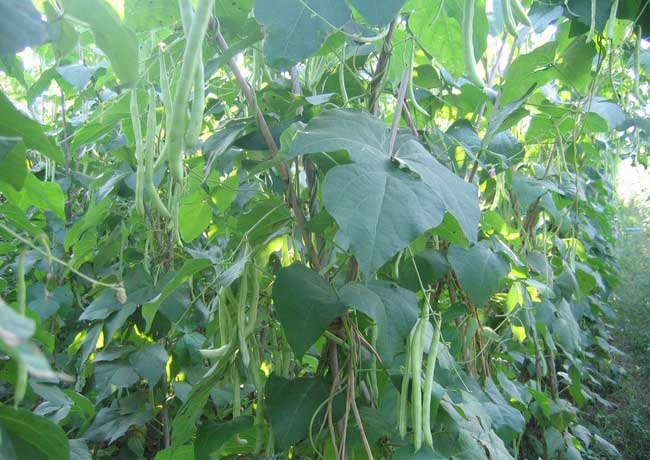
Snap beans can be planted in both spring and autumn, and are deeply favored by growers, being widely planted in both northern and southern China. In the Chengdu Plain, early spring snap beans can be sown after February 10 and harvested in mid-to-late April. In other areas, a suitable sowing time can be chosen according to temperature and local planting practices. For snap beans, the seeding rate per 667 sq m is 4 kg, with 3000 hills planted (4 seedlings per hill), yielding about 3000 kg and a value of about 3000 yuan.
Variety Selection
For early spring snap bean planting, choose varieties with cold resistance, strong disease resistance, high yield and good quality.
Soil Selection
Snap beans have low soil requirements; they grow well in both loam and sandy soil, and can be planted in any field with good drainage and irrigation, but fertile soil can produce high yields.
Seedling Raising Techniques and Seedling Stage Management
1. Because snap beans have relatively strong cold tolerance and do not need high temperatures (temperatures above 25°C affect flower bud differentiation), snap bean cultivation generally uses greenhouse seedling raising and low-tunnel transplanting.
(1) Seedling raising time. For low-tunnel planting, sowing can be done around February 10.
(2) Bed preparation. First, break up the soil of the seedbed finely and make a bed surface 1.2 m wide with ditches 20 cm deep; the bed length can be determined by the sowing quantity. Water thoroughly to saturate the bottom soil, then smooth the surface with a sand board, snap lines 9 cm wide with a nylon rope, then cut into 9 cm × 9 cm squares with a knife, and in the middle of each square cut a 1-2 cm deep hole with the knife.
(3) Sowing
① Seedling raising: Sow 4 seeds in each hole of the squares and cover with a handful of fine soil. In fields with underground pests, phoxim at 1000 times dilution can be used when watering. After completing one bed, spread a layer of plastic film flat on top, cover with a low tunnel, and remove the film once the seedlings emerge. If there is sun, the low tunnel can also be opened. When the seedlings grow to 2 true leaves, they can be transplanted into the low tunnel (if not using a low tunnel and only using plastic film, sowing and transplanting can be delayed by 10 days).
② Direct seeding: Snap beans can also be directly sown in the field, but the sowing time should be postponed to after February 25. Make beds 1.4 m wide in the fertilized field, with hill spacing of 35 cm-40 cm, and sow two rows per bed directly (seedlings 20 cm from the bed edge), placing 4 seeds per hill, then cover with soil. After sowing, spread plastic film flat on top and press the edges down with soil. After the seedlings emerge, tear a hole in the film directly above the seedlings and guide the seedlings out. If the soil is relatively dry, first dig the hills, pour in clean water, and sow the seeds after the water dries.
Field Preparation and Fertilization
1. Field preparation
① Weed control: Fields with severe weed problems can use manual weeding or chemical weeding. For chemical weeding, herbicides such as Roundup and Gramoxone can be selected and sprayed in the empty field after the previous crop is harvested, at 50 ml per 667 sq m diluted in 25-30 kg of water. After 7 days, the field can be plowed and bedded.
② Soil disinfection: Fields with many diseases can be treated with 3-5 g of dazomet per 1 sq m or 100 kg of quicklime per 667 sq m broadcast on the surface, then plowed and mixed evenly.
③ Pests: Fields with many soil pests can use phoxim mixed with soil and broadcast.
2. Fertilization. Apply sufficient base fertilizer all at once, and no additional topdressing will be needed afterward, which saves labor and time and also gives good results. The specific fertilization formulas are as follows; choose any one according to actual conditions:
① Per 667 sq m, apply 3000 kg of decomposed human and livestock manure, 50 kg of phosphate fertilizer, 25 kg of potassium fertilizer, and 10 kg of urea.
② Per 667 sq m, apply 1000 kg of decomposed farmyard manure, 100 kg of decomposed oil cake, 50 kg of phosphate fertilizer, and 10 kg of urea.
③ Per 667 sq m, apply 3000 kg of decomposed chicken and duck manure, 50 kg of phosphate fertilizer, and 20 kg of potassium fertilizer.
3. Bed making. After evenly applying the fertilizer to the field, use a tractor or ox to plow and mix the fertilizer evenly into the soil, then make the beds. For low-tunnel planting, generally make beds 1.5 m wide (including ditches), with ditches 20 cm deep.
Transplanting and Management
1. Transplanting
Before transplanting, first dig holes on the prepared bed surface, two rows per bed (the centers of the holes 25 cm from the bed edge), with hill spacing of 35 cm-40 cm. When transplanting, the topsoil of the square seedlings should be level with the bed surface. Water thoroughly to settle the roots, lay the plastic film, guide the seedlings out, then pour a small amount of water on the film and cover with the low tunnel. (The length of the bamboo strips for the low tunnel equals the width of the film; bamboo strips 2 cm wide are more suitable, inserted one every 1.5 m.)
2. Trellising
Snap beans can generally be trellised when they grow to 20 cm. Each hill should use one stake (stakes should preferably be no less than 2.5 m) to form an A-frame trellis, fixed with horizontal bars in the middle.
3. Harvesting
Harvesting is best done when the pods change from flat to round; harvesting too early affects yield, and harvesting too late lowers quality.
Pest and Disease Control
In early spring, because temperatures are relatively low in the early stage, snap beans have fewer pests and diseases. Generally, chlorothalonil, triadimefon, and thiophanate-methyl can be used for disease control and deltamethrin, dichlorvos, and fenvalerate for insect control, applied in mixture. Control 2-3 times is sufficient. If there are more pests and diseases in the later stage, apply medicine 2 more times. The main pests and diseases of snap beans are:
1. Brown spot disease
[Symptoms] Irregular black spots appear on the leaves, gradually expand, and form holes.
[Control method] Alternately spray carbendazim and iprodione.
2. Rust disease and powdery mildew
[Symptoms] Brown rust spots appear on the leaves and then gradually expand; with powdery mildew, a frost-like white powder appears on the upper surface of the leaves.
[Control method] Alternately use chlorothalonil and triadimefon for control.
3. Insect pests
Mainly aphids, stink bugs, and ladybird beetles. Use deltamethrin, dichlorvos, fenvalerate, chlorpyrifos and other pesticides for control.