Detailed Explanation of Key Points for High-Efficiency Cultivation Techniques of Bamboo Fungus
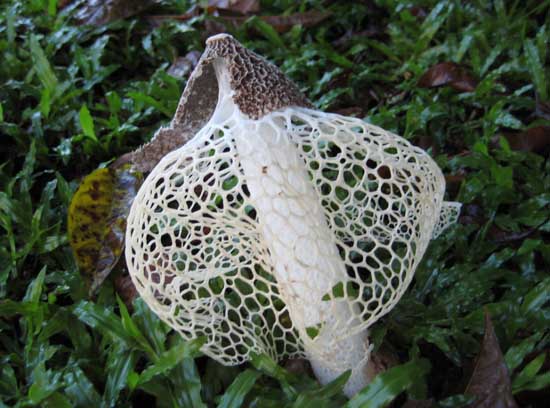
Known as the “flower of fungi” and the “king of imperial fruits,” the bamboo fungus (Phallus indusiatus) was used as tribute in ancient times, exclusively for the imperial palace kitchens. Today it is a “mountain delicacy” featured at state banquets and other high-end feasts in China. Bamboo fungus is rich in protein, amino acids (containing all 8 essential amino acids for the human body), vitamins and polysaccharides. It has a delicious flavor and possesses remarkable preservative properties. In medicine, it has weight-loss, health-promoting and tonic functions, and can prevent and treat cancer. Therefore, bamboo fungus is a precious health food that serves both culinary and medicinal purposes, as well as a traditional high-value export commodity of China.
Preparation of Cultivation Raw Materials
1. Types of Cultivation Substrates
The main raw materials for cultivating bamboo fungus include decayed dry bamboo, waste bamboo blocks, bamboo leaves in a decayed or semi-decayed state under bamboo groves, and garden soil; sawdust, bagasse, and wheat bran; where conditions permit, agricultural by-product straws such as corn stalks, wheat straw, and oilseed rape stalks can also be mixed with bamboo materials. Hardwood trees and green trees can be used for log cultivation.
2. Treatment of Cultivation Substrates
Before cultivation, spread the raw materials in the sun to dry for 3-4 days, then split them into bamboo blocks 11-22 cm long (for outdoor forest cultivation, bamboo blocks of up to 1 m can be used) and 1-2 cm wide. Then soak them in 1-3% lime water for 5-6 days, remove and rinse with clean water, and air-dry slightly before use. After turning and sun-drying bamboo leaves and soil for 3-4 days, disinfect with a mixture of 1-1.5% formalin and 0.3-0.5% dichlorvos. For each cubic meter of bamboo leaves or soil, use 27-30 liters of the mixed disinfectant solution, spraying while stirring so that the chemical and material are fully and evenly mixed. Cover with plastic film; after 4-5 days for soil and 1-3 days for bamboo leaves, remove the film, spread out, and let the chemicals evaporate for 1-2 days before use. The covering soil used in forest cultivation does not need disinfection treatment.
Disinfection Treatment of Mushroom Houses and Cultivation Containers
The mushroom house can be a general mushroom cultivation house. The bed frames can be iron frames, plastic frames, or bamboo/wooden bed frames. Plastic boxes, wooden boxes, and flower pots can also be used for box cultivation and pot cultivation. Before cultivation, thoroughly clean the mushroom house and spray the interior with 0.5% trichlorfon solution plus 0.1% carbendazim or 0.5% bleaching powder solution. Wipe the bed frames with 5% lime water or 5% bleaching powder. Then fumigate with formalin with windows and doors closed for one day and night, then open the mushroom house and it can be used after one week. Wash cultivation boxes and pots with clean water, then wipe their inner and outer surfaces with 0.5% potassium permanganate solution, and set aside for use.
Cultivation Techniques for Bamboo Fungus
1. Block-Pressing Cultivation
This is a method in which cultivated bamboo fungus spawn is removed from bottles or bags, pressed into spawn blocks, and cultivated with a soil casing. Its characteristics are early and concentrated fruiting, resulting in a shorter cultivation period, but it requires a larger amount of spawn.
(1) Removing from bottles and pressing into blocks. In the Chengdu area, the time for removing from bottles and pressing into blocks can be April-May in the first half of the year. Take freshly fully colonized bamboo fungus spawn, remove it from the bottles (bags), and use a wooden frame (specifications 40×40×12 cm, the same wooden frame used for shiitake block pressing. Wipe it clean with 5% lime water or 5‰ potassium permanganate solution before use) to form cultivation blocks that are slightly thinner at the edges than in the center. Each block uses about 12 bottles of spawn. Be careful not to press too tightly, so as to avoid excessive damage to the mycelium.
(2) Mycelium healing. After the blocks are formed, remove the wooden frame, first cover with one sheet of disinfected dry newspaper, place the spawn blocks on disinfected plastic film and wrap them well, with 4-5 cm between blocks, place on bed frames, and cultivate with moisture retention for about 15-20 days until the mycelium heals again.
(3) Casing soil. After the mycelium has healed, cover the spawn blocks with 1-2 cm of bamboo leaves, continue cultivating for 5-10 days, and when the mycelium has covered more than 80% of the leaf layer, promptly cover with soil 2-4 cm thick.
(4) Management. Mainly by regulating the substrate, the water content of the casing soil layer, the temperature in the mushroom house, air humidity, ventilation, and light conditions to meet the optimal conditions required for the growth and development of bamboo fungus, achieving high and stable yields. Generally, after casing soil, under conditions of 80% relative air humidity, 16-20°C air temperature, and 3-105 Lux light intensity, after about 1-2 months (the earliest about 24 days), primordia begin to appear.
① Water management. The soil water content of the casing soil layer should be controlled at 20-30%. If the soil water content is too high, the mycelium will grow excessively and climb extensively onto the soil surface rather than differentiating to form primordia within the soil layer, resulting in a small number of mushroom buds and failure to achieve high yield. The relative air humidity in the mushroom house should be maintained at about 80%. During the mushroom bud growth stage, the relative air humidity should be raised to 85-90%; otherwise, if the air humidity is too low, the soil layer moisture is easily lost; if the humidity is too high, it easily causes the reproduction of contaminant microorganisms, especially slime molds. When watering, the nozzle should be pointed upward to avoid damaging the buds.
② Temperature control. During high temperatures, open doors and windows to lower the temperature so as to prevent heat damage to the mushroom buds; during low temperatures, close doors and windows tightly, and if conditions permit, install heating devices to raise the mushroom house temperature to prevent the buds from freezing to death.
③ Ventilation. Open doors and windows 2-3 times a day, ventilating for 10-20 minutes each time, so that fresh air enters the mushroom house to meet the growth and development needs of the bamboo fungus.
④ Prevention and control of contaminant microorganisms, insects, and rodents. This work should focus on prevention. If slime molds (Stemonitis herbatica) and coprinoid contaminants are found on the mushroom bed, remove them promptly and sprinkle a layer of dry lime powder around the affected area to control their spread. If mushroom flies, mites, fungus gnats, and nematodes are found causing damage, spray dichlorvos solution to eliminate them, but be careful not to harm the mushroom buds. Screen windows and screen doors should be installed in the mushroom house to prevent mice from entering and harming the bamboo fungus.
2. Direct-Seeding Bed Cultivation
This refers to a cultivation method in which treated bamboo materials and other substrates are spread directly on the mushroom bed for sowing and casing soil. It has the characteristics of a large fruiting area, can make full use of the mushroom racks for large-scale cultivation, and has higher mushroom house utilization efficiency than pot cultivation, but the cultivation cycle is somewhat longer than block-pressing cultivation.
(1) Laying substrate and sowing. First lay a large sheet of disinfected plastic film on the bed frame, and make several small holes in the bottom of the film to allow excess water to drain out. Then lay substrate and sow on it, filling one layer of substrate and sowing one layer of spawn, for a total of three layers of spawn. Try to make the spawn blocks sandwiched between bamboo blocks, with spawn and substrate closely attached, and cover the topmost layer with a thin layer of bamboo leaves. Per square meter, use 20 kg of substrate calculated on a dry weight basis and 3-4 bottles of spawn. After sowing, water, then cover with plastic film for moisture-retention cultivation.
(2) Covering. Wait until the spawn blocks revive and grow, and when the mycelium has basically covered the substrate surface, promptly cover with soil, with a casing soil layer 2-4 cm thick.
(3) Management. The management methods are the same as those for block-pressing cultivation.
3. Direct-Seeding Box (Pot) Cultivation
A cultivation method using containers such as plastic rotating boxes, wooden boxes, and flower pots, with substrate laid and spawn sown directly. For box cultivation, first lay plastic film at the bottom of the box, leaving small drainage holes, then lay 2-3 cm of small pebbles on the bottom layer, lay 2 cm of garden soil on the pebbles, lay spawn on the soil layer, and the filling and sowing method is the same as direct bed cultivation. If the box specifications are 15×31×14 cubic cm, 4 kg of substrate calculated on a dry weight basis can be laid, using 2 bottles of spawn per box. For pot cultivation, plastic film may not be needed. Measures such as water control and temperature regulation in cultivation management are the same as those for block-pressing cultivation.