Detailed Explanation of Key Techniques for High-Yield Spinach Cultivation
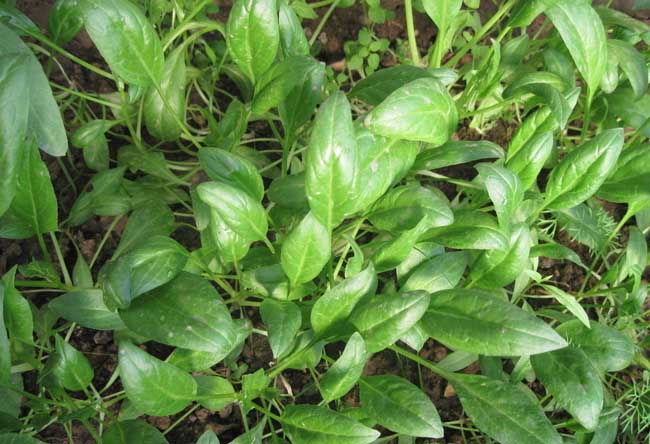
Spinach belongs to the Chenopodiaceae family and is an annual or biennial herbaceous plant. Also known as red-rooted vegetable and Persian vegetable. It originated in the Persia region, present-day Iran, and was introduced to China around the Tang Dynasty. It has a long history of cultivation and is widely grown throughout northern and southern China. It has broad adaptability, strong cold resistance, stores well, has a long supply period, is easy to grow and quick to harvest, and produces relatively high yields. The product can be supplied in early spring and during the off-seasons of autumn and winter, making it one of the important vegetables in the three seasons of autumn, winter, and spring in the north. The entire spinach plant is emerald green, tender and delicious, and rich in nutrition, containing abundant vitamins and mineral elements. It is a highly nutritious vegetable loved by the general public.
Biological Characteristics of Spinach
1. Botanical Characteristics
① Root. Spinach has a relatively deep and well-developed taproot. The taproot is slightly thick and somewhat swollen, red on the upper part, stores nutrients, and is sweet and edible. The main root mass is distributed within the 25-30 cm plow layer. Lateral roots are not well developed, making it unsuitable for transplanting.
② Stem. During vegetative growth, it is a shortened stem; during reproductive growth, the flower stem elongates, reaching 66-100 cm in height.
③ Flowers. Spinach flowers are unisexual, with a few being bisexual. It is dioecious, with a few being monoecious. Male flowers are in spike-like inflorescences, borne at the top of the flower stem or in leaf axils, without petals; the calyx has 4-5 lobes, and the number of stamens equals that of the calyx. Anthers dehisce longitudinally, pollen is abundant, yellow-green, and wind-pollinated. Female flowers are clustered in leaf axils, without petals, with 1 pistil, 4-6 stigmas, and a calyx with 2-4 lobes enclosing the ovary; the ovary has 1 chamber containing 1 ovule. In prickly-seeded varieties, the calyx develops into horn-like protrusions. The "seed" used for sowing is actually the fruit. Female flowers are clustered in leaf axils, with 6-20 florets per leaf axil. They have no flower stalk, or have flower stalks of varying lengths.
④ Leaves. Before bolting, spinach leaves are clustered on the shortened stem as basal leaves. There are two leaf types: round-leaved and pointed-leaved. Round-leaved spinach has large, thick leaves with smooth surfaces, ovate or spoon-shaped; pointed-leaved spinach has narrow, thin leaves, halberd-shaped or arrow-shaped, with acute or obtuse tips. Spinach leaves are dark green, tender in texture, with slender petioles, and are the main edible part.
⑤ Fruit and Seed. The spinach fruit is a utricle, irregularly round, containing 1 seed, enclosed by a hard, leathery exocarp. It is divided into prickly and smooth types. The endocarp is suberized with well-developed thick-walled cells, making it difficult for water and air to penetrate, so seeds germinate slowly. The 1000-seed weight is 9.5-12.599 g. Under general storage conditions, seeds can be kept for 3-5 years, with seeds 1-2 years old having strong germination capacity.
2. Requirements for Environmental Conditions
① Temperature. Spinach is the most cold-resistant vegetable among leafy green vegetables. South of the Yangtze River basin, it can overwinter in the open field; in areas with temperatures around -10 degrees, it can safely overwinter in the open field; in North China, Northeast China, and Northwest China, it can overwinter in the open field with windbreaks and ground coverage. The cold resistance of spinach is closely related to plant growth and development and seedling age. Plants with 4-6 leaves can withstand short-term lows of -30 degrees with their crowns, and at -40 degrees only the outer leaves freeze and turn yellow, while the root system and young buds are not damaged. If seedlings have only 1-2 leaves, or if seedlings are too large, or if plants are about to bolt, they are prone to freezing damage and death during overwintering. Spinach has broad adaptability; the suitable growth temperature is 15-30 degrees, with the optimum being 15-20 degrees. Spinach seeds can germinate at 4 degrees, with the optimum being 15-20 degrees; they can germinate in 4 days with a germination rate above 90%. As temperature increases, the germination rate decreases.
② Light. Although spinach is a low-temperature, long-day crop, flower bud differentiation is mainly influenced by day length. Under long days and high temperatures, it easily passes through the photoperiod stage; under long days, low temperatures promote flower bud differentiation. After flower bud differentiation, when temperature rises and day length increases, bolting and flowering accelerate. Overwintering spinach enters the following spring and summer, and the plants will rapidly bolt and flower.
③ Water. Spinach grows most vigorously, with thick leaves, good quality, and high yield under conditions of 80%-90% air humidity and 70%-80% soil moisture. Spinach requires large amounts of water during growth. Water shortage during the growing period slows growth, ages leaf tissue, increases fiber, and makes it susceptible to downy mildew. Especially under high temperature, dryness, and long days, it promotes flower organ development and early bolting.
④ Soil and Nutrition. Spinach has broad adaptability to soil. It is best planted in fertile, neutral or slightly alkaline loam with good water and fertilizer retention, moisture (night-damp soil), and a pH of 6-7.5. Acidic soil will poison spinach and is not suitable for cultivation. Spinach is a fast-growing leafy vegetable that requires relatively large amounts of nitrogen fertilizer to promote leaf cluster growth, good quality, and high yield. Nitrogen fertilizer should be increased on the basis of complete NPK fertilizer.
3. Growth and Development
① Vegetative growth period. From sowing and emergence to the full development of all differentiated leaves, when flower bud differentiation begins. From cotyledon expansion to the appearance of two true leaves, growth is slow. After the two true leaves expand, leaf number, leaf weight, and leaf area all increase rapidly. The number of leaves at flower bud differentiation varies by variety, sowing date, and climatic conditions, ranging from 5-6 to more than 20.
② Reproductive growth period. From flower bud differentiation to seed maturity; the early stage overlaps for a period with vegetative growth. External conditions that enhance photosynthesis and nutrient accumulation generally promote female expression; after bolting, there are more lateral branches, more flowers, and plumper seeds.
Types and Varieties of Spinach
Based on leaf shape and the presence or absence of spines on the fruit, spinach can be divided into pointed-leaved (prickly) and round-leaved (smooth) types.
① Beijing Pointed-Leaf Spinach. A Beijing local variety. Leaves are arrow-shaped with a pair of deeply lobed segments at the base, green, somewhat thin in flesh, with relatively little fiber and good quality. Fruits are rhomboid with spines. Cold-resistant, not heat-tolerant. Yield per mu is 1000-2500 kg. Suitable for overwintering after root stubble and for autumn cultivation.
② Japanese Large-Leaf Spinach. Leaves are elliptical to ovate, slightly pointed at the tip, with shallow notches at the base. Leaves are broad and thick, dark green. Strong heat tolerance, not cold-tolerant, suitable for summer and autumn cultivation. High yield, good quality.
③ Large Round-Leaf Spinach. Introduced from the United States, belongs to the smooth-seeded type. Leaves are ovate to broadly triangular, large and thick, with many wrinkles on the surface, dark green. Quality is sweet and tender, bolts late in spring, high yield, good quality, but not cold-tolerant. Individual plant weight is 0.5 kg. The disadvantage is weak resistance to downy mildew and viral diseases. Cultivated in Northeast, North, and Northwest China.
Four-Season Cultivation Techniques for Spinach
Spinach has broad adaptability, a short growth period, and is fast-growing and quick to mature. It is an important vegetable for intercropping and catch cropping. The product can be eaten regardless of size, and there are both cold-tolerant and heat-tolerant varieties. Cultivation methods include overwintering, buried, spring spinach, summer spinach, autumn spinach, frozen-storage spinach, etc., allowing staggered sowing and year-round supply.
1. Key Techniques for Spring Spinach Cultivation
① Cultivation time: sow from early March to mid-April, harvest in early to mid-May.
② Variety selection and sowing period. For spring spinach, choose round-leaved varieties that bolt late and have large leaves. In early spring, after the top 4-6 cm of soil thaws, sow as early as possible, preferably by "sowing on the ice." Based on meteorological data, sow when the average daily temperature rises to 4-5°C, generally in early March until mid-April. Because temperatures are low in the early period when spring spinach is sown, emergence is slow, which is unfavorable for leaf primordium differentiation; in the later period, temperatures rise and day length extends, favoring bolting and flowering, so the vegetative growth period is short, leaf number is low, bolting is easy, and yield is low.
③ Land preparation. For spring spinach, choose a plot where cruciferous vegetables or other field crops were not previously planted. Use decomposed barnyard manure as base fertilizer, add 30 kg of nitrogen and potassium fertilizer, then shallow plow and make flat beds about 1.3 m wide for sowing. Some prepare the land and beds the previous year and set up windbreaks for sowing.
④ Sowing. In production, seed soaking and pre-germination are commonly used. First soak seeds in warm water for 5-6 hours, remove and place at 15-20°C for pre-germination, rinse once daily with warm water, and sprouts appear in 3-4 days. Broadcast sowing is generally used. Spring spinach has a short growth period and small plants, so the sowing rate is increased to 5-7 kg per mu. For early spring sowing, wet sowing ("sowing in water") is best: first irrigate enough bottom water, wait for the water to infiltrate, then broadcast seeds, then cover with soil about 1 cm thick. Since the bed surface is covered with a layer of loose soil, it reduces soil moisture evaporation and also has a warming effect. Seeds are in a relatively warm, moist, and well-aerated environment, so they can emerge earlier.
⑤ Field management. In the early stage of spring spinach, cover with plastic film for warmth, directly on the bed surface. After emergence, remove the film or switch to small arch covers. For small arch covers, uncover during the day and cover at night, uncover on clear days and cover on rainy days, so seedlings get more light. For spring spinach sown by the wet method, because soil moisture is sufficient, the first watering can generally be done when seedlings have 2-3 true leaves. From the second watering, apply 15 kg of urea per mu with the water, or apply 20 kg of nitrogen-potassium fertilizer per mu; especially 15 days before harvest, apply quick-acting nitrogen fertilizer. Water according to climate and soil moisture conditions, with the principle of always keeping the soil moist.
⑥ Timely harvest. Generally, harvest can be done 40-60 days after sowing, and harvest standards can be reached in early to mid-May.
2. Summer Spinach Cultivation Techniques
Summer spinach, also called "dog-days spinach," is spinach marketed in July-August. The seedling growth period is in a high-temperature, long-day season. Although leaf primordium differentiation is fast, flower bud differentiation and bolting are also fast. Moreover, high temperatures, high evaporation, vigorous respiration, and low nutrient accumulation in plants limit leaf area expansion, resulting in poor quality and low yield. Summer spinach cultivation should focus on solving the problems of emergence, seedling retention, and vigorous growth. Key cultivation points are:
① Cultivation time. Sow from early to mid-June to July; harvest about 50 days after sowing.
② Variety selection. For summer spinach, choose varieties with strong heat tolerance, rapid growth, bolting resistance, disease resistance, high yield, and good quality. Varieties more suitable for summer planting include: Dutch Bejo No. 5 Spinach F1, K5, Japanese Beifeng, Shaoxing Spinach, etc. Next, Guangdong Round-Leaf Spinach, Nanjing Large-Leaf Spinach, Huabo No. 1, etc. can be used.
③ Determine the appropriate sowing date. The sowing date can be arranged about 50 days before the planned market date. At the same time, arrange sowing as much as possible before the highest summer temperatures arrive, so that seedlings grow for a period before entering the high-temperature period, which helps obtain higher yields. Therefore, the suitable sowing period for summer spinach is early to mid-June.
④ Seed soaking and pre-germination. Before sowing summer spinach, low-temperature seed soaking and pre-germination must be carried out. Method: soak in well water for 24-30 hours, wrap in gauze, hang in a water well about 20 cm above the water surface, sink the gauze bag into the water once daily to rinse the seeds, and sow after 2-3 days when the radicle emerges. Soaked seeds can also be spread in a cool indoor place for pre-germination, stirring and maintaining some moisture; sprouts appear in 5-6 days. Or place soaked seeds at 15°C-20°C for pre-germination, and they will sprout in 3-4 days.
⑤ Land preparation, fertilization, and sowing. Before plowing, apply 2000-3000 kg of decomposed farmyard manure, 20 kg of NPK compound fertilizer, and 10 kg of urea per 667 sq m. Also apply 1.5 kg of zinc fertilizer and 0.7 kg of boron fertilizer as base fertilizer. Shallow plow and harrow, make flat beds 1.1 m wide (including ridges). The bed surface must be level, and beds should not be too long, preferably about 15 m. Sow by the wet method before 10 a.m. or after 4 p.m. That is, first water, wait for the water to infiltrate, then broadcast seeds, and cover with 1.5-2 cm of fine soil. To ensure sufficient seedlings, the sowing rate per 667 sq m can be increased to 8-10 kg. After sowing, cover the bed surface with crop straw to cool and retain moisture, prevent heavy rain washing, and ensure uniform emergence. Before emergence, avoid watering as much as possible to prevent soil crusting or washing away the covering soil during watering, exposing seeds and affecting emergence. After emergence, remove the cover in the evening or morning.
⑥ Field management.
a. Thinning. After emergence, thin seedlings where they are too dense.
b. Watering. During the summer spinach growing period, fertilization and irrigation should follow the principle of light and frequent watering. For the first watering, the flow should be slow and the amount small, to avoid mud soaking the cotyledons and causing seedling death. Generally water once every 5-7 days, always keeping the soil moist to lower ground temperature. Water in the early morning or evening, use well water, not pond or river water. During seedling growth, spinach dislikes high temperatures and strong light; if necessary, build shade frames. Cover early and uncover late, both cooling and protecting from rain.
⑦ Pest and disease control. Major summer spinach diseases include damping-off, downy mildew, anthracnose, and viral disease. Damping-off control: after spinach emergence, spray the ground and plants with Lvheng No. 1 at 3000 times, or Kejun at 1500 times. If severe, spray with 72.2% Previcur at 600 times plus 68.75% DuPont Yibao at 1000 times. Downy mildew control: spray 72% mancozeb-cymoxanil at 600 times, or 58% metalaxyl wettable powder at 500 times, or 64% sandofan-mancozeb wettable powder at 500 times, or 40% fosetyl-aluminum wettable powder at 200 times, alternating sprays twice at 7-day intervals. Anthracnose control: use 70% thiophanate-methyl at 1000 times, or 50% carbendazim wettable powder at 600 times, or 70% mancozeb wettable powder at 500 times, alternating sprays 2-3 times at 7-day intervals. It is best to mix and apply according to different pesticide characteristics. Viral disease control: eliminate aphids early to reduce opportunities for virus transmission. For leafminer pests, strengthen prevention.
3. Technical Measures for Oversummering Spinach Cultivation in Greenhouses
Spinach is an important leafy green vegetable with strong cold resistance. It is mostly widely cultivated in autumn, winter, and spring. Growing spinach in summer's high temperature and rainy conditions is very difficult. We used winter-warm greenhouses and arch-round greenhouses during their idle summer period to experiment with rain-sheltered cultivation and achieved success. Yield per mu can reach over 1500 kg, with promising market prospects and very considerable income. One crop can be harvested in about 40 days. The main technical measures taken for growing oversummering spinach are as follows:
① Protective facilities. Spinach sown from May to July all belongs to oversummering spinach. When growing oversummering spinach, shade and rain protection methods must be used.
a. Install shade netting. You can use the summer idle period of a solar greenhouse (winter-warm greenhouse), covering the film with shade netting to achieve shading and rain protection; you can also use a large arch shed with shade netting over the film for shading and cooling. It is best to use shade netting with 60% shading rate. When installing shade netting, it is best to leave 20 cm from the greenhouse film (cooling effect is significant), and make it easy to roll and unroll. During the high-temperature period from 9 a.m. to 4 p.m. on clear days, cover the greenhouse or shed with shade netting to prevent direct strong light. On rainy days, or before 9 a.m. and after 4 p.m. on clear days when light is weak, roll up the shade netting. This prevents strong light and high temperature while allowing spinach to receive sufficient sunlight.
b. Add insect-proof netting. Aphids and small brown planthoppers are vectors of viral disease. Blocking these virus-transmitting vectors from entering the greenhouse is one of the main technical measures for growing oversummering vegetables. Before planting, add 60-70 mesh insect-proof netting around the arch shed or on the south side of the large shed. This does not affect ventilation and can safely isolate virus-transmitting vectors from entering the greenhouse. Also check and repair the greenhouse film in time to prevent rainwater from entering the greenhouse and causing viral disease.
c. In short, taking shade and rain protection measures is the key to oversummering spinach cultivation.
② Select heat-tolerant varieties. Choose relatively heat-tolerant varieties. Currently, K4, K5, K6, K7 and others produced by the Dutch Bejo company are mostly used; Shengxianfeng also performs very well. Their common characteristics are relatively heat-tolerant and disease-resistant, bolting-resistant, fast-growing, and high-yielding.
③ Cultivation method. When the soil in a solar greenhouse or large arch shed is sandy loam, because water easily infiltrates or evaporates, bed cultivation can be used. Generally bed width is 1.5 m, of which bed surface width is 1.15 m and ridge width is 35 cm. Plant 9 rows per bed, with row spacing 12 cm and plant spacing 2.50 cm, using about 1.75 kg of seed per mu. When the soil in the greenhouse is clayey, because soil moisture does not easily infiltrate or evaporate, ridge cultivation is best. Practice has proved that summer spinach cultivation fears moisture most; if grown in beds, it is prone to stem rot, while on ridges the leaf bases have good ventilation and are less prone to disease. Generally make 1 ridge every 50 cm, plant 2 rows per ridge, with hole spacing 5 cm and 2 seeds per hole, using about 1 kg of seed per mu.
④ Fertilizer and water management. Spinach likes fertile, moist soil with high organic matter content. If growing oversummering spinach in a solar greenhouse, because the soil is fertile, generally no base fertilizer is applied; if in a new greenhouse or new large arch shed with infertile soil, apply about 3 sq m of fully decomposed chicken manure per mu as base fertilizer. For topdressing, potassium nitrate or potassium sulfate compound fertilizer is best. For sandy loam, apply a total of 15 kg of potassium nitrate or 30 kg of potassium sulfate compound fertilizer per mu in 3 applications, flushed with water. Apply more fertilizer later and less early according to spinach growth. For clay loam, apply 12 kg of potassium nitrate or 25 kg of potassium sulfate compound fertilizer in 3 applications. Water timely in summer and hoe after watering; hoeing both retains moisture and prevents moss growth, which is key to disease prevention. Especially hoeing just after emergence is crucial. If the ground is covered with moss, spinach will show severe seedling death and leaf rot.
⑤ Pest and disease control. Oversummering spinach is prone to damping-off, downy mildew, bacterial rot, and other diseases, as well as whitefly, American leafminer, and other pests. Generally on the fifth day after sowing (just after full emergence), spray once with Dacol at 600 times + propamocarb at 600 times; on the 12th day spray again with Dacol and propamocarb; on the 20th and 28th days spray once each with Kelu at 600 times + abamectin + agricultural streptomycin; on the 35th day spray once with Dacol + propamocarb + agricultural streptomycin. This can control disease occurrence. To prevent viral disease, pay attention to insect control and prevent insect transmission. Also pay attention to shading and cooling, rain protection, prevention of excessive drought, and increased application of organic fertilizer, potassium fertilizer, and micronutrient fertilizers. Spray Zhibingling, Virus A, etc. once every 7 days to prevent viral disease.
⑥ Harvest. When spinach grows to 20-30 cm tall (about 40 days), harvest promptly. You can also harvest 1-2 days earlier or later for market according to market prices. But do not delay too long, because spinach easily rots in summer, so the harvest period should be earlier rather than later.
4. Key Techniques for Early Autumn Spinach Cultivation
Early autumn spinach cultivation has a growth period of about 30-40 days. The time is short, the vegetable reaches market quickly, it can meet market demand for autumn off-season vegetables, and it can achieve relatively high economic benefits.
① Cultivation time. Sow around August 20 and market around mid-to-late September.
② Select good varieties. Just entering autumn, temperatures are still high (commonly called "autumn tiger"). When sowing spinach at this time, choose varieties that are heat-tolerant and easy to germinate, such as Quanneng Spinach.
③ Soil selection. Autumn-planted spinach has no strict soil requirements. Cultivation on sandy loam shows early maturity, while cultivation on clay loam easily achieves high yield. Acid resistance is relatively weak. The suitable soil pH is 5.5-7. Growth is poor when soil pH is below 5.5 or above 8.
④ Apply sufficient base fertilizer. Spinach has a relatively high absorption rate of nitrogen and potassium. Generally apply 1000 kg of decomposed farmyard manure and 80 kg of NPK compound fertilizer per mu; at the same time, soil moisture throughout the growth period must be maintained at 70-80% of field capacity.
⑤ Seed soaking and pre-germination. Before sowing, soak spinach seeds for 12-24 hours, then spread them in a cool indoor place for pre-germination. During this period, stir the seeds frequently and keep them moist. After 5-6 days, sow once sprouted.
⑥ Timely sowing. Early autumn spinach generally begins sowing after mid-August and is harvested and marketed in mid-to-late September. During high-temperature periods, the sowing rate should be increased to 10-15 kg per mu (for imported seeds sown in holes, the sowing rate should not be too large; generally sow 1.2-1.5 kg of dry seed per mu). When sowing, first irrigate enough bottom water, then broadcast seeds, sowing evenly 2-3 times, and press the bed surface firm after sowing.
⑦ Sowing management. For spinach sown before "White Dew," after sowing it is best to cover the bed surface with straw or rice straw, or build shade frames, to reduce high-temperature and heavy rain damage and direct sunlight, so as to cool, retain moisture, and promote full emergence. Before spinach seeds emerge, water once each morning and evening. After emergence, remove the cover and water timely according to soil moisture to protect seedlings. After spinach's two true leaves expand, leaf number, leaf weight, and leaf area increase rapidly; apply quick-acting nitrogen fertilizer 1-2 times. During the growing period, apply dilute manure water many times in small amounts.
5. Autumn Spinach Cultivation Techniques
Autumn spinach refers to spinach sown in August and marketed from September to October. After "Start of Autumn" (early August), temperatures gradually decline and day length gradually shortens. Climatic conditions are favorable for vegetative growth and unfavorable for reproductive growth, so it is relatively easy to achieve high yield and high quality.
① Cultivation time. Sow in August; harvest in batches 30-60 days after sowing, and market successively from mid-to-late September to November.
② Select suitable varieties. After autumn spinach is sown, temperatures are high early and gradually decrease later. Light is relatively sufficient, suitable for spinach growth, and day length gradually shortens, making it difficult to pass through phase development. Generally autumn spinach does not bolt, so variety selection is not very strict. For early sowing, because temperatures are still relatively high, choose relatively heat-tolerant round-leaved spinach varieties; for later sowing, choose round-leaved or pointed-leaved spinach varieties.
③ Seed treatment. When sowing in August, average daily temperature still affects spinach seed germination. Especially when sowing in early August, average daily temperature often reaches 24-29°C. If seed soaking and pre-germination are not carried out before sowing, emergence is slow, the leaf growth period shortens, and yield is affected. The seed soaking and pre-germination method is the same as for summer spinach.
④ Land selection and bed preparation. At a base meeting pollution-free vegetable production conditions, choose sunny, loose, fertile soil with good water and fertilizer retention, good drainage and irrigation, and neutral to slightly acidic soil. After the previous crop is harvested, deep plow and turn the soil, remove residual roots, and fully bake and sun the soil until it turns white. When preparing land, apply 3000-4000 kg of decomposed organic fertilizer and 100 kg of lime per 666.7 sq m, then level and finely rake the bed surface, and make flat beds or high beds. Bed width is about 1.2-1.5 m.
⑤ Sow at the appropriate time. Spinach is generally direct-sown, mainly by broadcasting. Generally sow from August to September, or earlier in July or delayed to early October, in batches. Dry seeds can be sown, or seeds can be soaked in well water for about 12 hours, then placed in a well or air-raid shelter for pre-germination, or treated in a refrigerator or cold storage cabinet at about 4°C for 24 hours, then pre-germinated at 20°C-25°C, and sown after sprouting in 3-5 days. Before sowing, first irrigate bottom water. After sowing, gently rake the surface soil so seeds fall into soil cracks, and cover with rice straw or use small arch sheds or flat frames covered with shade netting to keep soil moist, facilitate emergence, and prevent high temperature and heavy rain washing. Keep soil moist frequently; seedlings emerge uniformly in about 6-7 days. Because autumn weather is hot and dry, with occasional heavy rain, growth is poor and seedlings often die, so a larger sowing rate is needed: 5-6 kg of seed per 666.7 sq m. In the later period, temperatures gradually decrease and emergence rate is higher, so the sowing rate can be reduced to 3.0-3.5 kg.
⑥ Cultivation management. During the seedling growth period of autumn spinach, air and ground temperatures are relatively high, so water frequently and lightly, keep soil moist, and lower ground temperature to provide good environmental conditions for seedling growth. The early growth period of autumn spinach coincides with hot, dry weather. After true leaves appear, apply a light manure water promptly. Later, as plants grow and temperatures decrease, gradually increase topdressing concentration. However, apply when the soil surface is dry; if the soil is moist, spinach grows slowly and is prone to disease. After 2 true leaves, combine thinning of overly dense small seedlings, remove weeds, and pay attention to topdressing. Fertilization should follow the principle of light application, frequent application, and dilute first then concentrated. Apply more organic fertilizer early, namely decomposed manure, but stop applying manure 15 days before harvest. Later, as plants enter the peak growth period, apply quick-acting nitrogen fertilizer 2-3 times in stages, applying 5-10 kg of urea per 666.7 sq m each time, to promote leaf cluster growth, increase yield, and improve quality.
⑦ Harvest. Autumn spinach has a relatively short growth period, so harvest and market timely according to growth and market demand. Generally when seedlings are 10 cm tall, begin thinning in batches and market successively. Note to harvest dense plants and those about to bolt first. Usually after the first thinning, topdress once, and after the second, clear the field. When harvesting, remove dead yellow leaves, wash clean with water, and tie into 250-500 g bundles. Autumn spinach generally yields 3000-4000 kg per mu, with high-yielding fields reaching 5000 kg.
6. Cultivation Techniques for Autumn-Winter Large-Leaf Spinach
① Variety introduction
a. Bolting-resistant Quanneng Spinach. Introduced from Hong Kong, China. Heat-tolerant, cold-tolerant, broadly adaptable, strong winter habit, late bolting; fast-growing, capable of rapid growth at 3-28°C. Plant form upright, plant height 30-35 cm, 7-9 leaves, individual plant weight about 100 g. Leaf color dark green, thick and large, leaf surface smooth, 30-35 cm long and 10-15 cm wide. Low astringency, tender texture. Growth period 80-110 days, resistant to downy mildew, anthracnose, and viral disease.
b. Shengxianfeng is a hybrid F1 spinach. Heat-tolerant and bolting-resistant, resistant to downy mildew, leaves broad, large, and dark green. Medium-early maturing; harvested 38-45 days after spring sowing; individual plant weight 55-65 g; plant height 30-35 cm. Plant form upright, pointed-round leaves, leaf surface smooth, leaf color bright, excellent market quality.
c. Jixianfeng Spinach. Plant form upright and tall, petioles thick and strong, leaves thick, leaf color dark green, fast growth, long suitable sowing period. Can be planted from mid-August to late January of the following year. Harvest 45-50 days after sowing. Generally yields 3000 kg per mu, with high-yielding fields reaching 4000-5000 kg.
d. Dutch Spinach. This variety is early-maturing, cold-tolerant, bolting-resistant. Leaves large and thick, leaf color dark green. Average individual plant weight 600 g, maximum individual plant weight up to 750 g. Generally yields 3000-3500 kg per mu. Low fiber, sweet taste, no astringency. Growth period in protected cultivation is 30 days, and in open field cultivation is 50 days. Autumn sowing time is generally before late September, and it can be marketed from New Year's Day to Spring Festival, yielding 3500-4000 kg per mu.
② Sow at the appropriate time. The suitable sowing period is mid-September to early October, preferably before National Day. Generally harvest begins about 60 days after sowing.
③ Land preparation and fertilization. First remove residues from the previous crop, then apply sufficient base fertilizer: 2000-2500 kg of decomposed human and livestock manure, 50 kg of high-concentration compound fertilizer, and 50 kg of ammonium bicarbonate per mu, then plow, turn, rake level, and make beds. Use flat bed cultivation, bed width 2 m, ensuring drainage and irrigation.
④ Sow in moist soil. Spinach seed shells are hard and not easy to absorb water, making uniform emergence difficult. Therefore, bottom water in the field before sowing must be sufficient. If the weather is dry at sowing, must irrigate in advance to preserve moisture, then sow after 1-2 days. If moisture is still acceptable, after opening furrows also irrigate enough water in the sowing furrows. Japanese large-leaf spinach seeds are large, plump, and neat, with strong germination vigor. When sowing, use furrow drilling: open furrows along the bed, furrow spacing 18-20 cm, furrow depth 2 cm, seed spacing 4-5 cm. Appropriate close planting can be used; sowing rate should be 0.7-0.8 kg per mu. After sowing, cover with 2-3 cm of soil, then gently press to preserve moisture and help emergence. If moisture is suitable, seedlings generally emerge uniformly 7-10 days after sowing.
⑤ Fertilizer and water management. Large-leaf spinach likes fertile, moist, cool conditions and avoids drought and waterlogging. It is a fast-growing vegetable. Therefore, during the growing period, sufficient fertilizer and water must be supplied in time. From sowing to full emergence, keep soil moist to ensure full emergence. At the 3-leaf stage, cultivate and weed to improve aeration and promote rooting. Before canopy closure, at the 6-7 leaf stage, combine fertilizer with water to promote vigorous spinach growth; apply 10-15 kg of urea per mu. Fertilization method: apply dry then water, or apply opportunistically during rain. After canopy closure, if topdressing is needed, ammonium bicarbonate water can be flushed with irrigation. If drought occurs during the growing period, water frequently to retain moisture. During continuous rain, drain promptly.
⑥ Pest and disease control. Diseases harming spinach mainly include viral disease and downy mildew. Thoroughly eliminate aphids, remove diseased plants, and control the spread of viral disease. Downy mildew control methods: strengthen field management, rational close planting, rational irrigation, reduce field humidity, and spray promptly at the initial stage of disease. Use 85% metalaxyl wettable powder at 500 times, spraying once every 7-10 days, 2-3 times total. Pests harming spinach include cabbage caterpillar, diamondback moth, aphids, etc. For cabbage caterpillar and diamondback moth, use pesticides such as decis, chlorfluazuron, or Bacillus thuringiensis in rotation for control; for aphids, use imidacloprid.
⑦ Timely harvest. When spinach plants grow to 35-40 cm, harvest promptly. When harvesting, remove yellow leaves, dead leaves, and diseased leaves, then tie with special plastic bands at 4-5 kg per bundle for sale.
7. Overwintering Spinach Cultivation Techniques
① Cultivation time. Sow around early to mid-October, begin harvesting around the Spring Festival.
② Land selection and preparation. Land preparation and fertilization. After the previous crop is harvested, apply 5000 kg of high-quality decomposed farmyard manure and 30 kg of NPK compound fertilizer per mu, plow 20-25 cm deep, rake level, firm, and make beds 1.5-1.7 m wide. For drilling, open furrows at about 10 cm row spacing, furrow depth 3-4 cm, sow seeds evenly, then cover with soil, firm, and water.
③ Select good varieties. Overwintering spinach cultivation is easily affected by low temperatures in winter and early spring. After spring begins, ordinary varieties easily bolt, reducing yield and quality. Therefore, choose varieties with strong winter habit, late bolting, strong cold resistance, and high yield, such as Pointed-Leaf Spinach, Baza 10, Baza 9 and other cold-resistant varieties.
④ Sow at the appropriate time. Overwintering spinach only has strong cold resistance when plants reach 5-6 leaves before growth stops. Therefore, when the average daily temperature drops to 17°C-19°C, it is most suitable for sowing. At this time the climate is cool, suitable for spinach germination and emergence. Generally no pre-germinated seeds are needed; sow dry seeds or wet seeds. Method: first soak seeds in 35°C warm water for 12 hours, remove and air dry, then broadcast or drill, cover with soil, press, and sprinkle water. At sowing, if the weather is dry, must first irrigate enough bottom water in the bed soil. After sowing, gently rake the surface soil so seeds fall into soil cracks.
⑤ Sow an appropriate amount. Drill in furrows, row spacing 8-10 cm. After seedlings emerge fully, thin to a plant spacing of 7 cm. If seed purity is low and impurities are many, winnow with a basket to remove impurities and shriveled seeds, leaving plump seeds for sowing, ensuring uniform emergence and strong growth.
⑥ Management and protection before winter. Seedlings emerge fully 4-5 days after sowing. Before emergence, water whenever the soil surface dries, ensuring the bed surface remains moist until full emergence to promote spinach growth. After spinach germinates and emerges, perform one shallow hoeing to loosen soil, which controls weeds and preserves moisture. When plants grow 3-4 leaves, appropriately control water to promote root development and help spinach overwinter. To meet market demand around the Spring Festival, as severe winter approaches, pay attention to setting up windbreaks or doing cold and freeze protection covering, so as to avoid freezing damage to leaves and serious impact on spinach yield and quality. When plants grow 5-6 leaves and are about to stop growing, water with freezing water in time. The timing should be when the soil surface thaws by day and freezes by night. It is best to use manure water for freezing water, which helps spinach green up in early spring and accelerate growth. In mid-February of the following year, remove windbreaks and rake clean debris on the bed surface and in bed furrows.
⑦ Pest and disease control. Overwintering spinach pests and diseases mainly include anthracnose, downy mildew, viral disease, and aphids. For downy mildew and anthracnose, spray at the initial stage with 75% chlorothalonil at 600 times, 25% metalaxyl at 700 times, 40% fosetyl-aluminum wettable powder at 300 times, etc. For viral disease, in addition to crop rotation, also control aphids and other virus-transmitting vectors in time. During aphid outbreaks, spray with 10% imidacloprid at 2000 times or 2% abamectin at 2500-3000 times.
8. Windbreak Spinach Cultivation
Windbreak cultivation is a cultivation type that uses windbreaks as barriers, erected on the north side of vegetable beds, to overwinter overwintering spinach. Because windbreaks reduce wind speed and stabilize airflow over the bed surface, the wind protection effect is good; moreover, windbreaks can also use solar radiation and reflection from the barrier surface to increase air and ground temperatures in the vegetable bed and improve the microclimate in front of the windbreak. This windproof, cold-proof, heat-retaining, and freeze-protecting effect of windbreaks is beneficial for spinach overwintering, early spring greening, and early harvest.
① Land preparation, bed making, and windbreak erection. Windbreaks should be set up before the soil freezes. If windbreaks are set too early, temperatures in the bed are high, easily causing aphids to gather and cause damage. If set too late, the soil freezes and land preparation quality cannot be ensured. Windbreaks generally run east-west. Dig a windbreak ditch on the north side of the vegetable bed, ditch width 16 cm, ditch depth 26 cm. Insert reeds or bamboo poles, old agricultural film, straw curtains, corn stalks, sorghum stalks and other frame materials evenly close to the south wall of the ditch, fill with soil and tread firm. The windbreak leans south at 70-80 degrees. Tie a horizontal pole every 50 cm and bind firmly. Behind the windbreak, cultivate soil and tread firm to block wind and cold. In front of the windbreak, make 4 sowing beds and half a bed as a walkway. The spacing between windbreaks is 7-8 m to prevent mutual shading.
② Sowing and management. The sowing, seedling management, freezing water, and other management techniques for windbreak spinach are the same as for overwintering spinach. Note that the greening water should be applied timely according to how early or late seedlings green up. Because the first and second beds retain heat well, seedlings green up earlier, so watering and topdressing should both be carried out earlier.
③ Film-covered spinach cultivation. That is, overwintering spinach is covered with old agricultural film for a short period before greening up the following year, allowing earlier greening and earlier marketing. Generally cover with old film 20-30 days before spinach greens up, or cover during overwintering. It has warming and cold-prevention effects, reduces seedling death, and can be marketed 15 days earlier than uncovered open-field spinach.
9. Cultivation and Frozen Storage of Frozen-Storage Spinach
Frozen-storage spinach is sown in mid-autumn. During the growing period, the climate gradually becomes cooler, the diurnal temperature difference increases, and day length gradually shortens, suitable for spinach leaf primordium differentiation and leaf growth. In the later growth stage, soil is hilled up for blanching, so plants accumulate more nutrients; leaf flesh is thick, color dark green, heart leaves fresh yellow, taste sweet, quality good, and storage-resistant. Because spinach is harvested with part of the red root, and green leaves with red roots set off by yellow hearts are colorful and beautiful, it is also called red-root spinach. Generally after winter harvest, it is frozen-stored, then taken out during New Year's Day and Spring Festival, thawed, trimmed, and marketed. The supply period is long and it is welcomed by the market. The management and hilling techniques for frozen-storage spinach are relatively complex. The cultivation techniques and frozen storage methods are introduced below.
① Cultivation time. Sow in early to mid-September, grow for 70-75 days, harvest in mid-to-late November.
② Variety selection. For frozen-storage spinach, choose pointed-leaved or pointed-round-leaved types with relatively strong cold resistance, dark green leaf color, thick leaves, short thick petioles, and high yield. Such as Shuangcheng Pointed-Leaf Spinach, Shanghai Pointed-Round-Leaf Spinach, Yangchuan, etc.
③ Land preparation and bed making. Land preparation and bed making for frozen-storage spinach are the same as for root-stubble spinach. Because it requires hilling for blanching in the later growth stage, when making beds, leave an inter-bed space for taking soil. Method: make 3 beds in parallel extending east-west. The two side beds are 1.67 m wide for sowing spinach; leave a 0.7 m wide inter-bed space in the middle, not planted with spinach, for taking soil when hilling. Bed length is 8.3 m.
④ Sowing. Frozen-storage spinach requires 70-75 days from sowing to suitable harvest, so the sowing period is relatively strict. If sown too early, stems and leaves grow excessively, leaf flesh is thin, accumulated nutrients are fewer, quality is poorer, plants tend to age at harvest, affecting frozen storage effect. If sown too late, plant growth time is insufficient, affecting yield. The suitable sowing period is early to mid-September. Frozen-storage spinach requires hilling in the later growth stage, mostly using wide-row drilling, row spacing 10 cm, sowing width 5-6 cm, seed rate 3-3.5 kg per mu, dry seed direct sowing. Field management such as watering, topdressing, cultivation, thinning, and weeding is the same as for overwintering spinach. The differences are:
a. Thinning. Frozen-storage spinach grows in a season when temperature and light are most suitable for spinach vegetative growth. Plants grow robustly, leaves are large and thick, tillering is abundant, and larger plant clusters can form. Therefore, appropriate thinning to ensure sufficient nutrient area between plants is conducive to photosynthesis and nutrient accumulation, and is key to increasing yield and quality of frozen-storage spinach. Thinning should be done in stages, generally 2 times, with final plant spacing about 7 cm. The thinned small seedlings can be bundled and marketed.
b. Hilling. Hilling can enlarge spinach plant clusters, thicken leaf flesh, make heart leaves fresh yellow, and improve spinach quality. Generally begin when plants grow to 20 cm tall. Because after hilling no more watering or topdressing is done in the field, before hilling remove all weeds between rows, irrigate heavily once, and apply quick-acting nitrogen fertilizer with the water at 20-25 kg per mu. At the same time, turn, break up, and sieve the soil in the inter-bed space in preparation for hilling. Hilling method: hold a wooden shovel and spread fine soil evenly between rows of the spinach bed, with each hilling about 1 cm thick. After hilling, use a soft-toothed bamboo rake to rake out leaves pressed by soil so leaves receive sunlight and produce nutrients, preventing leaves from being buried in soil and rotting. Generally hill 6-7 times in total, with total hilling thickness 5-6 cm. Hilling thickness depends on spinach plant growth; thin hilling for weak plants.
⑤ Harvest and treatment before frozen storage. Frozen storage requires timely harvest so spinach freezes quickly, enters a dormant state with extremely low physiological activity, and losses are reduced. If harvested too early, outdoor temperatures are still high and it cannot be placed in trenches for frozen storage; the vegetable body respires vigorously and easily heats up in piles, causing leaves to yellow, rot, and losses to increase. If too late, spinach freezes in the field and is difficult to cut and harvest. During harvest season, observe carefully in the field. The suitable harvest time is when spinach leaves are seen frozen stiff in the morning and can thaw during the day. Generally in mid-to-late November. However, when leaves are frozen stiff, do not cut and harvest immediately; harvest after leaves thaw and have no dew droplets or white frost. This is because harvesting when leaves are frozen makes thawing difficult and prone to rot; harvesting with water droplets increases vegetable humidity and makes it prone to rot during pre-storage. At harvest, use an iron shovel to lift spinach with roots, leaving red roots 2-3 cm, shake off soil, arrange neatly and stack on the ground, tie into large bundles 30-40 cm in diameter, with roots facing up and leaves close to the ground to keep leaves from losing water. Place them upside down behind the windbreak in a shaded, level bed, with bundles separated from each other, in two rows, for pre-storage 4-5 days. Bundle size should be appropriate. If bundles are too large, the center does not freeze through, heat from respiration cannot dissipate, causing leaves to yellow, deteriorate, or even rot. If bundles are too small, they are easily dried by wind and lose water, increasing losses and affecting product yield and quality. During pre-storage, cover with reed curtains during the day to avoid sunlight causing water evaporation and wilting. Pre-storage time depends on climate. If temperatures have already dropped significantly when spinach is harvested, a short airing is enough before frozen storage. If the weather turns warm and freezing is delayed, pre-store for a few days to avoid the pile heating and rotting after frozen storage.
⑥ Digging trenches and burying. Spinach should be stored frozen in a shaded, cool, well-ventilated place, such as behind a windbreak, using the natural low temperatures of winter for storage. The optimal storage conditions are: a temperature of -4 to -5°C and a relative air humidity of 90%-95%. The storage site should be prepared in advance; the form of the pit varies by region. Storage method: first make a bed parallel to and 20 cm behind the windbreak, with a bed width of 80-150 cm. The spinach is first pre-stored in the bed, stacked in 2-4 rows with roots facing up and leaves facing down. When burying, hold the bundles upright and place them back in their original position with roots facing down and leaves facing up, stacked in 2 or 4 rows, leaving a 10 cm gap between rows. Take soil from outside the bed and first fill it into the gaps between the rows of bundles, then surround all the bundles in the bed with soil, patting it into a soil ridge 25 cm high and thick, and finally spread a thin layer of soil on top, about 5 cm thick, which serves to block wind, retain moisture, and protect the leaves from cold wind and sun. After the tops of the bundles are covered with soil, they freeze quickly; as the temperature drops, the bundles freeze from the top downward. When the freezing reaches the middle of the bundles, cover with soil a second time, about 10 cm, and later cover with soil once more, for a total soil cover of about 25 cm. When the temperature is even lower, more soil is needed, or straw curtains are placed on top.
⑦ Thawing and marketing. Generally, starting in December and before new spinach comes on the market at the end of February the following year, the frozen spinach bundles are dug out, thawed, trimmed and sent to market. Thawing method: when digging out the frozen soil, do not bruise the bundles; when moving them, do not damage the leaves; avoid mechanical injury. Support the root end of the bundles with both hands, place them on a cart, and transport them to a relatively cool cellar or cold room, where the room temperature is generally 0-2°C and the humidity should be high, so that the frozen spinach thaws slowly and not too quickly. During thawing, the ice crystals in the intercellular spaces of the spinach leaves gradually melt and return into the leaf cells; the leaves regain turgor pressure and can still return to their original fresh, tender state without affecting product quality. After 3-5 days, once the plants have completely thawed, open the large bundles and trim them promptly, removing yellowed and rotten leaves, cutting off the main root, and tying them into small bundles of about 1 kg. After washing, pack them in baskets for market.