Detailed Explanation of Shiitake Mushroom Cultivation Techniques: Planting Methods and Management Key Points
Shiitake mushroom, also known as xiangxun, xiangxin, xianggu, and zhuiru, belongs to the class Basidiomycetes, order Agaricales, family Pleurotaceae, genus Lentinula. The artificial cultivation of shiitake mushrooms in China has a history of over 800 years. For a long time, shiitake cultivation used the "cut-flower method," a natural inoculation log cultivation method. It was not until the mid-1960s that pure spawn began to be cultivated, and the method was changed to artificially inoculated log cultivation. In the mid-1970s, the substitute-material block cultivation method appeared, which later developed into the plastic bag cultivation method, and yields increased significantly. China is currently the world's largest producer of shiitake mushrooms.
Shiitake mushroom is a well-known edible and medicinal fungus with a rich aroma and abundant nutrition. It contains 18 amino acids, 7 of which are essential to the human body. The ergosterol it contains can be converted into vitamin D, which has the effect of enhancing the human body's disease resistance and preventing colds; lentinan has antitumor effects; adenine and choline can prevent cirrhosis and arteriosclerosis; tyrosinase has the effect of lowering blood pressure; double-stranded RNA can induce interferon production and has antiviral effects. In folk medicine, shiitake mushroom is used for detoxification, benefiting stomach qi, and treating wind and breaking blood stasis. Shiitake mushroom is one of China's traditional special export products, and its top-grade product is flower shiitake.
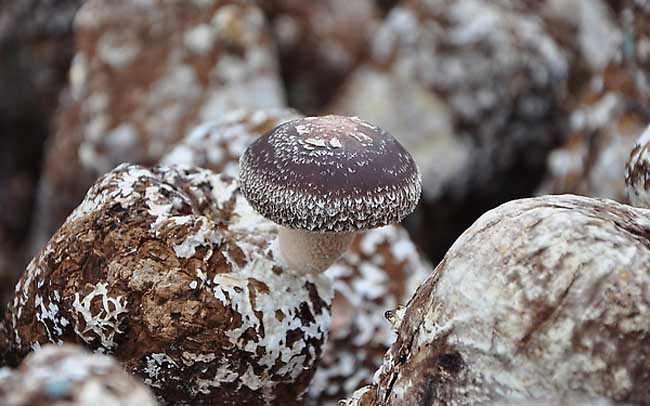
Biological Characteristics
1. Morphological Characteristics
Shiitake mycelium is white, fluffy, with septa and branches, mostly with clamp connections, twisting into a network after maturation, and forming a brown mycelial membrane after aging. The fruiting body is medium to slightly large. The cap diameter is 5-12 cm, plano-convex, with an incurved margin, gradually flattening after maturation, dark brown to deep cinnamon, with dark scales. The context is thick and white. The gills are white, dense, adnexed, of unequal length. The stipe is central to eccentric, white, solid, often curved, 3-8 cm long, 0.5-1.5 cm thick; an annulus is borne on the middle part, narrow, easily broken and disappearing; below the ring there are fibrous white scales. Spores are elliptical, colorless, smooth.
2. Living Conditions
① Nutrition: Shiitake is a wood-inhabiting fungus and uses cellulose, hemicellulose, lignin, pectin, starch, etc. as carbon sources for growth and development, but these must be decomposed into monosaccharides by corresponding enzymes before they can be absorbed and utilized. Shiitake uses various organic and inorganic nitrogen sources as nitrogen sources. Small-molecule amino acids, urea, ammonium, etc. can be directly absorbed, while macromolecular proteins and peptones must be degraded before absorption. The growth of shiitake mycelium also requires various mineral elements, with phosphorus, potassium, and magnesium being the most important. Shiitake also requires growth factors, including various vitamins, nucleic acids, and hormones. Most of these can be self-sufficient, but only vitamin B 1 needs to be supplemented.
② Temperature: The optimum temperature for shiitake mycelium growth is 23-25°C. Below 10°C or above 30°C hinders its growth. The suitable temperature for fruiting body formation is 10-20°C, and a day-night temperature difference greater than 10°C is required. The shiitake varieties currently used in production include three temperature types: high-temperature type, medium-temperature type, and low-temperature type. Their suitable fruiting temperatures are 15-25°C for the high-temperature type, 7-20°C for the medium-temperature type, and 5-15°C for the low-temperature type.
③ Moisture: The moisture required by shiitake includes two aspects: one is the water content in the culture medium, and the other is air humidity. The suitable amounts differ depending on whether substitute-material cultivation or log cultivation is used.
[Substitute-material cultivation]During the mycelial growth stage, the water content of the culture material is 55%-60%, and the relative air humidity is 60%-70%; during the fruiting stage, the water content of the culture material is 40%-68%, and the relative air humidity is 85%-90%.
[Log cultivation]During the mycelial growth stage, the water content of the culture material is 45%-50%, and the relative air humidity is 60%-70%; during the fruiting stage, the water content of the culture material is 50%-60%, and the relative air humidity is 80%-90%.
④ Air: Shiitake is an aerobic fungus. In the shiitake growth environment, due to poor ventilation, excessive accumulation of carbon dioxide, and insufficient oxygen, mycelial growth and fruiting body development are noticeably inhibited, which accelerates mycelial aging, makes fruiting bodies prone to deformity, and also favors the growth of contaminating microorganisms. Fresh air is a necessary condition for ensuring the normal growth and development of shiitake.
⑤ Light: The growth of shiitake mycelium does not require light; under completely dark conditions the mycelium grows well, while strong light can inhibit mycelial growth. During the fruiting body growth stage, scattered light is required. If the light is too weak, there will be few mushrooms, small caps, slender stipes, and poor quality, but direct light is also harmful to shiitake fruiting bodies.
⑥ pH: The growth and development of shiitake mycelium require a slightly acidic environment. The culture material can grow at a pH of 3-7, with 5 being the most suitable. Above 7.5, growth is extremely slow or stops. The optimum pH for fruiting body initiation and development is 3.5-4.5. In production, the pH of the cultivation material is often adjusted to about 6.5. High-temperature sterilization will lower the pH of the material by 0.3-0.5, and the organic acids produced during mycelial growth will also lower the pH of the cultivation material.
Shiitake Mushroom Cultivation Techniques
There are two cultivation methods for shiitake: log cultivation and substitute-material cultivation. Mushrooms produced by log cultivation have high commercial quality, and the input-to-output ratio is also high, reaching 1:7-10, but it requires a large amount of wood and is only suitable for development in forest areas. The input-to-output ratio of substitute-material cultivation is only 1:2, but substitute-material cultivation has a short production cycle and high biological efficiency, and can utilize various agricultural wastes, allowing widespread development in urban and rural areas. Substitute-material cultivation requires a large one-time investment and has relatively high costs. This chapter focuses on substitute-material cultivation techniques.
1. Arrangement of sowing time and selection of spawn: At present, shiitake production in northern China mostly uses greenhouses as fruiting sites, which are greatly affected by climatic conditions and are highly seasonal. The sowing time of shiitake in each place should be determined according to local climatic conditions. In the Beijing area, shiitake production mostly uses summer sowing, with fruiting in autumn, winter, and spring. Since the beginning of autumn fruiting is in mid-September, the specific sowing time should be in early July, and production spawn should be made in early June. Medium-temperature-type strains or medium-temperature-type leaning toward low-temperature strains should be selected. However, because the mycelial growth period of summer-sown shiitake coincides with the season of high temperature and high humidity, contaminating microorganism pollution is difficult to control, so winter-sown shiitake has developed somewhat in recent years. Generally, production spawn is made at the end of November or early December, sowing is done at the end of December or early January, and the bags are moved into the shed for fruiting in mid-March. Medium-temperature-type or medium-temperature leaning toward high-temperature-type strains are mostly used.
2. Preparation of cultivation material: The cultivation material is the substrate for the growth and development of shiitake and the material basis of its life, so the quality of the cultivation material directly affects the success or failure of shiitake production as well as the level of yield and quality. Because organic material resources differ from place to place, the cultivation materials used for shiitake production also differ.
① Preparation of several cultivation materials. The ingredients are calculated based on 100 kg, increasing or decreasing according to the scale of production.
a. Sawdust 78%, bran (fine rice bran) 20%, gypsum 1%, sugar 1%, plus urea 0.3%. The water content of the material is 55%-60%.
b. Sawdust 78%, bran 16%, cornmeal 2%, sugar 1.2%, gypsum 2%-2.5%, urea 0.3%, superphosphate 0.5%. The water content of the material is 55%-60%.
c. Sawdust 78%, bran 18%, gypsum 2%, superphosphate 0.5%, magnesium sulfate 0.2%, urea 0.3%, brown sugar 1%. The water content of the material is 55%-60%.
Preparation of the above 3 cultivation materials: First mix the gypsum and bran dry and evenly, then mix them dry and evenly with the sawdust. Dissolve the sugar and urea in water first, sprinkle evenly over the material, turning and sprinkling at the same time with a shovel, and repeatedly sweep the surface of the material evenly with a bamboo broom.
d. Cottonseed hulls 50%, sawdust 32%, bran 15%, gypsum 1%, superphosphate 0.5%, urea 0.5%, sugar 1%. The water content of the material is about 60%.
e. Soybean stalks 46%, sawdust 32%, bran 20%, gypsum 1%, edible sugar 1%. The water content of the material is 60%.
f. Sawdust 36%, cottonseed hulls 26%, corncobs 20%, bran 15%, gypsum 1%, superphosphate 0.5%, urea 0.5%, sugar 1%. The water content of the material is 60%.
Preparation of the above 3 cultivation materials: Weigh each ingredient according to the amount. First add water to the materials that absorb a lot of water, such as cottonseed hulls, soybean stalks, and corncobs, at a material-to-water ratio of 1:1.4-1.5, and mix evenly so that the material absorbs the water thoroughly; mix the gypsum and superphosphate dry and evenly with the bran and sawdust, then mix evenly with the cottonseed hulls, soybean stalks, or corncobs that have already been mixed with water; dissolve the sugar and urea in water and mix into the material, adjust the moisture of the material at the same time, and turn and mix the material evenly with a shovel and bamboo broom. There must be no dry particles of material.
② Several issues that should be noted when mixing ingredients
Sawdust refers to broadleaf tree sawdust, that is, hardwood sawdust. Old sawdust is better than fresh sawdust. Before mixing, the sawdust should be sieved to remove coarse sawdust to prevent puncturing the plastic bags; the thickness should be moderate, as sawdust that is too fine affects ventilation inside the bag. In sawdust cultivation material, 10%-30% cottonseed hulls should be added, which has a yield-increasing effect; however, if cottonseed hulls and corncobs account for too large a proportion of the cultivation material, the mycelial column is easily broken when the bag is removed for fruiting. Bran and urea in the cultivation material should not be added too much, otherwise it easily causes excessive vegetative growth of mycelium, making it difficult to change color and fruit. Bran and rice bran must be fresh, not caked, and not infested with insects or moldy. Soybean stalks should be ground into a coarse chaff-like form, and corncobs should be ground into particles the size of beans.
The water content of shiitake cultivation material should be slightly lower than that of oyster mushroom cultivation material, generally controlled at 55%-60% in production. Slightly lower water content helps control contaminating microorganism pollution, but after the first flush of mushrooms, the mycelial column should be replenished with water in time, otherwise fruiting will be affected. Because the raw materials differ in dryness and wetness and in softness, hardness, and thickness, the material-to-water ratio during mixing also differs. Generally the material-to-water ratio is 1:0.9-1.3, with a very large range of variation. Therefore, in production, when each batch of material is used for mixing for the first time, the water content should be measured after the material is mixed to determine a suitable material-to-water ratio.
a. Hand test method: Take a handful of the mixed cultivation material and squeeze it hard. If no water appears between the fingers and the material forms a ball when the palm is opened, it is suitable.
b. Drying method: Accurately weigh 500 grams of the mixed material, spread it thinly in an enamel tray, and dry it at 105°C until the weight of the dry material no longer decreases, then weigh the dry material. Water content of the material (%) = wet material weight - dry material weight / wet material weight × 100. When mixing ingredients, adding carbendazim (referring to the active ingredient) at 0.1% of the dry material weight with the water is helpful for preventing contaminating microorganism pollution.
3. Shiitake Bag Cultivation Techniques
Bag-cultivated shiitake is the most representative cultivation method of shiitake substitute-material cultivation. Although specific operations differ from place to place, the principles are the same.
① Common abnormal phenomena during the color-changing process and their treatment methods
a. Color change too light or no color change at all: If the mycelial column is exposed to sunlight or dry wind when the bag is removed, causing the surface of the mycelial column to become too dry, spray water on the mycelial column to restore the moisture on its surface, cover the film well, reduce the number of ventilations and shorten ventilation time. Ventilation can be done 1-2 times per day, 10-20 minutes each time. If the relative air humidity in the space is too low or the temperature is below 12°C or above 28°C, measures to increase humidity and control temperature should be taken in time, trying to keep the humidity in the bed at 85%-90% and the temperature at 15-25°C.
b. The mycelium on the surface of the mycelial column keeps growing vigorously and does not lie down or change color even when it reaches 2 mm in length: The cause of this phenomenon is lack of oxygen; although the temperature is suitable, the humidity is too high, or the nitrogen content of the culture material is too high. This requires prolonging ventilation time and allowing light to shine on the mycelial column to increase the difference between dryness and wetness on its surface and force the mycelium to lie down. If there is still no effect, 3% limewater can also be sprayed on the mycelial column, and after airing until the surface of the mycelial column is no longer sticky and slippery, cover the film again and resume normal management.
c. Mycelium dehydration, with a prickly feeling when touching the surface of the mycelial column: Spraying water can be used to increase the relative air humidity and the moisture on the surface of the mycelial column, keeping the relative air humidity inside the covering film at 85%-90%.
d. About two days after bag removal, the tumor-like mycelium on the surface of the mycelial column produces bubbles and swells, partially peels off in patches, or partly separates from the mycelial column to form hanging shapes: The main causes of this phenomenon are external mechanical damage during bag removal or the influence of high temperature (28°C), and it may also be caused by removing the bag too early, insufficient mycelial age, and mycelium not yet mature and unable to adapt to the changed environment. The solution is to strictly control the temperature at 15-25°C and the relative air humidity at 85%-90%, encourage new mycelium to grow again on the surface of the mycelial column, and then promote color change.
e. If contaminating microorganism pollution is found on the mycelial column, spray the mycelial column with a 1:500 dilution of Type II Kemeiling, once a day for 3 consecutive days. After each spraying, let it air briefly before covering the film again.
In addition to bag removal and color change, some production practices use the needle-prick micro-hole ventilation color-changing method, and after color change, remove the bag for fruiting. Others do not remove the bag; when shiitake fruiting body primordia appear around the inoculation holes of the fungus bag, cut the plastic bag around the primordia with a knife to expose the primordia and carry out fruiting management. After the first flush of mushrooms is finished, the entire fungus bag finishes color change, and then the bag is removed and soaked in water to produce the second flush of mushrooms. These color-changing methods are simple and retain moisture well; using this method for color change in high-temperature seasons can reduce contaminating microorganism pollution.
② Fruiting management: After the shiitake mycelial column changes color, the mycelium is fully mature and has accumulated rich nutrition. Under the stimulation of certain conditions, it rapidly moves from vegetative growth to reproductive growth, with differentiation and growth and development of fruiting body primordia, that is, it enters the fruiting stage.
a. Promoting mushroom buds: Shiitake is a fungus that fruits under variable temperature, and a certain temperature difference, scattered light, and fresh air are favorable for the differentiation of fruiting body primordia. During this period, the covering film on the bed is generally removed. The temperature of the fruiting greenhouse is best controlled at 10-22°C, with a day-night temperature difference of 5-10°C. If the natural temperature difference is small, the temperature difference can also be artificially enlarged by taking advantage of daytime and nighttime ventilation. The relative air humidity is maintained at about 90%. When conditions are suitable, white cracks will appear in the brown mycelial membrane on the surface of the mycelial column in 3-4 days, and mushroom buds will soon grow. During this period, prevent the space humidity from being too low or the mycelial column from lacking water, so as not to affect the formation of fruiting body primordia. When this occurs, increase water spraying, and after each spraying let it air until the surface of the mycelial column is not sticky and slippery but only moist, then cover with plastic film to retain moisture. Also prevent high temperature and high humidity to prevent contaminating microorganism pollution and rotting of the mycelial column. Once high temperature and high humidity occur, strengthen ventilation and reduce temperature and humidity.
b. Management during the fruiting body growth and development period: After the mushroom buds differentiate, they enter the growth and development period. The temperature for fruiting body growth and development differs among shiitake strains of different temperature types. Most strains can grow and develop fruiting bodies within the temperature range of 8-25°C, with the optimum temperature at 15-20°C. Under constant temperature conditions, fruiting bodies grow and develop very well. The relative air humidity is required to be 85%-90%. As fruiting bodies continue to grow, respiration strengthens and carbon dioxide accumulation accelerates, so ventilation should be strengthened to keep the air fresh, and there should also be a certain amount of scattered light. The beginning of fruiting of summer-sown shiitake is in autumn. In northern China, autumn is clear and crisp, the climate is dry, and temperature changes greatly. The mycelial column has just begun to fruit, with sufficient water and rich nutrition, and the mycelium is robust. The focus of management is temperature control and moisture retention. In early autumn, temperatures are high, so the fruiting greenhouse should be covered with shading materials and ventilated and sprayed with water to cool down; in late autumn when temperatures are low, light should be increased during the day to raise the temperature. If strong light affects fruiting, a shade net can be hung in the middle of the greenhouse, and an insulating curtain added at night. When the relative humidity of the space is low, water spraying is mainly misting the walls and space to increase the relative air humidity. When the fruiting body has grown until the mycelial membrane has broken, the cap has not yet fully expanded, the margin is incurved, the gills are all extended and have turned from white to brown, the fruiting body is eight-tenths mature and can be harvested. When harvesting, hold the mycelial column with one hand and twist and pull off the base of the stipe with the other hand. After the entire flush of mushrooms has been harvested, ventilate strongly once. In clear weather with dry climate, ventilate for 2 hours; in cloudy weather or when humidity is high, ventilate for 4 hours to dry the surface of the mycelial column, then stop spraying water for 5-7 days. Let the mycelium fully recover and grow, and when the mycelium at the indentations left by harvested mushrooms turns white, replenish water to the mycelial column. The water replenishment method is to first pierce a hole with No. 10 iron wire at the center of each end of the mycelial column, reaching 1/2 of the length of the mycelial column, then pierce 3 holes at equal distances on the side of the mycelial column. Then arrange the mycelial columns in a soaking pool, place wooden boards on the mycelial columns, press the boards down with stones, and add clean water to soak for about 2 hours, until the mycelial column is soaked through (the weight of the mycelial column is slightly lower than before fruiting). Mycelial columns that are not soaked through have insufficient water, and excessive soaking easily causes rotting of the mycelial column; both affect fruiting. After water replenishment, rearrange the mycelial columns in the bed and repeat the previous management method for promoting buds and fruiting, preparing to produce the second flush of mushrooms. After the second flush is harvested, still stop water and replenish water, repeating the previous management; generally 4 flushes of mushrooms are produced. Sometimes the water content when mixing the material is relatively high, and when the temperature and humidity during fruiting are suitable, the water loss of the mycelial column during the first flush is not great, so the soaking method for water replenishment may not be used. Instead, after the first flush is harvested, stop water for 5-7 days, and after the mycelium resumes growth, directly spray a heavy watering on the mycelial column to let the mycelial column absorb it naturally and increase its water content, then repeat the previous management for promoting buds and fruiting. After the second flush is harvested, soak the mycelial column to replenish water. The soaking time can be appropriately longer. Thereafter, each time a flush of mushrooms is harvested, replenish water once.
In northern China, winter temperatures are low, fruiting bodies grow slowly, and yields are low, but the mushrooms are thick-fleshed and of good quality. The focus of management in this season is heat preservation and warming. Increase light during the day, cover with straw curtains at night, and if conditions permit, make a fire to warm the greenhouse; ventilate at noon, and try to keep the air temperature in the greenhouse above 7°C. Water can be sprayed on the space and walls to regulate humidity, and less water should be sprayed directly on the mycelial columns. If the temperature is too low for fruiting, control the relative humidity of the greenhouse at 70%-75%, and maintain the fungus and preserve the fungus through the winter.
Spring climate is dry and windy. At this time, after fruiting in autumn and winter, the mycelial column has lost much water, water is insufficient, and mycelial growth is not as vigorous as in autumn. The focus of management is to replenish water to the mycelial column, with soaking time of 2-4 hours, frequently spray water on walls and space, and keep the relative air humidity at 85%-90%. In early spring, pay attention to heat preservation and warming, ventilate appropriately, and ventilate after spraying water. Control ventilation time so as not to cause temperature and humidity to drop.
③ Winter-sown shiitake bag cultivation method
When shiitake is sown in summer, it is during the high-temperature and high-humidity season, and inoculation and fungus cultivation are difficult, making it prone to contaminating microorganism pollution or high-temperature burning of the fungus. When shiitake is sown in winter, medium-temperature-type and medium-to-high-temperature-type shiitake strains should be used. Begin making mother spawn in late October, stock spawn in early November, cultivation spawn at the end of November and early December, and sow in January. Use 17 cm × 35 cm plastic tubes as cultivation bags. The operation methods for mixing material, bagging, sterilization, and inoculation are basically the same as for summer sowing. Choose a room or greenhouse that is convenient for warming and heat preservation as the fungus bag cultivation site. The cultivation site must be space-sterilized before the fungus bags are brought in. Arrange the fungus bags in a "#" shape row by row with inoculation holes facing sideways and stacked up, with each row stacked 6-7 layers high, 4 rows as one block, length unlimited, and walkways left between blocks. At the beginning, control the room temperature at about 25-26°C, and ventilate once every 3 days at noon when the temperature is high. Cultivate the fungus bags for 13-15 days, and when the mycelium at the inoculation holes reaches a growth diameter of more than 8 cm, carry out the first bag turning and micro-hole piercing. Before turning the bags, spray 2% lysol or use an oxygen atom sterilizer for space disinfection. Replace the high-temperature fungus bags in the middle two rows of each block with those on the two sides, and replace the fungus bags on the two sides with those in the middle, so that the temperature difference among each fungus bag is not great and the mycelium grows uniformly. When turning the bags, remove fungus bags contaminated by contaminating microorganisms, and at the same time, for fungus bags without contaminating microorganism pollution, pierce micro-holes at the mycelium-bearing parts 2 cm from the mycelial growth front, with micro-holes 1 cm deep, piercing 3-4 holes in the mycelium at each inoculation hole. After the first bag turning and hole piercing, the amount of mycelial growth increases. At this time, control the room temperature at about 24°C. At this time, ventilate once every 2 days at noon. After another 12-13 days, carry out the second bag turning, and pierce a ring of micro-holes on each piece of mycelium 2 cm from the mycelial growth front, about 5-6 holes, with a hole depth of about 2 cm. At this time, control the room temperature at about 23°C. Pay attention to shading throughout the entire cultivation process. For fungus bags with specifications of 17 cm × 35 cm, if inoculated at 4 points, they generally fill the bag in about 45 days. Continue cultivating, and when the surface of the mycelial column inside the fungus bag swells and tumor-like bodies appear on 2/3 of the area, they can be moved into the fruiting shed, and the bags removed for color change and fruiting.
Generally, in mid-to-late March, the fungus bags can be moved into the greenhouse for fruiting. First make beds in the greenhouse, with a bed width of 1-1.2 m and a depth of 15-20 cm. The greenhouse should be space-sterilized with sulfur or formaldehyde, quicklime powder scattered on the ground, and a layer of furnace ash or sand spread on the bed surface. Remove the plastic bags from the well-grown fungus bags in the greenhouse, arrange the mycelial columns upright in the bed with a spacing of 2 cm, and fill the gaps between the mycelial columns with soil (60% garden soil + 40% furnace ash, sun-dried, then adjusted with 5% formaldehyde water until it forms a ball when held in the hand and scatters when dropped, piled up, covered with film, and left to sweat for 2 days before use; fertile loam from 10 cm below the surface can also be used). Expose 2 cm of the top of each mycelial column above the soil layer, and use a soft long-bristle brush to brush off the soil adhering to the exposed part of the mycelial column. Arch bamboo strips over the bed, cover with plastic film, preserve heat and moisture, and allow color change. The color change of winter-sown shiitake occurs in late March, when the temperature is relatively low, the relative air humidity is low, and it is windy. The focus of management is heat preservation, moisture retention, and light ventilation. Fruiting management is the same as before. After the first flush is harvested, ventilate the greenhouse strongly for 1 hour, stop spraying water for 4-5 days, then spray a heavy watering into the bed to supplement the water content of the mycelial column. After April, management should pay attention to shading, cooling, and insect prevention. The advantage of this cultivation method is that the mycelial column in the soil can replenish water and some nutrients at any time, eliminating the process of soaking bags to replenish water. At the same time, note that because the mycelial column only fruits from the top, the fruiting area is relatively small. If the fruiting density is high, the mushrooms often deform due to crowding each other, causing quality decline, so when mushroom buds are too dense, thin them in time to ensure mushroom quality. In addition, the mushrooms are very close to the ground and easily contaminated with sand and soil, which also affects their commercial quality. When spraying water, spray lightly and finely, and do not let soil splash onto the mushrooms.
Processing and Fresh-keeping
When harvesting shiitake, place them gently in plastic baskets, and do not press or deform them. Then remove impurities from the mushrooms, pick out defective mushrooms, trim off the base of the stipe, and classify according to cap size, thickness, and water content. Arrange them on bamboo curtains or reed mats and place them in a ventilated place. They should be processed in time; piling them together for a long time will reduce quality.
1. Drying of shiitake
① Sun-drying: For shiitake to be sun-dried, stop spraying water directly on the mushrooms 2-3 days before harvest to avoid excessive water content in the fresh mushrooms. Harvest in time when the mushrooms are seven-to-eight-tenths mature, the mycelial membrane has just broken, and the cap margin is incurved like a copper gong. It is best to harvest on a sunny day. After harvest, trim off the base of the stipe with stainless steel scissors, classify according to cap size, thickness, and water content, spread them with gills facing up on reed mats or bamboo curtains, and place them in sunlight to dry. Generally, about 3 days of sun-drying are needed to reach full dryness. The sun-drying method for shiitake is simple and low-cost, but in the early stage of sun-drying, active substances such as enzymes in the mushrooms cannot immediately lose activity, and there is a certain "after-ripening" effect, which affects commercial quality. In cloudy and rainy weather, it is difficult to dry qualified commercial mushrooms. In addition, sun-dried shiitake is not as rich in aroma as oven-dried shiitake, which affects commercial value.
② Oven-drying: Clean the freshly harvested shiitake immediately, trim off the base of the stipe, classify according to cap size and thickness, spread them with gills facing down on bamboo sieves, with sieve openings not smaller than 1 cm. First preheat the dryer to about 45°C to reduce the humidity inside the machine, then place the bamboo sieves with fresh mushrooms arranged by classification on the drying racks. Place small thick mushrooms and mushrooms with low water content on the upper layer of the rack, thin mushrooms and mushrooms with medium caps on the middle layer, and large thick mushrooms or mushrooms with high water content on the lower layer. The temperature inside the machine gradually decreases. The starting temperature for drying is 35°C for relatively dry shiitake and 30°C for relatively wet shiitake. At this time, the water content of the mushrooms is high, and after heating, surface moisture evaporates rapidly. To accelerate moisture evaporation, fully open the air inlet and exhaust outlet of the dryer, increase ventilation, discharge water vapor, promote the upright gills to become fixed, and prevent them from falling over. At this time, the drying temperature should not be high, otherwise the mushrooms are easily dried black or steamed cooked. Discharge water vapor in time to prevent free water from appearing on the mushroom surface, so as not to affect the color and aroma of shiitake and also make drying difficult. During drying, raise the temperature by 5°C every 3 hours. When the drying temperature rises to 45°C, the water evaporation from the mushrooms decreases; at this time, close 1/3 of the air inlet and exhaust outlet. When drying enters the mushroom drying period, after maintaining for 3 hours, open the oven door and swap the positions of the upper and lower layers of drying sieves so that the drying degree of the mushrooms in each layer is consistent. Thereafter, raise the temperature by 5°C every 1 hour. When the temperature rises to 50°C, close 1/2 of the air inlet and exhaust outlet. When the temperature rises to 55°C, the gills and cap margins are completely dried, but the stipe has not yet reached full dryness. At this time, stop heating and let the drying temperature drop to about 35°C. Because the internal temperature of the mushrooms is higher than the surface temperature, the diffusion of moisture from inside the mushrooms to the surface is accelerated. After 4 hours, reheat and dry again. When the temperature rises to 50-55°C, open 1/2 of the air inlet and exhaust outlet, maintain for 3-4 hours, then close the air inlet and exhaust outlet, control the drying temperature at 60°C, maintain for 2 hours, and full dryness can be achieved.
③ Combined sun-drying and oven-drying: After trimming, spread freshly harvested shiitake on bamboo sieves and sun-dry for 6-8 hours to initially dehydrate the mushrooms before oven-drying. This can reduce drying costs and also ensure the quality of dried mushrooms.
⑤ Storage of dried shiitake: The water content of dried shiitake is below 13%; the stipe breaks easily when gently held by hand and makes a crisp sound. But it should not be too dry, otherwise it breaks easily. Dried shiitake easily absorbs moisture and becomes damp again, so it should be packed according to classification grade in double-layer large plastic bags with the bag openings sealed tightly. It can also be packed according to customer requirements by grade and weight in plastic bags with the bag openings sealed tightly, then packed in hard cardboard boxes, and placed in a cool, dry, dark place at a room temperature of about 15°C and a relative air humidity below 50%. Prevent rats and insects, and frequently check the storage condition.
2. Fresh-keeping of shiitake
There are many fresh-keeping methods for shiitake, including quick freezing, cold storage, chemical, controlled atmosphere, and microwave methods.
① Dehydration and cold storage fresh-keeping: Stop spraying water 10 hours before harvesting shiitake, harvest when seven-to-eight-tenths mature, carefully select and remove impurities, cut off the base of the stipe, grade according to customer requirements, then place the shiitake with gills facing down on mats or bamboo curtains and air-dry in sunlight. In autumn and spring, air-dry for about 3-4 hours; in summer when sunlight is strong, air-dry for 1-1.5 hours. After sun-drying, the dehydration rate of shiitake is 25%-30%, that is, 100 kg of fresh shiitake becomes 70 kg-75 kg after sun-drying. At this time, the stipe feels moist when pinched by hand, and the gills shrink slightly. Grade, pack a fixed amount into paper boxes, put a fresh-keeping bag over the box, then pack into cartons, and store at 0°C.
② Sealed packaging and cold storage fresh-keeping: After careful selection and trimming, fresh shiitake is placed with gills facing up in plastic bags and stored at about 0°C. Generally it can be kept fresh for about 15 days and is suitable for sale in self-service supermarkets.
Integrated Control of Pests, Diseases, and Contaminating Microorganisms
1. Strictly control the spawn: After determining the excellent variety to be used in production, whether the spawn is contaminated by contaminating microorganisms is the most basic condition for high-quality spawn. High-quality spawn can be determined by visual inspection and culture methods. Spawn with thick and strong mycelium and a distinctive aroma when the bottle stopper is opened can be regarded as high-quality spawn. If conditions permit, sample culture should also be carried out, and the vitality of the mycelium can also be checked.
2. Strictly control fungus bag processing: Plastic bags should be polypropylene plastic bags with uniform thickness, no sand holes, strong elasticity, and resistance to high temperature and high pressure. The culture material must not be too wet; control the material-to-water ratio at 1:1.1-1.2; the loading should be moderately tight, consistent from top to bottom and inside to outside; the bag openings at both ends should be tied tightly and melted shut with flame. When making fungus bags in high-temperature seasons, mix the material with a 1:800 dilution of carbendazim to prevent contaminating microorganisms.
3. Strictly control sterilization: For atmospheric pressure sterilization, the temperature in the cooker should be stabilized at 100°C and maintained for 8 hours; when arranging fungus bags in the pot, leave gaps in the middle so that steam flows freely and the fungus bags are heated evenly; avoid temperature drops midway caused by adding water or tending the fire; from mixing material to sterilization, it must be completed within 8 hours, and from the start of sterilization to the cooker temperature rising to 100°C, it must not exceed 5 hours, so as to avoid fermentation and spoilage of the material.
4. Do a good job of environmental sanitation: Purifying the air to reduce the density of contaminating microorganism spores in the air to the lowest level is the most active and effective method of reducing contaminating microorganism pollution. Bottle filling, disinfection and cooling, inoculation, and culture rooms, and other places all require good daily cleaning and sanitation. After heavy rain, carry out concentrated cleaning. Persist in daily cross-spraying or spraying in the air and on the ground with 0.2% soapy water or 3%-4% carbolic acid aqueous solution, 5% formaldehyde, 1:500 dilution of 50% carbendazim aqueous solution, and 5%-20% lime clear water, etc., and burn or immerse wastes and pollutants in chemical water tanks in time to prevent polluting the environment and air.
5. Strict aseptic operation: The inoculation room should be strictly disinfected, and spawn pretreatment before inoculation should be done well. During inoculation, the spawn bottles should be sealed with an alcohol lamp flame, inoculation tools should be flame-sterilized, and the spawn should be kept in whole blocks as much as possible. During inoculation, avoid personnel walking around and talking, clean up waste in the inoculation room in time, and keep the room clean.
5. Scientifically arrange the inoculation season: The inoculation season must be scientifically arranged according to the temperature requirements of shiitake mycelial growth and fruiting body initiation. Inoculating too early or encountering high temperatures in summer and autumn not only significantly increases the contamination rate but also is unfavorable for mycelial growth; inoculating too late, although the contamination rate is relatively low, shortens the autumn mushroom growth period and affects yield. Inoculation is best when the daily average temperature is stable at about 25°C. When summer temperatures are relatively high, inoculation time should be arranged from midnight to early morning the next day.
7. Improve environmental factors: The speed and severity of contaminating microorganism occurrence largely depend on various environmental factors. In particular, when mold occurs on shiitake cultivation blocks or fungus logs, ventilation and air exchange should be carried out. When environmental factors such as temperature and humidity are favorable for shiitake growth and development, shiitake mycelium has vigorous vitality and strong resistance, and contaminating microorganisms are not likely to occur; otherwise, contaminating microorganisms will take advantage of the opportunity and occur rapidly. Therefore, in daily management work, creating environmental conditions suitable for shiitake mycelial growth and development as much as possible is also a very important preventive measure.
8. Reduce mold occurrence when mycelium has not yet healed: Adopt measures such as closing doors and windows well (opening windows quantitatively for ventilation several times), removing the covering film, and covering it again after the mold is controlled. If mold occurs on individual cultivation blocks, do not rush to treat it; wait until the mycelium heals before treating it, but increase the frequency of lifting the film and strengthen ventilation and air exchange in the cultivation room and cooling and dehumidifying. If mold occurs on the surface of cultivation blocks or fungus logs and has not yet entered the material, generally pH 8-10 lime clear water can be used to wash off the mold on them, changing the pH to inhibit mold growth. If the mold is severe and has penetrated into the material, dig out the mold completely and then supplement with cultivation spawn. For cultivation blocks or fungus logs with particularly severe mold, take them outdoors, wash the mold clean with clean water, air-dry for 2-3 days, then spray 0.5% peroxyacetic acid (CH 3COOH) to achieve significant control effects.
9. Strengthen inspection: In seasons with relatively high temperatures, fungus bags in the cultivation room should not be arranged too high or too densely, so as to avoid mycelial growth stopping or being scalded due to high temperature, which affects the finished product rate. After 5-6 days of mycelial growth, carefully inspect each bag in combination with turning the piles, and immediately remove contaminated fungus bags when found. For lightly contaminated fungus bags, inject 20% formaldehyde or 5% carbolic acid or 95% alcohol into the contaminated area, then apply sterilized adhesive tape. For fungus bags severely contaminated by Penicillium and Trichoderma, add an appropriate amount of new material, then re-sterilize and re-inoculate; for fungus bags contaminated by Neurospora, bury them deeply in time. In addition, prevent and eliminate rats to avoid indirect contamination by rats. Contaminated and discarded fungus bags should be centrally treated and must never be thrown around, so as to avoid repeated infection.
10. Control of main pests: The pests mainly harming shiitake in bag material cultivation are mites and nematodes. During indoor cultivation of fungus logs, the main damage is from mites, and in the later stage mainly from nematodes. If pest damage occurs in the cultivation room or cultivation site, spray high-efficiency low-toxicity pesticides: 1:1,200-1,500 dilution of Texaman, 1:50 dilution of insecticidal emulsion, and 1:500 dilution of Malathion emulsion can achieve good results in controlling nematodes.