Detailed Explanation of Key Cultivation Techniques and Management Methods for the Tea Tree Mushroom
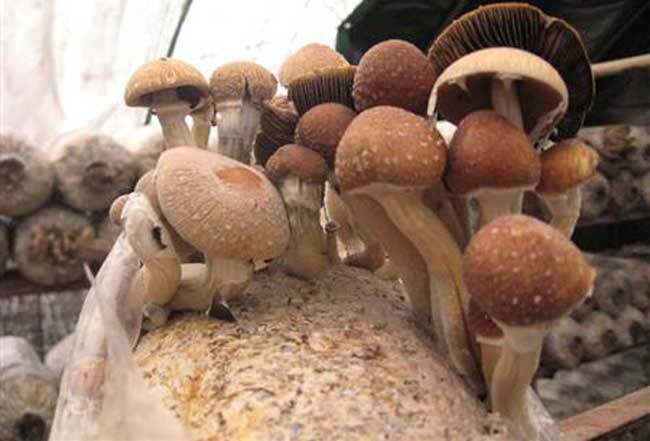
The tea tree mushroom, commonly known as the tea mushroom, has a delicious flavor, is crisp and tender, and is fragrant without any off-odor. The mushroom body contains 18 amino acids and various mineral elements. Traditional Chinese medicine holds that the tea tree mushroom is neutral in nature, sweet and warm, and has effects such as removing dampness, promoting diuresis, and strengthening the spleen and stomach. It is one of the delicious and rare edible fungi and is currently the most favored mushroom dish at banquets and restaurants. The tea tree mushroom mainly comes from the wild. In China, it began in 1972, and in 1990 large-area artificial cultivation succeeded in Guangchang, Jiangxi, after which large-scale production followed.
Biological Characteristics of the Tea Tree Mushroom
1. Temperature
The tea tree mushroom grows in temperate to subtropical regions, so this fungus is relatively resistant to high temperatures and can also tolerate low temperatures. Its mycelium can grow normally at 5-35°C, with the optimum temperature range being 18-28°C. The tea tree mushroom is a constant-temperature fruiting fungus; fruiting does not require stimulation by temperature differences. Its fruiting body formation temperature is 13-28°C, with the optimum being 18-24°C. At 20°C, fruiting is fast.
2. Moisture
The water content of the tea tree mushroom cultivation substrate can be controlled at about 65%, and growth is relatively fast. If the substrate is too dry or too wet, it is unfavorable for mycelial growth. When fruiting bodies form, a relatively high air relative humidity is required, while during the growth process a lower humidity is required. Therefore, during the fruiting period, the air relative humidity should first be maintained at 100%, and after fruiting begins it should be lowered to 85%, which is beneficial to the development and growth of the fruiting bodies.
3. Air
The tea tree mushroom is an aerobic fungus. During the mycelial growth stage, a supply of fresh air must be ensured, so the cultivation environment for the bags must be well ventilated. However, during the fruiting and fruiting body growth stages, a slightly higher carbon dioxide concentration is required, which is beneficial for fruiting and stipe elongation, thereby increasing yield. Therefore, during fruiting body development, ventilation should be appropriately reduced. This phenomenon is similar to the cultivation of enoki mushroom.
4. Nutrition
The tea tree mushroom is a wood-rotting fungus, often growing wild on dead tea-oil tree stumps or on decayed parts of poplar, willow, and other trees. Because it lacks laccase activity, its ability to utilize lignin is weak, but its protease activity is strong, and its ability to utilize protein is strong. The optimum carbon-to-nitrogen ratio is 60:1. Increasing the proportion of organic nitrogen in the cultivation substrate (such as wheat bran, rice bran, corn flour, cake fertilizer, etc.) is beneficial for increasing yield.
5. Light
The mycelial growth process of the tea tree mushroom generally does not require light, but its fruiting bodies have obvious phototropism. Both primordium formation and fruiting body development require a certain amount of scattered light. Therefore, during fruiting, the cultivation room requires relatively strong scattered light, which is beneficial to primordium formation and fruiting body growth.
6. pH Value
The tea tree mushroom prefers to grow in an acidic environment. The mycelium can grow normally at pH 4-6.6, with the optimum pH being 5.5-6. It grows poorly in a neutral to slightly alkaline environment. Therefore, natural pH can generally be used in cultivation, but alkalinity must be prevented.
Cultivation Techniques for the Tea Tree Mushroom
1. Selection and Breeding of Superior Strains
At present, there are many tea tree mushroom strains. In the early period, the tea tree mushroom strains promoted in the Guangchang area of Jiangxi Province included AS78, AS982, and others selected by the Strain Preservation Center of the Ganzhou region, Jiangxi. In recent years, the tea tree mushroom strains promoted in Fujian Province include Tea Tree Mushroom-1, Tea Tree Mushroom-3, Tea Tree Mushroom-5, and others selected by the Sanming Institute of Fungi. Their spawn production is as follows:
① Mother spawn (first-level spawn)
Use enriched PDA medium (potato 200 g, glucose 15 g, sucrose 5 g, magnesium sulfate 0.5 g, monopotassium phosphate 0.5 g, B1 1 g, water 1000 ml) or wheat bran-added PDA medium (potato 200 g, sucrose 20 g, wheat bran 10 g, water 1000 mL); both formulas use agar 20 g. Generally, the mycelium from the latter formula is thicker and stronger. The mother spawn made with the above formulas can be cultured at a constant temperature of about 26°C for about 7 days.
② Original spawn (second-level spawn)
The original spawn made with sawdust medium (sawdust 78%, wheat bran 20%, sucrose 1%, gypsum powder or calcium carbonate 1%, with a small amount of superphosphate, magnesium sulfate, and monopotassium phosphate) can be cultured at a constant temperature of about 25°C for about 7 days.
③ Cultivation spawn (third-level spawn)
The spawn made with sawdust medium or cottonseed hull medium (cottonseed hull 78%, wheat bran 20%, sucrose 1%, gypsum powder 1%) can be cultured at 24-28°C for about 30 days. Tea tree mushroom spawn requires thick, dense white mycelium. In the later stage of culture, it is normal for reddish-brown streaks to sometimes appear on the mother spawn slant, or for small fruiting bodies like those of enoki mushroom to grow on the surface of the original spawn or cultivation spawn. However, if the mycelium is sparse, weak, and thin, if the substrate is not fully colonized, or if there are miscellaneous-colored spots or yellow liquid appears, it should not be used.
2. Cultivation Season
Because the tea tree mushroom is relatively resistant to high temperatures and can also tolerate low temperatures, it can be cultivated year-round in most areas of Fujian, Guangdong, Zhejiang, and other provinces. However, cultivation in different seasons results in different yields and quality. Therefore, to achieve high yield and high efficiency in tea tree mushroom cultivation, an appropriate cultivation period must be selected. According to cultivation trials in various places, spring or autumn cultivation is suitable in most areas of China, especially spring cultivation, which gives higher yields. In production, spring cultivation is generally arranged so that fruiting occurs when the temperature reaches 20°C, and autumn cultivation so that fruiting occurs when the temperature falls to 25°C. Each place can choose the appropriate cultivation period according to local climatic conditions. For example, in the eastern Fujian region, the suitable spring cultivation period is bag making from January to February, with fruiting in April-May, or bag making from September to October, with fruiting in November-December.
3. Bag Production and Cultivation Management
① Cultivation substrate formula
According to the raw material conditions in each place, choose the formula with benefit as the criterion. Reference formulas include:
a. Tea branch powder (or cottonseed hull) 77.5%, wheat bran or rice bran 20%, gypsum powder 1%, sucrose 1%, superphosphate 0.5%.
b. Straw powder 38%, sawdust or cottonseed hull 38%, wheat bran or rice bran 19.5%, gypsum powder 1%, sucrose 1%, superphosphate 0.5%, tea seed cake 2%.
② Bag production
Mix according to the required quantity and proportions for production, and add water to mix the substrate. The substrate-to-water ratio is preferably about 1:1.2. Raw materials must be fresh, without mold or insect damage. Mixing must be uniform and consistent; in particular, cottonseed hulls must not have dry kernels, otherwise sterilization will not be thorough. Use low-pressure polyethylene plastic bags with specifications of 15-17 cm × 35 cm × 0.05 cm. Each bag has a dry material weight of about 350 g and a wet weight of 720-750 g. Fill with an appropriate degree of tightness, with a height of 14-15 cm, and slightly level the surface. Promptly put on the neck ring and insert the cotton plug properly (or tie tightly with braided thread) to prevent evaporation and loss of moisture. Then carry out atmospheric-pressure sterilization (raise the temperature to 100°C within 4 hours and maintain for 12-14 hours). The tea tree mushroom has weak resistance to contaminating microorganisms, so sterilization must be thorough. During the production process, strictly prevent piercing, abrasion, and perforation of the bags to prevent contamination by foreign microorganisms.
③ Bag inoculation
After sterilization, inoculate only after the substrate temperature drops below 30°C. The inoculation box or inoculation room should be completely disinfected. The inoculation amount is 30-40 bags per bottle. After inoculation, culture in the dark. Tea tree mushroom mycelium recovers and colonizes slowly and is prone to contamination by foreign microorganisms and pests. Therefore, after inoculation, pay attention to keeping the culture room clean, dry, and ventilated, prevent the influence of high and low temperatures, and promote uniform mycelial growth. Check frequently. If bags contaminated by foreign microorganisms are found, promptly remove and handle them to prevent spread and diffusion. Generally, after inoculation, the mycelium can fully colonize the bags in 30-40 days.
④ Fruiting management
Under normal conditions, the tea tree mushroom can fruit about 50 days after inoculation. Before fruiting, primordium induction management should be carried out. During primordium induction, the bags can be placed upright or stacked in a wall style. Then remove the cotton plug or cut the tying thread, straighten the bag opening, and arrange the bags to induce primordia. When placed upright, about 80 bags are arranged per square meter. Let the mycelium transition from vegetative growth to reproductive growth. The color of the substrate surface also changes accordingly: at first there is yellow liquid, then it turns brown, and small mushroom buds appear. During this period, increase the air relative humidity and maintain it at 95-98%, and spray water in the morning and evening to preserve moisture. Control light intensity at 500-1000 lux and temperature at 18-24°C. In this way, a large number of fruiting bodies appear 10-15 days after opening the bags. After fruiting, the space humidity must be appropriately lowered and ventilation reduced. At this time, the relative humidity of the cultivation space drops to 90-95%, and the frequency and duration of ventilation are reduced to prevent excessive oxygen from causing early veil opening, short stipes, and thin flesh. If the mushroom buds are too dense, thinning can also be carried out, with 6-8 per bag. A moderate number gives uniform growth, good shape, and thick stipes; otherwise, the quality and yield of the mushrooms are affected. Harvest when the caps of the tea tree mushroom fruiting bodies begin to flatten and the annulus has not yet fallen off. Because the stipe of the tea tree mushroom is relatively brittle and easily broken, when harvesting, grasp the base and pull it down, while preventing damage to young mushrooms. After harvesting, the substrate surface of the bags must be cleaned thoroughly, the bag openings pinched together, and the mycelium allowed to rest and recover for 2-3 days. Then pull open the bag openings, give one heavy watering, and repeat the above management. After 5-7 days, another flush of mushrooms can grow. A total of 4-6 flushes can be harvested.
Pest and Disease Control of the Tea Tree Mushroom
During bag production and cultivation management, the tea tree mushroom often suffers from contamination by foreign microorganisms and invasion by diseases and pests. Therefore, during cultivation, pest and disease control must be strengthened. Common contamination by foreign microorganisms in tea tree cultivation includes green mold, red Neurospora, Rhizopus, and others. Their control measures are the same as those for shiitake cultivation.
The common pest damage in tea tree mushroom cultivation is caused by the larvae of mushroom gnats and mushroom flies. Their larvae are small and difficult to see with the naked eye. They feed directly on the mycelium and the nutrients of the substrate within the cultivation material, causing mycelial degeneration and mushroom bud shrinkage, and in severe cases total loss of yield. Control measures include:
1. Maintain good sanitation and eliminate pest sources: insect-infested mushrooms, rotten mushrooms, mushroom heads, mushroom roots, discarded cultivation material, garbage, and so on inside and outside the mushroom house should be promptly cleaned up and destroyed, eliminating breeding grounds for pests, preventing adults from coming to lay eggs or larvae from pupating into adults and flying into the mushroom house to hatch eggs, eliminating pest sources, and reducing pest damage.
2. Light trapping and killing: the adults of mushroom gnats and mushroom flies are phototactic and can be trapped and killed with black light lamps or high-voltage electrostatic insect-killing lamps.
3. Chemical control: use a 5% fipronil 1500-fold solution (add 10 ml of this product to 30 jin of water in one sprayer) and spray it directly on the bags. The pesticide fipronil has contact, stomach-poison, and systemic translaminar effects on mushroom gnats and mushroom flies. If larval damage is severe, spray once more after three days.