Key Cultivation Techniques and Methods for Three-Cherry Pepper Explained in Detail
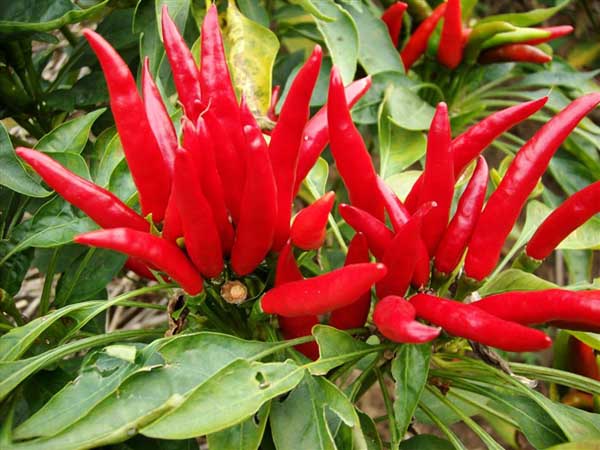
Three-Cherry Pepper, also known as Japanese Three-Cherry Pepper, is a variety of clustered pepper (facing-heaven chili), with a compact plant type, clustered fruits growing upward, and thin flesh. It has a strong spicy flavor and high oil content. Three-Cherry Pepper has a field growth period of 120-135 days, a plant height of 40-60 cm, 8-15 branches per plant, and 150-200 peppers per plant. Its maturity period is concentrated, allowing a one-time harvest, with a yield of 200-300 kg of dried peppers per mu.
Three-Cherry Pepper is generally grown using a wheat-pepper intercropping pattern: when sowing wheat before the new year, sow one drill of wheat and leave one drill of open space (120 cm strip, sow three rows of wheat occupying 40 cm in width, leaving an 80 cm gap), then transplant and establish the seedlings in late April, and harvest in mid-to-late October.
Seedling Raising Techniques
Three-Cherry Pepper is generally sown and raised as seedlings in early to mid-March, and must be raised in a sunny cold frame or small arched shed. To plant one mu, 35-40 sq m of seedlings must be raised. After treating the seeds, choose a "cold tail, warm head" period for sowing, meaning 5-6 consecutive sunny days should be maintained after sowing. Seedbed management should focus on three stages: in the early stage, do well in keeping warm and preventing freezing, promoting early emergence and full emergence of seedlings; in the middle stage, reasonably regulate temperature and humidity to prevent seedling scorching, seedling wilting, and seedling collapse; in the later stage, strengthen hardening of the seedlings to prevent spindly growth and improve the adaptability and stress resistance of the seedlings. When the seedlings emerge and the cotyledons unfold, thin the seedlings in time; when 2-3 true leaves have unfolded, keep the seedling spacing at 3-5 cm; when the seedlings have 4-6 leaves, gradually increase ventilation, and 5-7 days before transplanting, remove the film covering entirely during the day.
Timely Transplanting
For Three-Cherry Pepper in wheat-pepper intercropping, on the basis of applying sufficient base fertilizer when sowing wheat before the new year, apply 25 kg of diammonium phosphate per mu, 10-15 kg of urea or 30-40 kg of ammonium bicarbonate as base fertilizer. The transplanting and establishing time is generally in mid-to-late April. One day before transplanting, water the seedbed thoroughly so that more soil is carried when lifting the seedlings and fewer roots are damaged. When transplanting, plant three rows in the 80 cm gap, with a row spacing of 20-25 cm and a plant spacing of about 25 cm, planting two plants per hole, with 6,500-7,000 holes per mu.
Field Management
Three-Cherry Pepper generally uses a one-time fertilization method, with no additional fertilizer applied during the growth period. However, for plots with poor fertilizer retention or fertilizer deficiency, quick-acting chemical fertilizer can be applied after the peppers set fruit. During the entire growth period, the soil surface should be kept alternately dry and moist. The yield of Three-Cherry Pepper is mainly concentrated on the side branches; the yield on the main stem accounts for only 10%, while the yield on the side branches accounts for 80-90%. Therefore, within 5-7 days after the seedlings recover, the growing tips should be removed in time to limit main stem growth and promote side branch sprouting.
Timely Harvesting
Three-Cherry Pepper is generally harvested once by pulling up the whole plant before Frost's Descent. Therefore, in order to promote the upper green fruits turning red, about 10 days before Frost's Descent, spray ethephon over the entire field once. Before the pepper plants are pulled up, all leaves fall off and all fruits turn red. After the whole plants are pulled up, spread them in the field or hang them upside down on trees, ropes, or built racks to dry. After the whole Three-Cherry Pepper plants are thoroughly sun-dried, sprinkle water 12 hours before picking to let them regain moisture, then grade and pick according to color and completeness. After picking, spread them thinly to continue drying, and they can be sold after being sun-dried.