Detailed Guide to Pest Control Techniques for Onion, Garlic and Chive Family Vegetables
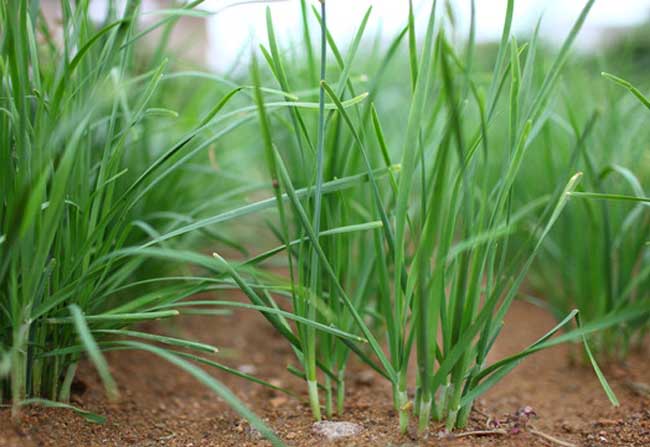
The common pests of onion, garlic and chive family vegetables mainly include bean seed fly, onion thrips, onion leaf miner, chive jumping plant bug and chive root maggot.
Onion maggot
The onion maggot mainly damages garlic, scallions and onions, and sometimes also damages chives. The larvae damage the seeds after sowing and the young stems and roots, so that the seeds cannot germinate and the seedlings die. The onion maggot bores into and feeds on the underground garlic cloves after planting; in mild cases it causes the garlic cloves to split open and the aboveground parts to turn yellow, and in severe cases it causes the whole plant to die.
Control methods for the onion maggot
1. Agricultural control: Apply organic fertilizer only after it is fully decomposed; when fertilizing, spread it evenly and deeply and keep it separated from the seeds, then cover with soil immediately after application. Select high-quality seeds and seedlings, and sow in soil at the appropriate time. Keep soil moisture moderately dry and wet; after maggot damage occurs, heavy flooding irrigation can be used, once every other day, for 2 consecutive times.
2. Chemical control: At sowing, apply toxic soil in the furrow (25 grams of trichlorfon per mu, 15 kilograms of fine soil) to kill the larvae. During the peak emergence of adults, spray with 90% trichlorfon or 50% dichlorvos emulsifiable concentrate at 1000 times dilution, or 50% phoxim emulsifiable concentrate at 1000 times dilution, and spray again after 6-8 days.
Onion thrips
Onion thrips mainly damages Welsh onions, garlic, onions, chives, as well as melons and solanaceous vegetables. Adults and nymphs rasp and suck the epidermis of the host's heart leaves, tender stems, tender buds and other tissues and feed on the sap. The damaged parts show long strip-shaped white spots; in severe cases, the onion leaves become twisted, withered and yellow, shrink and droop, and the pest also transmits viral diseases of many crops. It occurs severely under dry, rain-scarce and warm environmental conditions.
Control methods for onion thrips:
1. Agricultural control: Remove residual plants and fallen leaves from the field and burn them, and deep-plow the land in time to reduce the source of insects. Irrigate frequently with a small amount of water to prevent drought, and apply more phosphorus and potassium fertilizer.
2. Physical control: Taking advantage of the thrips' habit of being attracted to blue, set up blue boards coated with machine oil in the field to trap and kill them. 3. Chemical control: Alternately spray 20% Haoniandong emulsifiable concentrate at 2000-2500 times dilution, or 2.5% deltamethrin emulsifiable concentrate, or 20% fenvalerate-malathion emulsifiable concentrate at 1000-1500 times dilution, or 2.5% lambda-cyhalothrin emulsifiable concentrate at 3000-5000 times dilution, or Actara at 1000-15000 times dilution. Spray again after 6-8 days.
Onion leaf miner moth
The onion leaf miner uses its larvae to mine and feed on the leaf mesophyll within the leaf tissue, forming winding and turning tunnels; only the upper and lower epidermis remain at the damaged spots, and in severe cases the whole leaf can wither and yield decreases.
Control methods for the onion leaf miner moth
1. Agricultural control: In early spring, remove weeds inside and around the field in time and dispose of residual plants to reduce the source of insects. Implement formula fertilization and do a good job in fertilizer and water management.
2. Trap and kill adults: Use sugar-vinegar liquid to trap and kill adults.
3. Chemical control: Use 98% cartap soluble powder at 2000 times dilution, or 20% imidacloprid soluble concentrate at 2000 times dilution, or 20% Haoniandong emulsifiable concentrate at 1000 times dilution, or 10% bromine-malathion emulsifiable concentrate or fenvalerate-malathion emulsifiable concentrate at 1500-2000 times dilution, or 40% Qixingbao emulsifiable concentrate at 600-800 times dilution; be careful to spray alternately in a timely manner.
Chive jumping plant bug
The chive jumping plant bug uses adults and nymphs to pierce and suck chives, producing white to light brown spots; in severe cases, the leaves of the whole plant turn yellow and wither.
Control methods for the chive jumping plant bug
1. Agricultural control: Winter plowing and cleaning of the field, removing fallen leaves and dry grass at the field edges; watering at the appropriate time can kill some adults and first-generation eggs.
2. Chemical control: Target mainly adults; nymphs should be controlled before they disperse. Spray with 80% dichlorvos emulsifiable concentrate at 1500-2000 times dilution, or 2.5% deltamethrin at 3000 times dilution, or 50% phoxim-cypermethrin emulsifiable concentrate at 3000-4000 times dilution, spraying once every 6-8 days, for 2-3 consecutive sprays.
Chive root maggot
The chive late-eye fungus gnat, also known as the chive maggot, mainly damages chives, Welsh onions and garlic. Chives suffer the most severe damage. The larvae gather and bore into the underground bulbs and tender stems of chives, causing the bulbs to rot and the chive leaves to wither and yellow and then die. In mild cases it causes missing plants and gaps in the rows, and in severe cases the crop is destroyed. The larvae like moisture and fear dryness; in moist loamy soil, juicy tender stems and bulbs suffer severe damage.
Control methods for the chive root maggot
1. Agricultural control: Winter irrigation or spring irrigation of the vegetable plot can eliminate some larvae, such as with a medicinal liquid (8-10 kilograms of ammonia water per mu). Sun-dry the soil and expose the roots for 5-6 days, and before covering with soil, broadcast 50% malathion powder or 1.5% dimethoate powder (2 kilograms per mu), or use an emulsifiable concentrate sprayed on fine soil to make toxic soil and broadcast it.
2. Chemical control: During the peak emergence of adults, spray with 10% fenvalerate-malathion emulsifiable concentrate at 3000 times dilution, or 2.5% deltamethrin at 3000 times dilution, or 20% fenvalerate at 3000 times dilution, or 50% phoxim emulsifiable concentrate at 1000 times dilution; spraying at 9-10 a.m. is best. When leaf tips are found turning yellow and soft and gradually lodging toward the ground in the field, use 20% chlorpyrifos-cypermethrin emulsifiable concentrate at 2000 times dilution, or 2.5% deltamethrin emulsifiable concentrate at 5000 times dilution, or 50% phoxim emulsifiable concentrate at 2000-3000 times dilution, etc., for root drenching control.