What are the common misconceptions about greenhouse vegetable growing?
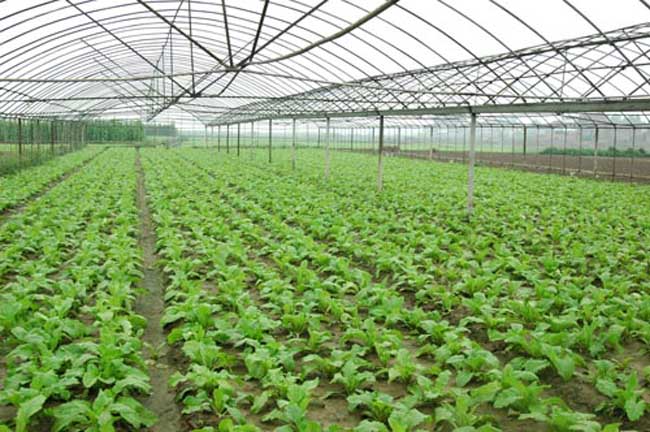
In daily life, many vegetable growers make wrong judgments and take wrong actions in vegetable growing based on intuitive views or unripe experience. Below, the common mistakes are corrected for growers, along with solutions.
Misconception 1: Believing that more fertilizer means more output
Many vegetable growers think that heavily fertilizing greenhouse vegetable plots will bring high yields. In fact, excessive fertilization of vegetables very easily causes fertilizer damage. Solutions: First, for greenhouses that have been planted for more than 3 years, control chicken manure and cow manure at no more than 2500 kg each, and reduce chemical fertilizers by about 50%. Second, in plots with high total salt concentration, focus on applying cow manure, humic acid fertilizer and EM microbial fertilizer to raise the soil carbon-to-nitrogen ratio, loosen the soil and improve aeration, and reduce salt and fertilizer damage. Third, supplement boron, zinc and magnesium fertilizers to balance soil nutrients, creating conditions for reducing input and striving for sustained high yields.
Misconception 2: Believing that keeping more seedlings means high yield
Many vegetable growers tend to keep too many seedlings, believing that keeping more seedlings can give high yields. In fact, because winter temperatures are low, light is weak, photosynthesis is poor and carbohydrate synthesis is low, only a reasonable density can give high yields. Solutions: First, for overwintering crops, reasonable sparse planting is better. Second, to make full use of space, adopt the management method of dense planting in the early stage, thinning plants in the middle stage and thinning branches in the late stage, with spacing based on leaves and branches not being crowded, so as to increase total yield and total benefit.
Misconception 3: Believing that the higher the temperature, the faster vegetables grow
In fact, vegetables have an upper limit for temperature, generally 25-32°C. If the temperature is too high, respiration increases, the organism's operation and physiological activities become disordered, plants grow leggy, vegetative and reproductive growth become unbalanced, and yield actually declines. Solutions: First, set up two ventilation openings in the greenhouse to cool it down in time. Second, manage according to the temperature required at each growth stage of various vegetables and the suitable temperature requirements for the growth of each organ, to prevent high temperature from growing vines without growing fruit.
Misconception 4: Believing that vigorous vines mean vegetables are growing well
Most people think vigorous vines mean a good crop, but in fact, with more water the leaves flourish and the roots must be shallow, nutrition is incomplete and yield is low, and excessive vegetative growth inevitably affects reproductive growth, so yield actually decreases. Solutions: First, at the seedling stage, aim for weak plants with deep roots, control water and control plant growth to promote roots, so that the underground part absorbs about 60% of photosynthetic products, and in the middle and late stages the underground and aboveground absorption each account for 50%. Second, in the early stage the plant body consumes 60% of nutrients and reproductive growth accounts for 40%; in the middle stage each accounts for 50%; in the late stage reproductive growth accounts for 60%-70% and vegetative growth only 30%-40%, that is, ensure a certain assimilating leaf area in the early stage, and control vines and promote fruit in the late stage to increase yield.
Misconception 5: Believing that frequent spraying means fewer diseases
Many vegetable growers spray once every 2-3 days in the middle and late stages of vegetable growth, believing that frequent spraying can prevent diseases from spreading. Solutions: First, identify the disease accurately and spray the right remedy; it is best to choose copper-containing and zinc-containing agents, which can kill bacteria, enhance the plant's ability to resist pathogen invasion and also promote crop growth. Second, improve the ecological environment; when branches and leaves are dense and ventilation is poor, spraying every day will not necessarily work well, so leaves should be thinned to lower the temperature. Third, for dead seedlings caused by soil-borne bacteria, focus on medication prevention at the seedling stage. If the source of disease is ignored, the seedlings become infected, symptoms appear later, and once the pathogen has invaded the plant body, frequent spraying will not work well either.
Misconception 6: Believing that more cropping cycles mean more income
Many people think that after investing in building a greenhouse, the land should not be left idle, so they follow the main crop with a secondary crop and interplant the main crop with a secondary crop, planting many cropping cycles, but the result is often the opposite, with poor actual results and low benefits. Solutions: First, for one main overwintering crop, it is better to plant one crop a year, and for spring and autumn crops, two crops a year is suitable. Old plants of eggplant, pepper, tomato and cucumber can be regenerated to continue harvesting for one more crop; when prices are low, pull up the plants and let the land dry. Second, each year in summer leave a period of time to deep-plow the land, let rain leach and press down salt, expose it to the sun to sterilize, close the greenhouse to kill insects, and mature the soil.