How to prevent and control nutrient deficiencies in cucumbers?
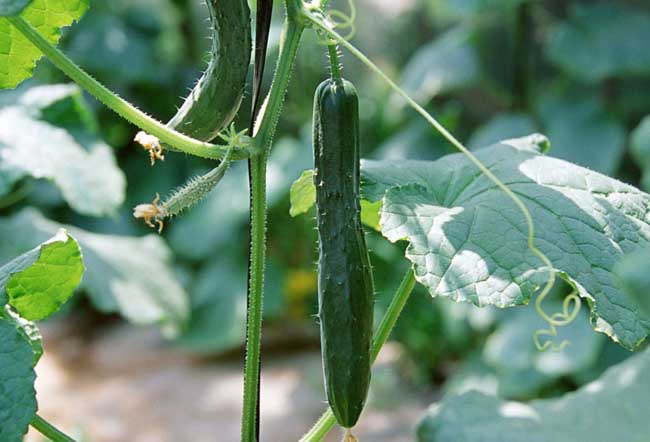
The common nutrient deficiencies in cucumber cultivation are: potassium deficiency, magnesium deficiency and boron deficiency, 3 kinds. Their symptoms and prevention and control methods are as follows:
Potassium deficiency
Slight yellowing appears at the leaf margins, then the leaf margins die back, and as the leaves grow, the leaves curl outward.
Prevention and control method: apply potassium fertilizer promptly; when applying potassium fertilizer, it should be done together with iron supplementation.
Magnesium deficiency
In the lower leaves of the cucumber, the mesophyll between the veins gradually loses green and turns yellow. With further development, all of it turns yellow except for a little green at the leaf margins, and in severe cases the upper leaves also turn yellow from the inner side.
Prevention and control method: increase the application of organic fertilizer, use formula fertilization, and avoid excessive application of nitrogen fertilizer causing the soil to become acidic and affecting the absorption of calcium and magnesium. When magnesium is deficient, foliar spraying of 1%-2% magnesium sulfate, etc. can be used. Note that magnesium supplementation should be combined with potassium and zinc supplementation.
Boron deficiency
When boron is deficient, the growing point dies, the flower organs develop incompletely, the leaves, stems and fruits stop growing, the leaf margins turn yellow, the yellowed part is relatively wide, and there are cracks on the fruit skin.
Prevention and control measures: increase the application of barnyard manure, do not apply too much lime, and water reasonably. Supplement boron fertilizer promptly; chelated boron series can be used, and avoid applying only borax-type fertilizers and causing damage to the soil.