Detailed Explanation of Key Points for High-Yield Cultivation Techniques of Aconite
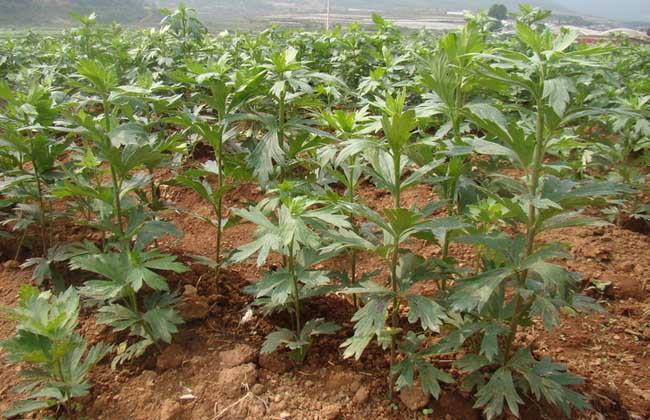
Aconite, also known as Wutou, Caowu, Tiehua, etc., is a plant of the genus Aconitum in the Ranunculaceae family. It is mainly produced in Sichuan, Hubei, Hunan and other places, and has extremely high cultivation value. It prefers warm, humid and sunny environments, is cold-resistant, and avoids continuous cropping. It is best cultivated in deep, fertile, loose soil with good drainage and rich in humus. Let's take a look at the high-yield cultivation techniques of aconite below!
Site Selection and Land Preparation for Aconite
The aconite planting site should be selected in mountainous land with deep, loose and fertile soil. Starting from Major Snow, in late October, apply 4000-5000 kg of barnyard manure or compost per mu as base fertilizer, make beds 1.2 m wide with a bed surface width of 1 m, mix 50 kg of superphosphate and 50 kg of rapeseed cake, crush finely and spread evenly on the bed surface, stir well, and set aside for planting.
Propagation Techniques of Aconite
1. Aconite is propagated by tuberous roots. First, select seed roots. Tuberous roots can be divided into three grades by size: the first grade weighs 2 kg per 100 tuberous roots, the second grade weighs 0.75-1.75 kg, and the third grade weighs 0.25-0.5 kg. The first and third grades are mostly used as Wutou seed roots, while the second grade tuberous roots are used as aconite seed roots. Each mu uses 11000-12000 tuberous roots, amounting to 130-150 kg. Any tuberous roots with black scars on the skin, water rot disease, wounds, or pests and diseases must not be used as seed.
2. After the aconite seed roots are dug out, spread them in a leeward and shady place (about 6 cm thick) and air-dry for 7-15 days, so that the moisture in the cortex is slightly reduced before planting. In early to mid-November, plant in the beds in order with a plant-to-row spacing of 15x18 cm and a hole depth of 12 cm, settling the seedlings into the holes and planting 3 rows, then cover with 9 cm of soil, forming a fish-back shape to facilitate drainage. When planting, an extra tuberous root may be planted every 10 plants to facilitate replanting and ensure a high yield.
Field Management of Aconite
1. Intertillage and Replanting: During aconite cultivation, shallow hoeing and weeding should be done once around mid-November to keep the field free of weeds. In early spring of the following year, after the seedlings emerge completely, replant promptly, taking healthy seedlings with soil for replanting, firm the soil, and water with clean water to help them survive.
2. Topdressing and Earthing Up: Aconite is generally topdressed 3 times. In early February, when 5-6 leaves appear, apply 3000-3500 kg of urine-based fertilizer per mu, digging small trenches between rows and pouring it along the trenches once. The second time is in May after root trimming, apply 3000-3500 kg of human and animal manure, or 250 kg of oil cake fertilizer, digging 1 hole every 3 plants, applying the fertilizer, and covering with soil. The third time is in early August, using 1000 kg of human and animal manure water per mu and 10 kg of urea, mixed with 1000 kg of water for irrigation. While topdressing, earth up at the same time, 6-15 cm thick, forming a fish-back shape.
3. Tip Removal and Root Trimming: This is done when aconite seedlings are 30-36 cm tall. First remove the tall tips, after 7 days remove the tips of second-class seedlings, and after another 7 days remove the tips of third-class seedlings. After tip removal, axillary buds grow quickly and should be removed promptly. Before Grain Rain in early April and after the Beginning of Summer, trim the roots once: gently open the soil around the roots, evenly retain 2-3 healthy new aconite tubers, and cut off and remove all the remaining small tubers, being careful not to damage the roots and stems.
4. Harvesting and Processing: Aconite is generally harvested in late July. Dig out the whole plant with a two-tooth rake, shake off the mud and sand, pick off the aconite tubers, and remove the fibrous roots to obtain mud aconite, which must be processed immediately. At the same time, cut off the mother roots and dry them in the sun to obtain Wutou.
Pest and Disease Control of Aconite
1. Southern Blight: It mostly occurs in summer during high-temperature and rainy seasons, damaging the rhizome of aconite. Select disease-free Wutou as seed, practice crop rotation, and when trimming roots, mix 2 kg of quintozene powder per mu with 50 kg of dry fine soil, apply it around the rhizome and then cover with soil. In the early stage of the disease, bury diseased plants and diseased soil deeply, and drench healthy plants near the diseased plants with 5% lime or 1000-fold solution of 50% carbendazim wettable powder.
2. Downy Mildew: Downy mildew generally occurs from March to May, damaging leaves. Pull out diseased seedlings promptly, and spray with 1:1:200 Bordeaux mixture or 800-fold solution of 65% amobam wettable powder.
3. Root Rot: Root rot generally occurs from April to July, damaging the roots. Do not damage the rhizome when trimming roots, do not apply too much alkaline fertilizer, and drench with 1000-fold solution of 50% carbendazim wettable powder.
4. Red Aphids: Red aphids generally begin to appear in late March or early April, peak from May to June, and damage the tender stems at the top of the plant. Control method: spray with 800-1500-fold solution of 40% dimethoate emulsifiable concentrate.