Detailed explanation of high-yield castor bean cultivation techniques, teaching you scientific cultivation and management
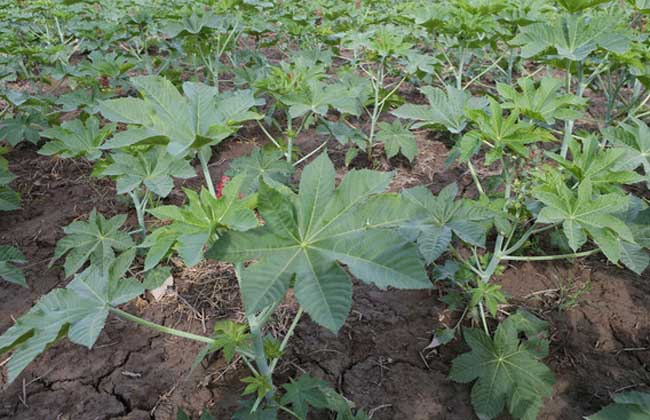
Castor bean, also known as large hemp seed, old hemp, grass hemp, etc., is an annual or perennial herbaceous plant of the genus Ricinus in the Euphorbiaceae family. In tropical or southern regions it often becomes a perennial shrub or small tree. It originated in Egypt, Ethiopia, and India, and later spread to Brazil, Thailand, Argentina, the United States, and other countries. Castor bean in our country was introduced from India. Let us take a look at high-yield castor bean cultivation techniques below!
Land selection and preparation
Castor bean has strong adaptability and can be planted in all kinds of soil. It can be scattered-planted in spare land along ditches and roadsides and around houses, or planted in patches on barren hills and slopes. For patch planting, plow the land 4 to 6 weeks before sowing to let the soil mature. Scattered planting also requires plowing in advance and digging holes 35 cm deep and 35 cm wide. Because castor bean is afraid of waterlogging, if planting in low-lying land, the land should first be converted into raised beds, with drainage ditches opened between the beds. When planting castor bean on wasteland, convert the slope into contour strip terraces to maintain soil and water and facilitate management and harvesting. On steep slopes above 25 degrees, hole planting is suitable.
Seed treatment
1. Seed selection: Before harvest, select castor bean plants that grow vigorously, have many branches, bear fruit early, and have many capsules. Collect the capsules with the most fruits and the earliest maturity, dry them in the sun and thresh them. After drying, put them in baskets or bags and store them in a dry, ventilated place. However, it is best to purchase excellent hybrid seeds from scientific research or production units.
2. Seed soaking and germination: Before sowing, soak the seeds in warm water at 40 to 50°C for 24 hours, then remove them and bury them in moist sand. The seeds generally need 5 to 7 days to germinate, and they can be sown immediately after germination. If sowing is to be delayed, soak the seeds in warm water for 48 hours to soften the hard shell and allow the seeds to absorb enough water, so as to speed up germination. After soaking, the seeds can be sown in time or germinated first. When some seeds show sprouts, they can be sown.
Fine sowing
1. Sowing time: Castor bean is generally sown from "Jingzhe" to "Lixia". Some provinces and regions in South China and Southwest China sow earlier, while some provinces and regions in East China and North China generally sow in April to May. In some provinces and regions in Southwest China, sowing can be done in spring, summer, and autumn, and in the tropical regions of South China, sowing can also be done in winter.
2. Sowing methods: There are two sowing methods for castor bean: direct sowing and transplanting. For direct sowing, place 2 to 3 seeds per hole, with a seed spacing of 3 to 5 cm, and cover with soil 2 to 3 cm thick. For transplanting, choose a sheltered, sunny, conveniently watered, and relatively fertile loam or sandy loam, deeply plow and apply fertilizer, level it, and make a seedbed 1 m wide, then sow, water, and cover the seeds.
3. Timely transplanting: When castor bean seedlings emerge and grow 3 to 4 true leaves, they can be transplanted with soil attached. After planting, water to settle the roots, and water once every 3 to 5 days until they survive. The density is generally 1.7 to 2 m square, with about 160 plants per mu. For perennial castor bean, it can be slightly denser, with 200 to 250 plants per mu being suitable. Planting on steep slopes and gentle slopes can also be appropriately slightly denser.
Field management
1. Reasonable fertilization: Castor bean has a strong ability to absorb fertilizer. In the early stage, it needs more nitrogen fertilizer, and after flowering, phosphorus and potassium fertilizer should be mainly applied. Therefore, more composted barnyard manure or farmyard manure mixed with plant ash should be used as base fertilizer. For large-scale planting, furrow fertilization can be carried out, or two handfuls of compost can be applied in each hole, covered with soil, and then sown. For scattered planting, hole application can be used. After sowing, cover the holes with plant ash mixed with fine soil, and apply dilute human and animal manure when thinning seedlings. If planting on reclaimed wasteland, soybeans or peanuts can be interplanted between the castor bean rows after emergence.
2. Thinning and earthing up: When castor bean seedlings are 10 cm tall, thin them, remove thin and weak seedlings that are too dense, and combine this with one cultivation and weeding. When the seedlings are 17 to 20 cm tall, final thinning can be done, keeping one strong seedling per hole, and carry out a second cultivation and weeding. For planting on barren hills and slopes, final thinning can be delayed somewhat. Before flowering, a third cultivation and weeding can be carried out. When the seedlings are 30 cm tall, combine cultivation with earthing up around the roots to stabilize the root system and provide drought resistance, wind resistance, and lodging resistance.
3. Topping and pinching: When castor bean grows 7 to 8 true leaves, top it. Later, according to the growth of the castor bean, the tips growing from each branch can be cut again to promote branching and increase yield. At the same time, it dwarfsthe plant and makes fruit harvesting easier. When the plant grows to 55 to 60 cm, prune it, cutting off dry branches and diseased and pest-damaged branches to promote more new shoots and prevent the spread of diseases and pests. After pruning, topdress in time, and in dry weather, water promptly to resist drought.
4. Overwintering management: After harvesting perennial castor bean, overwintering protection should be carried out well. In places with heavy frost and snow, wrap the castor bean stalks with rice straw before Frost's Descent and remove it after the beginning of spring the following year. For branches or main stems that have already been damaged by freezing, saw them off 35 cm above the ground and paste the cut with cow dung. After the beginning of spring, the main stump can sprout and grow again. In areas with severe freezing damage, saw off the main stem before frost, leave a stump 20 to 30 cm above the ground, paste the cut with cow dung, and then cover and seal the castor bean stump with soil. In the following spring or when there is no snowfall, uncover the soil and it can sprout and grow branches.
5. Disease and pest control: The main pest of castor bean is the black cutworm, which comes out at night to gnaw and bite off seedlings. Therefore, in the early morning, the topsoil around the roots of bitten seedlings can be scraped open to catch and kill them, or poisoned bait can be used to trap and kill them. The main diseases are sclerotinia and powdery mildew. Once they occur, remove diseased plants in time, burn or deeply bury the removed sources of infection, and spray with 25% triadimefon 1000-fold solution once every 7 to 10 days for 2 to 3 consecutive sprays, or use 1:120 Bordeaux mixture spray for control.