What are the key cultivation techniques for white fresh bark?
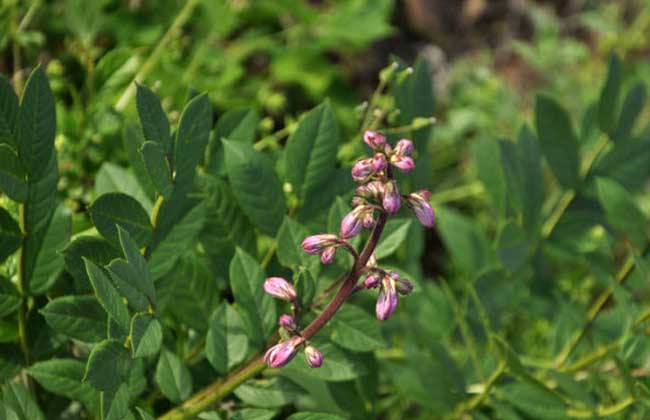
White fresh bark, also known as white fresh bark, bagu niu, mountain peony, sheep fresh grass, etc., is a perennial herbaceous plant of the Rutaceae family. It is mainly produced in Liaoning, Hebei, Sichuan, Jiangsu and other places, growing in soil-slope shrub thickets, mountain shrub thickets and under forests. Its root bark is used medicinally and has the effects of clearing heat and drying dampness, dispelling wind and detoxifying, and fighting cancer. Its cultivation value is relatively high. Let us take a look at the cultivation techniques for white fresh bark below!
Growth habits
Wild white fresh bark mostly grows on sunny hillsides, forest edges and low shrub thickets in sandy-stony soil. It has strong adaptability, prefers warmth and moisture, likes light, tolerates severe cold, tolerates drought, and does not tolerate waterlogging. The seeds are spherical, shiny black, with a 1000-seed weight of 20-21 grams, and a suitable germination temperature of 16-20°C. Under suitable conditions, seedlings emerge 15-18 days after sowing. In the same year, the plant height is 10-15 cm, and it can overwinter naturally in winter. Two-year-old plants are more than 20 cm tall, with a main root 15-20 cm long. Three-year-old seedlings begin to flower and set seed. Cultivated white fresh bark has a growth period of about 150 days, turns green and emerges in late April, and the aboveground parts begin to wither in late September.
Site selection and land preparation
White fresh bark is mainly propagated by seed. First, seedlings are raised in a concentrated way, and after 1-2 years of growth they are transplanted in divisions. The seedling-raising land should be flat land or gentle slope land with sufficient sunlight, fertile and loose soil, and good drainage, preferably sandy loam. Low-lying waterlogging-prone land, saline-alkali land or heavy clay land is not suitable, and it is best to have irrigation and drainage conditions. Deeply plow the soil 25-30 cm, and at the same time apply 1500-2000 kg of fully decomposed farmyard manure per mu according to the fertility level. After breaking up the soil clods, make beds 1-1.2 m wide and 15-20 cm high. The transplanting land should be gentle slope land, and attention should be paid to good drainage. In mountainous areas, sunny hillside wasteland, orchards and the interrows of young artificial forests can be used for cultivation, and the space under low shrubs in contracted tussah silkworm farms and hazelnut orchards can also be used for cultivation.
Sowing and transplanting
1. Sowing: After the white fresh bark seeds are harvested, dry them in the sun for 5-7 days and store them in a cool, ventilated place. From early October to early November, carry out autumn sowing. If autumn sowing is not possible, place the seeds outdoors for low-temperature freezing and sow from mid-April to early May the following spring. Autumn sowing results in earlier emergence and more uniform seedlings. When sowing, rake the bed surface level, open furrows at a row spacing of 12-15 cm and a furrow depth of 4-5 cm, firm the bottom, sow the seeds together with fine sand into the furrows, cover with 3-4 cm of soil, and sow 10-15 grams per square meter. After covering with soil, slightly compact the bed surface. If conditions permit, cover the bed surface with a layer of rice straw to retain moisture, which helps emergence.
2. Transplanting: White fresh bark seedlings grow for 1-2 years and are transplanted after the aboveground parts wither in autumn or before turning green the following spring. Dig out all the seedlings in the seedbed, classify them by size, and plant them separately at a row spacing of 25-30 cm and a plant spacing of 20-25 cm. Open furrows or dig holes according to the length of the seedling roots, place the terminal buds upward in the furrows or holes, and spread the seedling roots out. The soil cover should be 4-5 cm above the terminal buds. After covering, tread firmly. In drought, water thoroughly after planting.
Field management
1. Seedling-raising field: When white fresh bark seedlings emerge in the seedling-raising field, the mulch on the bed surface should be removed gradually. During the growth period, weeds should be removed and the soil loosened frequently, and field drainage should be done well in the rainy season. For 2-year-old seedlings, appropriately apply nitrogen and phosphorus fertilizer during the peak growth period, and 0.3-0.5% potassium dihydrogen phosphate solution can also be used for foliar feeding. After the aboveground parts wither in autumn, remove the remaining stems and leaves and cover the bed surface with 2-3 cm of soil to help the seedlings overwinter.
2. Transplanting field: In the white fresh bark transplanting field, loosen the soil and remove weeds frequently. After each weeding, earth up around the stem base to prevent young roots from being exposed above the ground. In the high-temperature and rainy season from July to August, do a good job of drainage to prevent water accumulation in the field from causing root rot, and at the same time increase the application of phosphorus and potassium fertilizer. For plants not grown for seed, cut off the flower buds in the early budding stage to favor root growth. After withering in autumn, cut off the stems and leaves in time, and cover the bed surface with soil or a layer of fully decomposed farmyard manure, commonly known as applying "head-covering manure," which helps the roots overwinter and the plants grow the following year.
Harvesting and seed reservation
1. Harvesting: After transplanting, white fresh bark grows for 2-3 years. The medicinal roots are harvested after the aboveground parts of the plant wither in autumn or before turning green the following spring, with autumn harvesting being better. First cut off the aboveground stems and leaves, dig out all the roots starting from one end of the seedbed, remove soil and residual stems, and dry them in the sun. When half-dry, remove the fibrous roots, pull out the hard core in the middle of the root (xylem), then dry until completely dry and store for later use. 2.8-3.3 kg of fresh roots can be sun-dried into 1 kg of dried product, and the yield per mu is 300-350 kg of dried product.
2. Seed reservation: The seed reservation field should select robust plants that have grown for more than 4 years. Usually management should be strengthened, phosphorus and potassium fertilizer should be added during the flowering period, and attention should be paid to drainage in the rainy season. Seeds begin to mature in mid-July and should be collected as they mature to prevent the fruit valves from splitting naturally and causing the seeds to fall to the ground. When the fruit turns from green to yellow and the fruit valves are about to split, they can be collected. Before 10 a.m. each day, while it is humid, cut off the fruits and dry them in the sun, covering them with a transparent plastic sheet to prevent the seeds from popping elsewhere. After the fruits are all sun-dried and split, beat them with a wooden stick, remove the fruit skins and impurities, and store the seeds or sow them in autumn.
Disease control
1. Downy mildew: Downy mildew usually begins to occur in March and mostly occurs on the leaves. Brown spots first appear on the leaves, and gradually a layer of downy mildew-like material is produced on the underside of the leaves, causing the leaves to die. It can be sprayed with 40% fosetyl-aluminum wettable powder 200 solution, or 50% ridomil 500-fold solution, or thiophanate-methyl 800-fold solution.
2. Sclerotinia disease: Sclerotinia disease usually occurs in mid-March and damages the stem base. At first, yellow-brown or dark brown water-soaked spindle-shaped lesions appear. In severe cases, the stem base rots, the aboveground parts lodge and wither, and mycelium and sclerotia can be seen on the soil surface. It can be controlled by mixing 3% sclerotinia powder or 1:3 lime and plant ash and scattering it on the bed surface, or by broadcasting 5% chloronitroaniline powder.
3. Rust disease: Rust disease usually occurs in early to mid-March. In the early stage, yellow-green lesions appear on the leaves, then turn yellow-brown. The lesions on the underside of the leaves or on the stems bulge and release rust-colored powder. It can be sprayed with 60% zineb wettable powder 500-fold solution, or 25% triadimefon wettable powder 1000-fold solution.