Detailed Explanation of Key Cultivation Techniques and Management Methods for Tetrastigma hemsleyanum
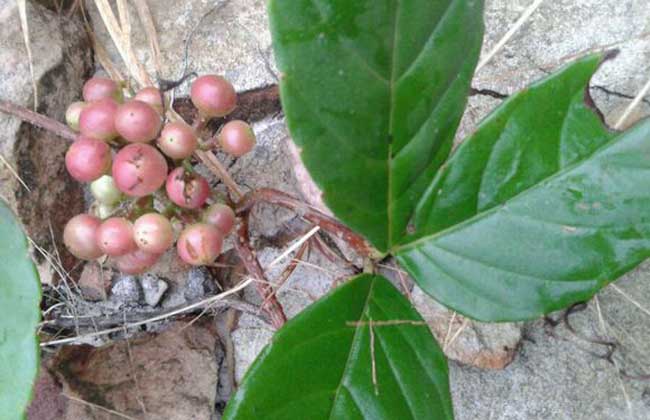
Tetrastigma hemsleyanum is a herbaceous climbing vine in the genus Tetrastigma of the grape family (Vitaceae), also known as three-leaf rock climbing vine, snake aconite, and stone rat, among other names. The entire plant can be used as medicine. It grows on mountain slopes in thickets, in valleys, and in rock crevices under forest along streams. The underground tuberous roots and fruits have the best medicinal effects. Due to different places of origin, its shape and medicinal properties may vary slightly. Let us now take a look at the cultivation techniques for Tetrastigma hemsleyanum!
Growth Habits
Tetrastigma hemsleyanum prefers a cool climate, growing robustly at an optimal temperature of around 25°C, and its growth stalls when the winter temperature drops to 10°C. It is drought-tolerant and intolerant of waterlogging. It has low soil requirements, and is best planted in loamy soil rich in humus or calcareous soil. It has strong shade tolerance, resistance to disease, few pests, is very cold-hardy, and highly adaptable. It can be planted as ground cover in damp, shaded outdoor environments, with a high survival rate and coverage rate, and fast growth.
Propagation Techniques
Tetrastigma hemsleyanum is usually propagated by cuttings, carried out in spring and summer, with spring being better. Select robust branches, cut them into 12-15 cm cuttings, insert them obliquely into the seedbed, with the depth of insertion being 2/3 of the branch length, then press firmly after inserting and water to keep moist. About 30-40 days after inserting, when roots have grown and leaves have emerged, they can be transplanted. Open holes at a row spacing of 100×100 cm, plant 2-3 plants per hole, press firmly, and water thoroughly to settle the roots. In addition, seed propagation can also be used.
Field Management
When the vines of Tetrastigma hemsleyanum grow to 35-40 cm, set up trellises to guide the vines to climb. Carry out intertillage and weeding 3-4 times per year. In spring and summer, mainly apply diluted human manure or chemical fertilizer; in autumn and winter, open ring-shaped trenches and apply compost or barnyard manure, and earth up the soil. In winter, appropriately prune overly dense weak branches and dead branches. Regarding pest and disease control for Tetrastigma hemsleyanum, the main issue is leaf spot disease damaging the leaves, which can be controlled with 65% zineb at 55-600 times dilution or 1:1:150 Bordeaux mixture.
Timely Harvesting
The medicinal value of Tetrastigma hemsleyanum does not depend on its size, similar to other precious Chinese medicinal materials, but rather on its growth years and the selection of an appropriate digging time. Each year from the Winter Solstice to Awakening of Insects, select Tetrastigma hemsleyanum that has been growing for more than three years for harvesting. This harvesting method yields good quality (during the dormant period) and high quality. The tuberous roots of Tetrastigma hemsleyanum harvested at this time have a starch content of over 70%, and the medicinal effect is the best.