What are the control methods for goji berry powdery mildew?
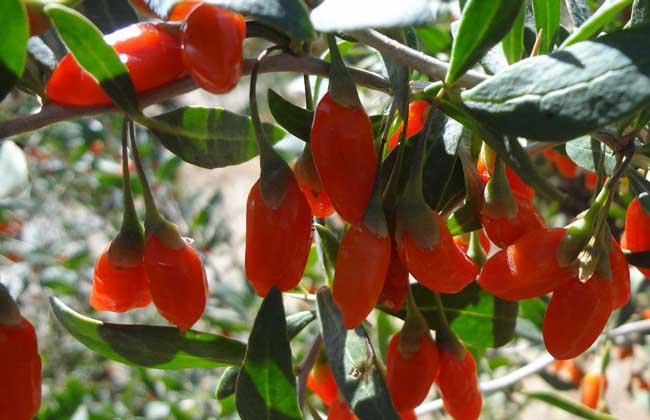
Goji berry powdery mildew, also known as goji berry leaf spot, mainly damages leaves and fruits. When leaves are infected, round to nearly round spots first appear, 2-4 mm in size, with brown edges and grayish-white centers, and dark gray mold-like growth often forms on the underside of the leaves. Infected fruits also show similar symptoms. Let's take a look at the control methods for goji berry powdery mildew below!
Symptoms
Goji berry powdery mildew mainly harms leaves. The leaf surface becomes covered with white mold spots (early stage) and powdery spots (later stage). The white mold spots and powdery spots are both the symptoms of this disease and the signs of the disease (fungal conidiophores and conidia). In severe cases, the goji berry plant appears white overall, which is quite striking. Photosynthesis of the diseased plant is hindered, eventually causing the leaves to gradually turn yellow and fall off easily.
Causal pathogen
The pathogen of goji berry powdery mildew is Oidium spp. in the Deuteromycetes. In cold regions, the fungus overwinters in the soil as the sexual fruiting body, the cleistothecium, along with diseased residues. In warm regions, the fungus mainly carries out primary and secondary infection through the asexual stage conidia, completing the annual disease cycle, with no obvious overwintering period. Warm and humid weather or planting site conditions favor the disease, but the fungal spores have drought-tolerant characteristics and can still germinate normally and cause infection under high-temperature and dry weather conditions.
Disease conditions
The pathogen of goji berry powdery mildew overwinters as mycelium or conidia on dead branches and fallen leaves of goji berry or in the soil along with diseased fruits. The following year, conidia spread through wind and rain to cause primary infection and secondary infection, expanding the damage. It is prone to occur in years with high temperature and abundant rain, high soil moisture, humid air, soil nutrient deficiency, and weakened plants.
Control methods
1. Select improved goji berry varieties, such as Ningqi No. 1. After leaf fall in autumn, clean the goji berry orchard promptly, remove diseased leaves and diseased fruits, and bury them deeply or burn them in a centralized manner to reduce the source of inoculum.
2. Strengthen cultivation management, advocate the application of compost fermented with Japanese enzyme bacteria, and increase the application of phosphorus and potassium fertilizers to enhance disease resistance.
3. Starting in June, spray 70% mancozeb wettable powder at 500 times dilution, or 75% chlorothalonil wettable powder at 600 times dilution, 64% oxadixyl mancozeb wettable powder at 500 times dilution, or 30% Ludebao suspension concentrate at 400 times dilution, once every about 10 days, for 2-3 consecutive treatments, and stop using the chemicals 7 days before harvest.