Detailed Explanation of Citron Tree Cultivation Techniques and Management Methods
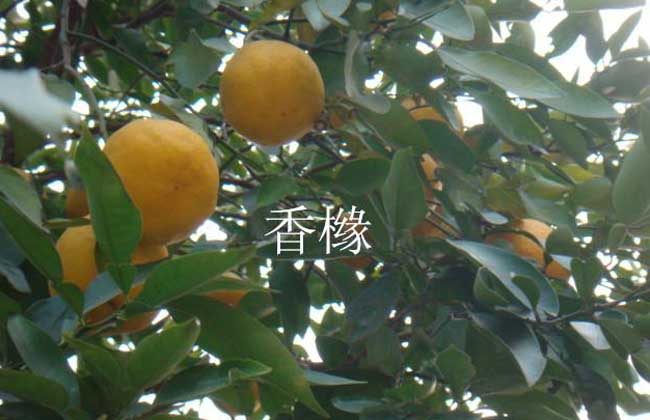
Citron is the collective name for both the plant citron and the medicinal citron, also known as juzhuo, juzhuozi, etc. It is an irregularly branching shrub or small tree of the genus Citrus in the family Rutaceae. It is distributed throughout the Yangtze River basin and areas to the south in China, with more extensive cultivation in Taiwan, China, Fujian, Guangdong, Guangxi, Yunnan, Hunan and other provinces and regions. Let us now take a look at the cultivation techniques for citron trees!
Growth Habits of Citron Trees
Citron trees prefer a warm and humid climate, are afraid of severe frost, and are not tolerant of severe cold. They are best cultivated in sandy loam with deep soil layers, loose and fertile texture, rich in humus, and good drainage. Citron trees are suited to high-temperature and high-humidity environments, clearly originating from more southern regions. In the broad-leaved forests of Xishuangbanna, Yunnan, there are citrons in a semi-wild state.
Propagation Methods for Citron Trees
1. Seed propagation: For seed propagation of citron trees, usually in October, select mature fruits, cut them open to extract the seeds, wash them clean, dry them, and sow immediately, or store the seeds in stratified wet sand and sow in spring. Open furrows at a row spacing of 30 cm, sow the seeds evenly, cover with soil, water, and cultivate for 2-3 years before planting out.
2. Cutting propagation: For citron tree cuttings, select 2-3 year old branches, remove the thorns, cut into segments of about 18 cm, and take cuttings in the high-temperature and high-humidity season of spring. Open furrows at a row spacing of 30 cm, with a plant spacing of 12 cm, insert obliquely, leaving 1/3 of the cutting exposed above the ground, cover with soil, press firm, and water. Cultivate for 1-2 years before planting out.
Cultivation Techniques for Citron Trees
1. Field management: Citron trees require 2-3 rounds of intertillage, weeding, and fertilization each year. From May to September, apply mainly human and livestock manure, and a dilute liquid cake fertilizer may also be applied as a top dressing. In winter, apply additional calcium superphosphate, which can be applied in circular furrows. Pruning should remove water sprouts and overly dense branches. During the fruiting period, stakes should be inserted for support.
2. Rational fertilization: The first fertilization for citron trees is before bud emergence, and the second is after the summer solstice. For the second fertilization, 250 grams of urea plus 500 grams of calcium superphosphate can be mixed with water at 100 times dilution, and applied as a foliar top dressing using a sprayer to promote vigorous plant growth and fruit enlargement.
3. Pest and disease control: Diseases of citron trees include sooty mold, which damages leaves, young branches, and fruits. Insect pests include the cottony cushion scale, which can be controlled with its natural enemy, the vedalia ladybug. Bordeaux mixture can also be sprayed, diluted 8-10 times in winter and 20 times in summer. In addition, there are longhorn beetles, red spiders, aphids, etc.