A Detailed Guide to the Cultivation Techniques and Management Methods of Asparagus Fern
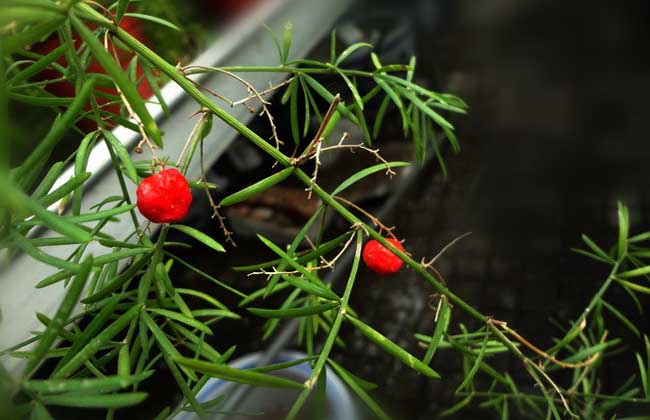
Asparagus Fern, also known as Sanbaibang, Sidong, Tiger Tail Root, and Tian Dong Cao, is a perennial herbaceous plant of the genus Asparagus in the Liliaceae family. It mostly grows in shady, damp places at the edges of mountain forests, in shrub thickets on hilly land, or in hillside grass clumps. It is distributed in Hebei, Henan, Shaanxi, Shanxi, Gansu, Sichuan, Taiwan, China, Guizhou and other places. Let us take a look at the cultivation techniques of Asparagus Fern below!
Growth Habits of Asparagus Fern
Asparagus Fern is distributed from the southern parts of Hebei, Shanxi, Shaanxi, and Gansu provinces to the provinces and regions of East China, Central South China, and Southwest China. It prefers warmth and cannot tolerate severe cold, and it avoids high temperatures. It is often distributed in mountainous areas below 1000 m in altitude. Areas with cool summers, warm winters, and an average annual temperature of 18-20°C are suitable for its growth. It prefers shade and fears strong light. Under strong light conditions, seedlings grow poorly, their leaves turn yellow, and the seedlings may even die.
Propagation Methods of Asparagus Fern
1. Seed propagation: The sowing period of Asparagus Fern is divided into spring sowing and autumn sowing. Autumn sowing is from early September to early October. Autumn sowing has a high germination rate, occupies land for a long time, and requires labor-intensive management. Spring sowing is in late March, occupies land for a short time, and is convenient to manage. In the seedbed, open horizontal furrows with a row spacing of 20-24 cm, a furrow depth of 5-7 cm, a sowing width of 6 cm, and a seed spacing of 2-3 cm. Use 10-12 kg of seeds per mu. At a temperature of 17-20°C and with sufficient humidity, seedlings emerge 18-20 days after sowing.
2. Division propagation: When digging up Asparagus Fern, select robust mother plants with large root heads and thick, strong buds. Divide each plant into at least 3 clusters, each with 2-5 buds and more than 3 small tuberous roots. The cut should be small, and lime should be applied to prevent infection. After spreading them out to dry for 1 day, they can be planted. The method is the same as transplanting after seedling cultivation.
Cultivation Techniques of Asparagus Fern
1. Land selection and preparation: Asparagus Fern has well-developed tuberous roots that penetrate 50 cm into the soil. It is suitable for growing in deep, loose, fertile, moist, and well-drained sandy loam soil (black sandy soil) or soil rich in humus. Seedlings should be raised in valley flatland or shady forest areas with short sunshine duration. Before sowing, deeply plow and harrow the land, level and break up the soil, and make high beds 100 cm wide for sowing.
2. Seed selection and collection: From September to October each year, Asparagus Fern is harvested when the fruits turn from green to red. Pile them indoors to ferment until slightly rotten, put them in water, and rub off the fruit flesh. Select plump seeds for planting. They can be sown immediately after collection, or kept for spring sowing the following year. Seeds kept for spring sowing should be stored in moist fine sand and must not be allowed to dry out, otherwise the germination rate will decrease.
3. Watering to protect seedlings: Within 1 month after planting Asparagus Fern, keep the soil moist. In case of drought, water frequently to promote germination and seedling growth. After seedlings emerge, insert bamboo poles or wooden stakes in time to let the seedlings climb and grow upward, avoiding tangling and twisting with each other, so as to facilitate ventilation, light penetration, and field management.
4. Intertillage and weeding: Asparagus Fern is generally intertilled for the first time in April-May. After that, whether to intertill is decided according to weed growth and the degree of soil compaction. Intertillage should loosen the soil and thoroughly remove weeds. Intertillage should be shallow to avoid damaging the roots and affecting tuberous root growth.
5. Timely topdressing: Asparagus Fern is a fertilizer-tolerant plant and needs sufficient base fertilizer and multiple topdressings. The first topdressing is carried out about 40 days after planting, when the seedlings have grown to more than 40 cm. Generally, apply 1000 kg of human and livestock manure water per mu. After that, topdress 3 times for each batch of new seedlings, that is, apply the first time when buds first appear, the second time when seedlings emerge but have not yet grown leaves, and the third time after leaves grow. When fertilizing, do not let the fertilizer touch the roots. Instead, open holes or furrows at the edge of the bed or between rows, apply the fertilizer, and then cover with soil.
6. Adjusting light: For Asparagus Fern planted in forests, prune branches from after autumn to early winter so that internal light penetration reaches more than 50%. In summer, light is strong and Asparagus Fern needs less light, so appropriately increase shade. When planting in open areas, insert branches for shading. In spring and autumn, shading should be sparse, with 50-60% light penetration in the field. In summer, shading should be dense, with 30-40% light penetration in the field.
7. Timely harvesting: Asparagus Fern generally needs 3 years of cultivation before it can be harvested. From October to before sprouting in March of the following year, choose a sunny day, first pull out the inserted poles, cut off the stems and vines, then dig away the soil around the roots, carefully take out the tuberous roots, shake off the soil, and pick off the large ones for processing as medicine. Leave the small tuberous roots with root heads as seed material.
8. Processing and storage: After picking off the tuberous roots of Asparagus Fern, cut off the fibrous roots, wash away mud and sand with clean water, put them into a boiling water pot and boil for 10-15 minutes, take them out and peel them. When peeling, use your hands and a sharp knife to peel off both the outer and inner layers cleanly in one go. Rinse off the outer sticky gelatinous substance with clean water, dry the surface water slightly, put them into a sulfur cabinet (furnace) and fumigate for 12 hours to make the color bright, then take them out and sun-dry or oven-dry. It is best to sun-dry during the day and fumigate with sulfur at night. At noon, when sunlight is strong, cover them with a bamboo curtain when drying to prevent discoloration. Sun-dried Asparagus Fern should be put into bamboo baskets and placed in a ventilated, cool, and dry place.