How to Grow Hollyhock from Seed? Detailed Guide to Sowing Methods and Techniques
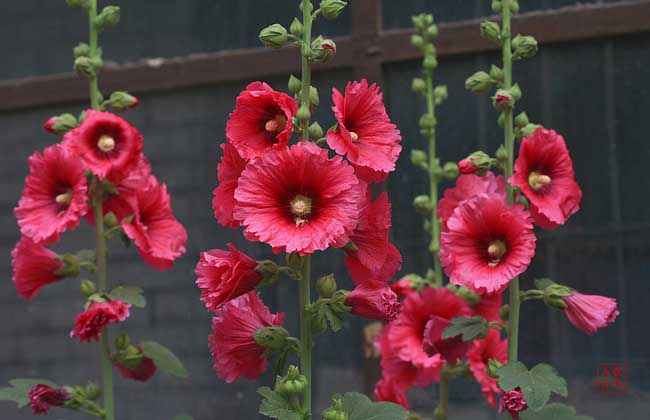
Hollyhock is a biennial upright herbaceous plant of the genus Alcea in the mallow family (Malvaceae). It is usually propagated by sowing seeds, and can also be propagated by division and cuttings. Division is carried out in spring, and cuttings are used only to propagate certain superior cultivars. [4] In production, seed propagation is mainly used, and in North China spring sowing is the main method. Let's take a look below at how to grow hollyhock from seed!
Growth Habits of Hollyhock
Hollyhock is widely distributed in China, found in East China, Central China, North China and South China, and is widely cultivated around the world. It likes full sunlight and tolerates partial shade, but dislikes waterlogging. It has strong tolerance to saline-alkali conditions and can still grow in soil with a salt content of 0.6%. It is cold-tolerant and can overwinter safely in the open field in North China. It grows well in loose, fertile, well-drained sandy soil rich in organic matter.
How to Grow Hollyhock from Seed?
Hollyhock can be sown in either spring or autumn. Depending on how many hollyhock seeds you have, you can sow them in an open-field seedbed and then raise seedlings for transplanting, or sow them directly in the open field without transplanting. In the south, autumn sowing is often used, usually in September in an open-field seedbed, where germination is uniform. In the north, spring sowing is usually the main method. Hollyhock seeds can be sown as soon as they mature; under normal conditions the seeds germinate in about 7 days. The germination capacity of hollyhock seeds can be maintained for 4 years, but seedlings show signs of growth decline after 2 to 3 years. For direct sowing in the open field, if combined appropriately with transplanting on rainy days, you can both thin the seedlings and plant flowers once for many years of enjoyment.
Planting Methods for Hollyhock
1. Watering: When hollyhock seedlings grow 2 to 3 true leaves, they should be transplanted once, with increased spacing between plants and rows, and watered promptly after transplanting. During the flowering period, water appropriately to encourage a long flowering period and good blooms, continuing all the way to the top of the stem.
2. Fertilizing: During the seedling growth stage of hollyhock, pay attention to fertilizing, weeding and loosening the soil so that the plants grow strong. After flower buds form in the leaf axils, apply additional phosphorus and potassium fertilizer, and trim off a few of the lower leaves.
3. Root cutting: When planting hollyhock, to keep the plant low and prevent lodging, in June you can use a spade to cut the roots around the plant in a cone shape, cutting the roots once every 2 to 3 weeks, then water immediately for maintenance.
4. Harvesting: When the hollyhock fruit turns yellow and ripe, it should be harvested immediately to prevent the seeds from scattering. After the flowering period ends, the above-ground part of the plant can be cut back, and when new shoots sprout, a clumping plant can form. Hollyhock tends to age, so after 2 to 3 years of cultivation it should be renewed.