Detailed Guide to Purple Loosestrife Planting Techniques, Easily Master the Key Cultivation Points
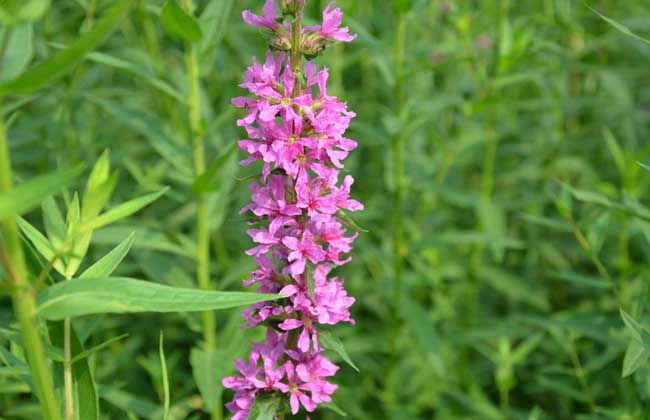
Purple loosestrife (Lythrum salicaria), also known as water willow, water willow herb, and opposite-leaved lotus, is a perennial herbaceous plant of the genus Lythrum in the family Lythraceae. It is best planted in clusters along shallow-water banks or in ponds, and can also be used as flower border material and cut flowers, in pots, or in bog gardens. As a medicinal herb it has functions such as clearing heat and cooling blood, and also has a blood sugar-lowering effect. Let us take a look at purple loosestrife planting techniques together below!
Growth Habits of Purple Loosestrife
Purple loosestrife is produced throughout China and is also cultivated. It is distributed in Asia, Europe, Algeria in Africa, North America, and southeastern Australia, growing on riverbanks, lakesides, along streams and ditches, and in moist grasslands. It likes strong light, has strong cold resistance, likes water and moisture, and is not demanding about soil, growing better in deep soil rich in humus.
Propagation Techniques for Purple Loosestrife
1. Sowing: Purple loosestrife is sown in spring from March to April. Before sowing, mix the seeds evenly with fine soil, then broadcast them on the seedbed, cover with 2.5 cm of soil, and finally cover with grass and water. After sowing, seedlings emerge in 10 to 15 days, and the grass cover should be removed immediately. Transplant when the seedlings are about 25 cm tall.
2. Cuttage: For purple loosestrife cuttage, select healthy branches in spring, cut them into lengths of about 30 cm, remove the leaves, insert them obliquely into the soil to a depth of 1/2 of the cutting, press firmly, and water to keep moist. Transplant after roots and leaves have grown.
3. Division: For purple loosestrife division propagation, dig up the root clumps in spring from April to May, divide them into clumps of several buds each, and plant them in moist land with sufficient base fertilizer applied.
Planting Management of Purple Loosestrife
1. Purple loosestrife has strong vitality and can be managed extensively, but a location with sufficient light and good ventilation should be chosen. Open-field cultivation is mostly in shallow-water areas and wetlands of park lakeside garden waterscapes, while courtyards can use pot cultivation. The cultivation soil should be appropriately applied with decomposed chicken manure or cake fertilizer.
2. From after purple loosestrife is planted until before the rows close, cultivate and weed 3 to 4 times each year. Apply nitrogen fertilizer or compound fertilizer once each in spring and summer, and apply compost or barnyard manure once after autumn. Keeping the soil moist at all times is the most critical measure for growing purple loosestrife well. During the growing period, promptly remove weeds and water moss. Before and during flowering, potassium dihydrogen phosphate must be applied as a top dressing two to three times. Keeping the soil moist at all times can promote plant growth.
3. In late October, the aboveground part of purple loosestrife gradually withers. Use pruning shears to cut off the aboveground clumps and let them overwinter naturally in the open field. Potted plants must be moved into a low-temperature cold shed to overwinter. Throughout winter, the pot soil must be kept moist, and the temperature is best controlled at 0°C to 5°C, so as to avoid sprouting early in winter. Generally, divide and replant once every two to three years.