What to do when honeysuckle gets powdery mildew? Understand the prevention and control methods in one article
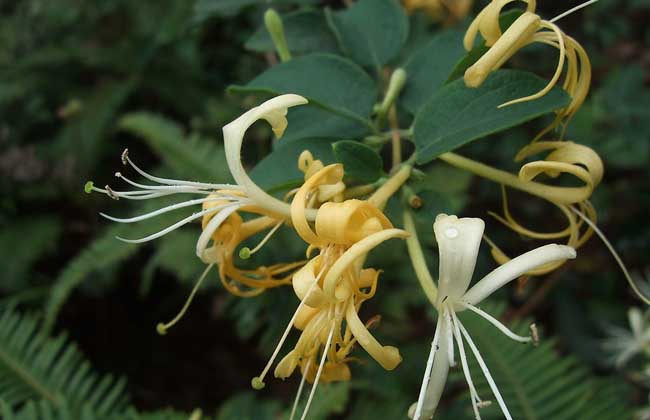
Honeysuckle (Japanese honeysuckle, Lonicera japonica) is a perennial twining shrub of the genus Lonicera in the family Caprifoliaceae. Its buds and nearly opened flowers are used as medicine, and its leaves and branches can also be used as medicine; it has the effects of clearing heat and detoxifying. It is now cultivated in many cities and counties from south to north in China. Powdery mildew is a common disease on honeysuckle, occurring widely in all planting areas across the country and causing serious damage. Let us take a look below at what to do about powdery mildew on honeysuckle!
Symptoms of powdery mildew on honeysuckle
Powdery mildew on honeysuckle mainly harms leaves, and sometimes also harms stems and flowers. The spots on leaves are initially small white dots, then expand into white powdery patches, and later the entire leaf is covered with a white powdery layer; in severe cases the leaves turn yellow, become deformed, and even fall off. The spots on stems are brown, irregular in shape, and covered with white powder; flowers become twisted and in severe cases fall off.
Pattern of powdery mildew on honeysuckle
The pathogen of powdery mildew on honeysuckle is the fungus Lonicera dimorphus of the subphylum Ascomycotina. The pathogen overwinters on diseased residues as ascocarps; the following year the ascocarps release ascospores for primary infection, and after disease onset the diseased parts produce conidia for secondary infection. Warm and dry conditions or shading between plants make the disease likely to occur, and excessive application of nitrogen fertilizer and alternating wet and dry conditions make the disease severe.
What to do about powdery mildew on honeysuckle?
1. Resistant varieties: select resistant honeysuckle varieties according to local conditions, and spray Hushu Jiangjun in the field at the appropriate time for sterilization and disinfection to reduce sources of the pathogen.
2. Strengthen management: plant at a reasonable density, pay attention to ventilation and air permeability, fertilize scientifically, increase the application of phosphorus and potassium fertilizers, and improve plant disease resistance. Before honeysuckle budding, spray Huaduo Zhuangdiling at the appropriate time to promote strong buds, plump petals, bright flower color, rich fragrance, and a longer flowering period. Irrigate at the appropriate time, drain promptly after rain, and prevent moisture from lingering.
3. Chemical control: at the early stage of disease onset, spray 50% colloidal sulfur 100 g mixed with 20 kg of water or 15% triadimefon wettable powder at 2000 times dilution, and at the same time spray Xingao Zhimo at 800 times dilution to improve the utilization rate of the effective ingredients of the pesticide and consolidate the control effect.