What exactly is the cultivation prospect for Paris polyphylla?
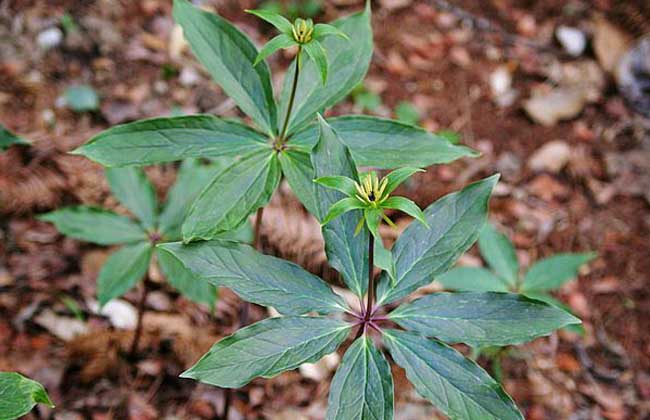
Paris polyphylla, also known as Dujiaolian, Baigansui, Zhihuatou and Jinxian Chonglou, is the rhizome of Paris polyphylla var. yunnanensis, a plant in the Liliaceae family. It is hard and brittle, with a white cross-section, and has the effects of clearing heat and detoxifying, reducing swelling and relieving pain, and cooling the liver to calm fright. It is used for conditions such as boils and abscesses, sore and swollen throat, venomous snake bites, bruises and injuries, and convulsions. Let us take a look below at the cultivation prospects of Paris polyphylla!
Cultivation prospects of Paris polyphylla
Paris polyphylla is a wild medicinal herb. As wild resources decline year by year, its high medicinal value has led to serious indiscriminate digging by the public. Because the medicinal part has a long growth cycle, the harvestable amount of wild resources is facing exhaustion. Prices have recently remained stable at a high level. Although goods on the market are not moving very quickly at present, due to the reduction in resource volume, the high-price situation has never been reversed. Currently, domestic general goods on the market sell for around 780 yuan, selected goods for around 870 yuan, and imported goods for between 280 and 290 yuan. At present, although artificial cultivation has succeeded, there is little supply on the market, and the trend of development is slow. It still has not reached scale, and the cultivation cost is also relatively high.
Cultivation conditions of Paris polyphylla
1. Geography: Wild Paris polyphylla grows in valleys and beside mountain streams at altitudes of 700 to 1100 m, in shady, damp places under broad-leaved forests.
2. Soil: Paris polyphylla grows best in well-drained, slightly acidic humus soil or fertile sandy soil. It cannot grow in alkaline soil or clay soil, and heavy, water-accumulating, compacted soil is not suitable for planting.
3. Water: Paris polyphylla prefers a cool, shady, damp environment with moderate moisture. It fears both drought and waterlogging. If soil moisture content is too low, it easily causes the stems and leaves to lose water and the root system to dry up and die, while if it is too high, pests and diseases easily occur and the rhizome rots.
4. Temperature: Paris polyphylla plants are relatively cold-tolerant, with no frost damage at low temperatures. From late February to early March, they can still sprout and grow at a temperature of 5°C, and even at a minimum temperature of 2°C. At 1 to 2°C, no frost damage occurs to the buds. Generally, the suitable temperature for seed germination, root growth and development, and terminal bud sprouting is 18 to 20°C, for seedling emergence it is 20°C, for aboveground plant growth it is 16 to 20°C, and for underground rhizome growth it is 14 to 18°C.
5. Light: Paris polyphylla is a shade-loving plant. It prefers oblique or diffused light and avoids direct strong light. Its growth requires a shaded environment. Stronger light will cause the leaves to wither. Generally, the seed germination and seedling stages require better shading, while in the two years before maturity, shading should be appropriately reduced and light increased, which is beneficial to the accumulation of secondary metabolites and dry matter.
Cultivation techniques for Paris polyphylla
1. Thinning and replanting: Usually in mid-to-late May, thinning is carried out in directly sown plots, and at the same time missing spots are checked and filled. Before thinning, water first, then use a wooden pry to lift the seedlings. When replanting, water with rooting water, make full use of small seedlings, and ensure full stands and sufficient density.
2. Cultivation and weeding: Paris polyphylla requires loose soil. The aboveground part grows weakly, so special attention should be paid to loosening the soil and weeding. Generally, from late May to early June, there are many rainstorms and the soil easily becomes compacted, so drainage should be timely to prevent waterlogging. Cultivate frequently, loosen the soil shallowly, and remove weeds at any time.
3. Timely shading: Paris polyphylla likes shade and fears strong light. Throughout the entire growth period, a light transmittance of 40 to 50% is best. Therefore, shading measures should be taken after seedling emergence and transplanting. Where conditions permit, shade nets are best used. Where conditions do not permit, inserting branches for shade can be used. Intercropping or relay intercropping with corn for shade can also be tried, but attention should be paid to density and the intercropping or relay intercropping method.
4. Topdressing and earthing up: Paris polyphylla usually has a growth pattern in which flowers form above while the tubers below swell. Generally, growth is fastest from mid-to-late June to the end of August. In early June, heavy topdressing must be applied. Use 2000 to 3000 kg of cattle and sheep manure or farmyard manure plus 20 to 30 kg of calcium superphosphate per mu. Apply it to the roots and then combine it with clearing the trenches and heavy earthing up. The soil on the ridge must be loose, the soil surface should be kept intact, and there should be no water accumulation at the bottom of the trench.
5. Harvesting and processing: Paris polyphylla can be harvested before and after the aboveground parts wither in autumn, that is, from November to December until before March of the following year. The tubers mostly grow in the surface soil layer and are easy to dig, but care should be taken to keep the tubers intact. First cut off the stems and leaves, then dig from the side with a hoe, dig out the tubers, shake off the soil, scrub clean with clean water, slice while fresh at a thickness of 2 to 3 mm, and sun-dry. On cloudy days, they can be dried with a low fire at around 30°C.