When is the most suitable time to plant Paris polyphylla?
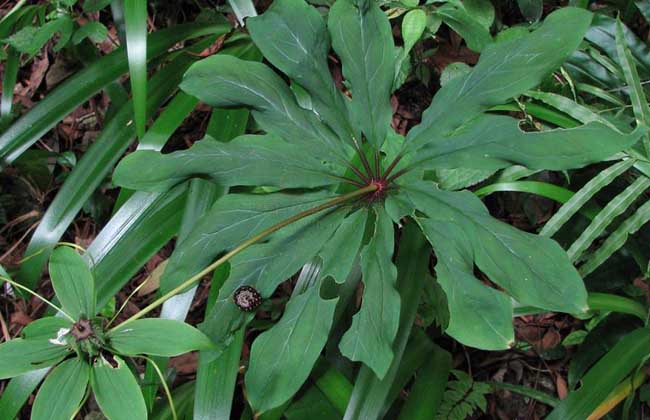
Paris polyphylla grows on hillside under forests and in damp shaded places in thickets. It likes warmth, moisture and shade, but is also cold-resistant and drought-tolerant, and fears frost and direct sunlight. It can be planted in sandy soil and loam soil with an average annual temperature of 13-18°C and a relatively high content of organic matter and humus, and is especially suitable for planting by riversides, ravine edges and on shaded hillsides. Now let us take a look at the planting time for Paris polyphylla!
Seed treatment for Paris polyphylla
Paris polyphylla seeds have a long dormancy period and a low natural germination rate. Artificial methods are used to break dormancy, increase the germination rate and shorten the growth cycle. The method is to break dormancy by combining variable-temperature stratification with plant hormone treatment, and to investigate the effects of temperature, substrate and light on its germination. The results showed that Paris polyphylla embryos have a secondary dormancy phenomenon. After variable-temperature cold stratification treatment with fine sand, followed by treatment with 50-100 mg·L GA for 24 hours, using fine sand as the substrate, and germination acceleration at 20°C for 60 days, the germination rate can reach more than 90%.
Planting time for Paris polyphylla
1. Direct seeding: The direct seeding time for Paris polyphylla is usually in early to mid-January, after thorough rain. On the prepared seedbed surface, make small shallow ponds 3-5 cm deep with a row spacing of 30-35 cm and a plant spacing of 20-25 cm. Make 4 rows on a narrow bed of 130 cm, and 4 rows on a wide bed of 150 cm. Before sowing, soak the seeds in cold water for 24 hours, mix with plant ash and sow. Put 2-3 seeds in each pond, then cover with 2-3 cm of fertile soil made of half fine manure and half fine soil. If the soil is dry, water it in time. Seedlings emerge in 7-10 days.
2. Seedling raising and transplanting: The seedling raising time for Paris polyphylla is usually in early April. Select a seedbed in dry land or vegetable garden land with a water source. Before digging the soil, it is best to disinfect the soil by mixing 40% quintozene at 5-10 g per sq m with fine soil and broadcasting it. After leveling and finely raking the bed surface, open sowing furrows about 5 cm deep on the bed surface at a row spacing of 15 cm, sow in the furrows at a plant spacing of 5 cm, then cover with 3 cm of soil, cover with 2 cm of fine manure, water thoroughly and cover with plastic film. Seedlings can emerge in 5-7 days. One month after raising seedlings, transplant the young seedlings into the field according to the direct seeding specifications.
3. Rhizome planting: In autumn and winter, dig up robust rhizomes free of pests and diseases and store them in sand in a cool, dry place. Take them out in early to mid-April of the following year. According to the characteristics of residual buds and bud scars on stems that have germination ability, cut them into small sections, ensuring each section has 1 bud scar. After cutting, dry them properly and mix with plant ash. Plant them in rows in the seedbed like sowing, and cover with film. After rooting and sprouting in 15-20 days, transplant them into the field in mid-to-late May according to the direct seeding specifications.
Planting management of Paris polyphylla
1. Thinning: In mid-to-late May, thin the directly seeded land, and at the same time check the ponds and fill gaps. Water before thinning, pry out the seedlings with a wooden stick, and water with rooting water when replanting. Make full use of small seedlings to ensure a full stand and sufficient density.
2. Intertillage: Paris polyphylla requires loose soil. The aboveground part grows weakly, so special attention should be paid to loosening the soil and weeding. From late May to early June, there is a lot of heavy rain, and the soil tends to harden. Drain in time, prevent waterlogging, cultivate frequently, loosen the soil shallowly, and remove weeds at any time.
3. Weeding: After the seedlings are uniform or after transplanting, weed and loosen the soil in time. Hoe frequently and shallowly to avoid damaging the roots and affecting growth. Usually cover the bed surface with grass to retain moisture.
4. Fertilizing: For cultivated Paris polyphylla, the base fertilizer used accounts for 70-80% of the total fertilizer amount and must be applied into the soil before transplanting. Later topdressing can only account for about 20% of the total fertilizer amount. After the seedlings emerge each year, apply human feces water once as topdressing. Do not use or use little chemical fertilizer, and prohibit chemical nitrogen fertilizer.
5. Water management: Paris polyphylla likes a shady and moist environment. The bed surface and soil layer should be kept moist. In dry seasons, water in time. At ordinary times, spray water at intervals. In the rainy season, dredge ditches and drain in time to prevent water accumulation in the field and induce diseases.
6. Removing flower stalks: To reduce nutrient consumption and concentrate nutrients for the growth of underground tubers, when flower stalks appear in May-June, except for those retained for seed, all flower stalks should be cut off in time to increase yield.
7. Shading: Paris polyphylla likes shade and fears strong light. Throughout the whole growth period, a light transmittance of 40-50% is best. Therefore, after emergence and transplanting, shading measures should be taken. Where conditions permit, shade nets are best. Where conditions do not permit, inserting branches for shade can be used. Intercropping tall crops such as corn between rows for shade can also be considered, but attention should be paid to density and the intercropping and relay-cropping methods.
8. Earthing up: Paris polyphylla usually has the growth pattern that flowers form above while tubers below expand. Generally, expansion is fastest from mid-to-late June to August. A heavy topdressing must be applied in early June, using 2000-3000 kg of decomposed farmyard manure per mu, plus 20-30 kg of ordinary calcium superphosphate, applied to the roots and then combined with clearing ditches and heavy earthing up. The soil earthed up must be loose, keeping the bed surface and ditch bottom free of standing water.
9. Harvesting: Paris polyphylla can be harvested from November-December before and after the autumn seedling withering until before March of the following year. The tubers mostly grow in the surface soil layer and are easy to dig, but care should be taken to keep the tubers intact. First cut off the stems and leaves, then dig from the side with a hoe, dig out the tubers, shake off the soil, scrub clean with clean water, slice while fresh at a thickness of 2-3 mm, and sun-dry. On cloudy days, they can be dried with a low fire at about 30°C.