What are the key cultivation techniques for Millettia speciosa?
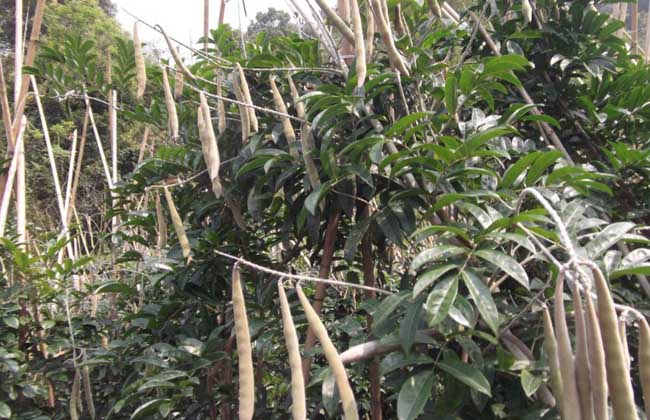
Millettia speciosa is a plant of the genus Millettia in the Fabaceae family, also known as pig's trotter, golden bell root, mountain lotus root, upside-down golden bell, powerful tuber, etc. As a medicinal herb it has effects such as tonifying yang, nourishing the kidneys and supplementing deficiency, strengthening sinews and activating collaterals, calming the liver, and moistening the lungs, and its cultivation value is relatively high. Let's take a look at the cultivation techniques for Millettia speciosa below!
Can Millettia speciosa be cultivated?
Millettia speciosa can be cultivated. Millettia speciosa has not yet been industrialized in China, and can be said to be in the ascendant, so many growers often make mistakes in their understanding, mistakenly believing that once Millettia speciosa is planted there will be a successful harvest. Little do they know that Millettia speciosa has many different germplasm sources, and different provenances of Millettia speciosa differ somewhat in morphological characteristics and yield. Only by selecting high-quality, high-yield varieties can a successful harvest be achieved; otherwise, failure may result.
Selection of Millettia speciosa Seedlings
1. Seed seedlings: Millettia speciosa seed seedlings are formed from germinated seeds, generally having only one taproot. After the taproot is cut off, the fine roots that emerge do not easily expand to form tubers. Seedling traits vary greatly and are irregular, and yield is not guaranteed. Moreover, they branch heavily, grow slowly, have low yield and poor quality, and only plants grown for more than two years will flower and set seed. Plants used for flowering and seeding have relatively poor quality underground tubers. Generally, seedling-grown plants take 4-5 years to form yield.
2. Tissue-cultured seedlings: Millettia speciosa tissue-cultured seedlings are produced through mass production, grow uniformly, have excellent traits, and have a relatively large number of roots, all of which can expand into tubers.
3. Cutting seedlings: Among Millettia speciosa seedling types, cutting seedlings have relatively great advantages. Collecting cuttings is relatively easier and simpler than seeds and can maintain the excellent traits of the mother plant. They have high active ingredient content, form yield faster than seedling-grown plants, produce more tubers, and have good quality. Generally, they can form yield in 1-2 years, and their advantages are very obvious.
Cultivation Preparation for Millettia speciosa
1. Hardening off seedlings: After leaving the nursery, Millettia speciosa seedlings need to be acclimated before transplanting. After the seedlings are placed, spray them first with a 500-fold carbendazim solution to prevent disease. Harden them off under a shade shed for about one week, watering once every morning. If conditions do not permit, they can be hardened off under tree shade with regular watering.
2. Site selection: Millettia speciosa requires more water during the seedling stage, and soil moisture should be ensured, but it is not tolerant of waterlogging. During the rainy season, drainage should be timely, and there must be no standing water in the furrows. Therefore, when selecting a site for transplanting, as long as it is not paddy field, it is generally suitable for planting.
3. Land preparation: After selecting the site for Millettia speciosa, weed it, deeply plow the land, and harrow it. Where machine plowing cannot be carried out, loosen the soil at the planned transplanting spots, with a plowing depth of 0.5 m. Then dig drainage ditches according to the terrain, and along the contour lines build large ridges and high ridges 1.5-1.8 m wide and about 0.6 m high. On slope land, dig pits 1 m square and 0.5 m deep at the transplanting points.
4. Base fertilizer: Apply sufficient base fertilizer during land preparation. Per mu, use 1-2 tons of organic fertilizer together with about 100 jin of superphosphate. After mixing evenly, broadcast it on the ground, then rotary till and ridge, or after ridging broadcast it on top of the ridges. Afterwards, it is recommended to cover with agricultural film, preferably black plastic film, with a thickness of 0.014 mm or more; the width depends on the ridge width and ridge height.
Cultivation Techniques for Millettia speciosa
1. Transplanting management: The planting density is 300-500 plants per mu. The best time for planting is in the afternoon when sunlight is weaker; if it is cloudy, planting can be done all day. Punch holes and dig planting holes in the plastic film according to the plant spacing. When transplanting, tear open the nutrient pot at the side of the hole, then place the seedling with its soil ball into the hole, preventing the soil ball from breaking apart. The planting depth should be 1 cm above the soil ball surface or level with it. Where conditions permit, drip irrigation can be used for watering by laying water pipes in advance on top of the ridges and then covering with film, replenishing water in a timely manner according to soil and weather conditions to achieve water-saving purposes.
2. Timely weeding: After planting, Millettia speciosa grows relatively slowly in the early stage. Manual methods or spraying herbicides can be used to remove weeds between the ridges to prevent weeds from competing with Millettia speciosa seedlings for fertilizer and water. When spraying herbicides, be careful to spray cautiously under calm wind conditions to prevent the herbicide from drifting onto the Millettia speciosa plants.
3. Fertilizer and water management: Millettia speciosa is drought-tolerant but not waterlogging-tolerant, especially at the seedling stage. In rainy weather, ditches should be opened in a timely manner for drainage to prevent flooding. About one month after planting, after branches have emerged, topdressing can begin. Per mu, take 2 jin of compound fertilizer and dilute it in 400 jin of water to irrigate each plant individually. About three months after planting, the total topdressing amount per mu is 40 jin (20 jin each of urea and compound fertilizer mixed evenly). Apply a small handful of compound fertilizer in holes between every two seedlings. Thereafter, fertilize once around October each year.
4. Pruning and training: For vine-type or small-shrub-type Millettia speciosa varieties, pruning management is needed to control branch growth, so that underground tubers form more, grow faster, and increase yield. For plants not used for propagation and planting, strong vigorous branches should be thinned out to suppress vine growth and maintain plant height. The earlier the pruning, the better, to promote nutrient supply to root growth. For plants kept for seed propagation, in addition to earlier pruning, take one bottle of Yuhualing No. 2 and dilute it in 30 kg of water for foliar spraying. After spraying 2-3 times continuously, plants transplanted in March-April can enter the flowering stage in June-September.
5. Flower thinning to promote fruiting: When flower buds emerge on Millettia speciosa, thin out some of the buds. The number of flower spikes retained should not be too many, and the number of branches on the plant should be maintained. Spray Yuhualing No. 2 once more before flowering to promote flowering and pod setting, and to concentrate a large amount of nutrients for underground rhizome growth. After the Start of Autumn, spray Yuhualing No. 5 to promote rapid rooting and continuous expansion of Millettia speciosa. Apply corresponding fertilizers in combination with the growth status of Millettia speciosa leaves and rhizomes to achieve high yield.
6. Disease and pest control: Mature Millettia speciosa plants are generally not easily harmed by diseases and pests, but under high temperature, rainy, and damp conditions, seedlings may develop a small amount of leaf spot disease, which can be controlled by spraying 600-fold solutions of each of 50% carbendazim wettable powder + 80% mancozeb. At the same time, Millettia speciosa seedlings are susceptible to damage by Lepidoptera pests, which can be controlled with 1000-fold solutions such as 5% abamectin emulsifiable concentrate, 5% abamectin-chlorpyrifos granules, or 2.5% abamectin-hexaflumuron emulsifiable concentrate.
7. Harvesting and processing: The best harvest time for Millettia speciosa is in autumn and winter when the soil is dry. Where conditions permit, a tillage machine can first be used to deep-plow once between the rows, and after loosening the soil, harvest manually. Where conditions do not permit, dig the tubers directly by hand. After harvesting, store in a cold storage at 0-5°C for half a month, or slice and dry, vacuum-pack fresh slices, make beverages, etc.