How to Plant Motherwort Seeds? Detailed Planting Methods and Techniques
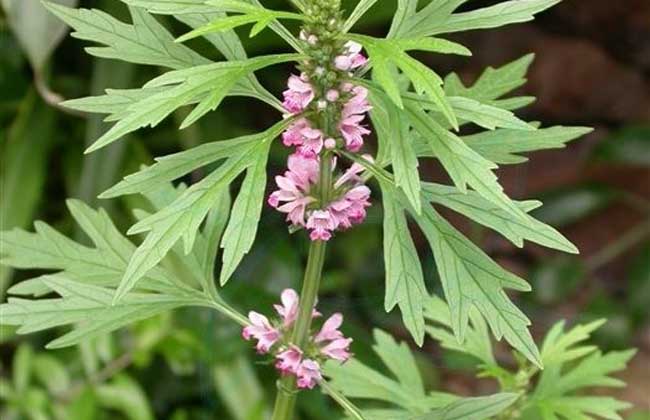
Motherwort (Leonurus japonicus) is an annual or biennial herbaceous plant of the genus Leonurus in the Lamiaceae family. It is distributed throughout China and is divided into early-maturing motherwort and winter-type motherwort. Generally, seed propagation is used, with direct sowing as the planting method. Seedling transplanting is also practiced, but yields are lower, so it is mostly not adopted. Let's take a look below at how to plant motherwort seeds!
Motherwort Sowing Preparation
Motherwort is propagated by seed, using the direct sowing method. Before sowing, mix the seeds with wood ash or fine soil mixed fertilizer, then treat the seeds with human and animal manure and New High-Lipid Film to repel underground pests and diseases, isolate viral infection, strengthen respiratory intensity, and improve the seed germination rate. Choose fresh seeds of the current year with a germination rate generally above 80%. For hole sowing, prepare generally 400-450 grams of seeds per mu; for drill sowing, prepare 500-600 grams of seeds per mu.
Motherwort Sowing Time
Early-maturing motherwort can be sown in autumn, spring, or summer, while winter-type motherwort must be sown in autumn. Spring sowing is best during the period from Yushui to Jingzhe (late February to early March). In the north, summer sowing is used to make use of idle summer land, planting after wheat harvest at Mangzhong, but the yield is not high. In low-temperature areas, autumn sowing is mostly adopted, best during the period from Qiufen to Hanlu (late September to early October) when the soil is moist. The choice of autumn sowing time directly affects the yield and quality of the product. If too early, it is susceptible to aphid damage. If too late, it is affected by low temperatures and dry soil, cannot germinate in the current year, and can only germinate from Chunfen to Qingming of the following spring, and germination is irregular and uneven, mostly unable to bolt and flower.
Motherwort Sowing Methods
Motherwort sowing is divided into drill sowing, hole sowing, and broadcast sowing. Plains areas mostly use drill sowing, slopes mostly use hole sowing, and broadcast sowing is inconvenient to manage and mostly not adopted. Before sowing, mix the seeds with wood ash or fine soil mixed fertilizer, then mix with human and animal manure, with moisture at a level where it can be scattered. Generally, 250-300 kg of wood ash or soil mixed fertilizer and 35-40 kg of human and animal manure are used per mu. For drill sowing, open transverse furrows in the seedbed, with a furrow center distance of about 25 cm, a sowing width of about 10 cm, and a depth of 4-7 cm. The furrow bottom should be flat. Before sowing, apply 2500-3000 kg of human and animal manure in the furrows, then evenly scatter the seed-ash mixture in, with no need to cover with soil. For hole sowing, open holes with a hole and row spacing of about 25 cm each, a hole diameter of about 10 cm, and a depth of 3-7 cm. The hole bottom should be flat. First apply 1000-1200 kg of human and animal manure per mu in the holes, then evenly scatter the seed-ash mixture in, with no need to cover with soil.