Where are the main producing areas of Leonurus japonicus distributed?
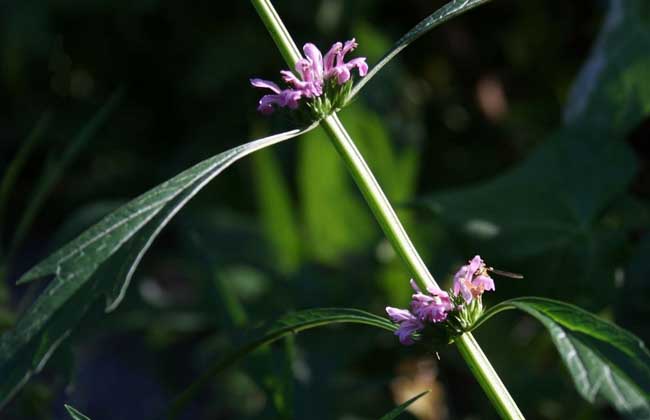
Leonurus japonicus is an important herb used by physicians through the ages to treat gynecological diseases. It is an annual or biennial herbaceous plant of the genus Leonurus in the Lamiaceae family. It is harvested in summer when it grows luxuriantly and the flowers are not fully open, and the whole plant is used as medicine. Its active ingredient is leonurine, and it has diuretic and swelling-reducing effects and can contract the uterus. Let us take a look below at where the producing area of Leonurus japonicus is!
Where is the producing area of Leonurus japonicus?
Leonurus japonicus is produced throughout China, and is distributed in Russia, Korea, Japan, tropical Asia, Africa and various parts of the Americas. It can be divided into two varieties, one being the original variety and the other the white-flowered variety. The white-flowered variety is also known as white-flowered Leonurus japonicus, wild hair grass, oil hemp pine, etc. It differs from the original form only in having a white corolla, and is mainly produced in Jiangsu, Fujian, Jiangxi, Guangdong, Guangxi, Guizhou, Yunnan and Sichuan, among other places.
The producing area environment of Leonurus japonicus
Leonurus japonicus prefers a warm and humid climate and sunshine, and has no strict requirements for soil. It can generally be planted in ordinary soil and barren hillside land, with relatively fertile soil being better. It needs sufficient water conditions, but should not be waterlogged, as it is afraid of flooding. It grows in a variety of environments, at altitudes up to 3400 m, and is distributed in wild wasteland, roadsides, field ridges, hillside grassland, and riversides, mostly in sunny places.
The medicinal effects of Leonurus japonicus
[Nature and flavor] Bitter, pungent, slightly cold.
[Meridians entered] Liver, heart, bladder meridians.
[Effects] Activates blood and regulates menstruation, promotes urination and reduces swelling, clears heat and detoxifies. It is used for irregular menstruation, dysmenorrhea and amenorrhea, incomplete lochia, edema with scanty urine, sores and swellings, and other conditions.
1. "Compendium of Materia Medica": The root, stem, flower, leaf and fruit of Leonurus japonicus are all used as medicine and can be used together. If treating wind-heat in the blood aspect of the hand and foot jueyin, improving eyesight and boosting essence, and regulating women's meridians, then using the fruit of Leonurus japonicus alone is good. If treating toxic swellings and sores, reducing water and promoting blood circulation, and the various diseases of women during pregnancy and childbirth, then using them together is good. This is because its root, stem, flower and leaf are specialized for promoting movement, while the fruit moves while also tonifying.
2. "Ben Cao Qiu Zhen": Leonurus japonicus (specifically enters the pericardium and liver). Also called Chongwei. Pungent, slightly bitter, cold. Its function is to enter the liver and pericardium collateral. It reduces water and promotes blood circulation. It removes stasis and generates new tissue. It regulates menstruation and detoxifies.
3. "Ben Cao Bei Yao": Promotes the movement of blood stasis and generates new blood. Pungent, slightly bitter, cold. It enters the hand and foot jueyin (pericardium, liver). It reduces water and promotes blood circulation, removes stasis and generates new tissue, regulates menstruation and detoxifies.