A Detailed Explanation of Motherwort Planting Techniques and Management Methods
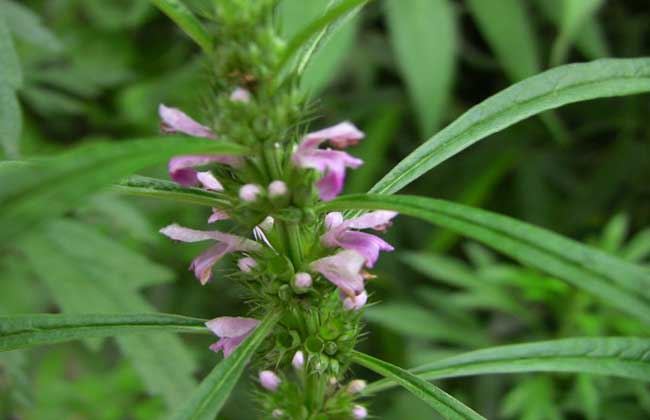
Motherwort (Leonurus japonicus) is an annual herbaceous plant of the genus Leonurus in the family Lamiaceae. It has been an essential medicine used by physicians of past dynasties to treat gynecological diseases, with the effects of promoting blood circulation, removing blood stasis, regulating menstruation and reducing water retention. It is divided into early-maturing motherwort and winter-type motherwort, and both are generally propagated by seed. Its cultivation value is relatively high. Let us take a look at motherwort planting techniques together below!
Motherwort Planting Conditions
Motherwort prefers a warm and humid climate and likes sunlight. It has no strict requirements for soil, and can be planted in ordinary soil and on barren hillsides, with relatively fertile soil being better. It needs sufficient water conditions, but should not be waterlogged and is afraid of flooding. It grows in a variety of environments, and its altitude can reach as high as 3400 m. It is distributed in wild wastelands, roadsides, field ridges, hillside grasslands, riversides and other places, mostly in sunny spots.
Motherwort Propagation Techniques
1. Seed treatment: Before sowing motherwort, mix the seeds into wood ash or fine soil mixed fertilizer, then mix the seeds with human and livestock manure and urine plus Xin Gaozhi film, to repel underground pests and diseases, isolate viral infection, strengthen respiration intensity and increase the seed germination rate. Choose fresh seeds of the current year with a germination rate generally above 80%. For hole sowing, generally prepare 400-450 grams of seed per mu; for drill sowing, prepare 500-600 grams of seed per mu.
2. Sowing time: Early-maturing motherwort can be sown in autumn, spring or summer, while winter-type motherwort must be sown in autumn. Spring sowing is best during the period from Yushui to Jingzhe, and in the north, summer sowing is used to make use of summer fallow land for planting. In low-temperature areas, autumn sowing is mostly adopted, and it is best when the soil is moist during the period from Qiufen to Hanlu.
3. Sowing methods: The propagation methods for sowing motherwort include drill sowing, hole sowing and broadcast sowing. Plains areas mostly use drill sowing, sloping land mostly uses hole sowing, and broadcast sowing is inconvenient to manage and is mostly not adopted. Before sowing, mix the seeds into wood ash or fine soil mixed fertilizer, which can both ensure growth nutrition and prevent insect damage.
Motherwort Planting Techniques
1. Thinning and replanting: Begin thinning motherwort when the seedlings are about 5 cm tall, then carry out 2-3 more thinnings successively, and finalize the seedlings when the seedlings are 15-20 cm tall. For drill sowing, keep seedlings in staggered plants, with a plant spacing of about 10 cm; for hole sowing, keep 2-3 seedlings per hole. If missing seedlings are found during thinning, transplant and replant them in time.
2. Intertillage and weeding: Spring sowing requires intertillage and weeding 3 times, carried out respectively when the seedlings are about 5 cm, 15 cm and 30 cm tall. For summer sowing, carry out timely according to plant growth conditions. For autumn sowing, carry out the first intertillage and weeding in the current year when the seedlings have grown 3-4 true leaves, then carry out intertillage and weeding three more times the following year, in the same way as for spring sowing. When intertilling and weeding, do not turn the soil too deep, so as not to damage the roots. During the seedling stage, intertillage should protect the seedlings well, prevent them from being pressed by clods of soil, and even more, do not bruise the seedling stems. After the last intertillage, earth up the soil to protect the roots.
3. Rational topdressing: After each intertillage and weeding of motherwort, apply topdressing once, with nitrogen fertilizer being better; urea, ammonium sulfate, cake fertilizer or human and livestock manure and urine are all acceptable. When topdressing, pay attention to watering, and by all means avoid fertilizer that is too concentrated, so as not to damage the seedlings. Especially when applying cake fertilizer, it is emphasized that after being crushed, it should be thoroughly decomposed with water and diluted with water before application. During the rainy season when rainfall is concentrated, prevent waterlogging and pay attention to timely drainage.
4. Pest and disease control: Motherwort diseases include powdery mildew, which can be controlled before and after onset with a 1000-fold solution of 25% Xiufenning. For sclerotinia disease, spray 1:500 Ruikumai, or spray 1:1:300 Bordeaux mixture, or spray a 500-fold solution of 40% Junheli, etc. There is also damage from mosaic disease and others. Pests include aphids, which occur in spring and autumn and can be controlled with chemical preparations. Small cutworms can be caught and killed in the morning or trapped and killed with grass piles.