What is the difference between raw Panax notoginseng and cooked Panax notoginseng? Explained clearly in one article
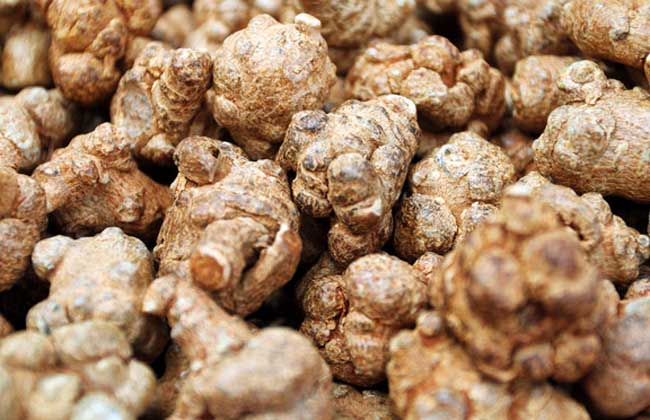
Panax notoginseng is a perennial erect herbaceous plant of the Araliaceae family, genus Panax. It is the main ingredient of Yunnan Baiyao, and its main producing areas are in the deep mountains of Yunnan and Guangxi. Its effects can be summed up in six words: "stop bleeding, dissipate stasis, relieve pain." It has traditionally been used as an important medicine for trauma and incised wounds, and is rarely eaten as a tonic. There is no distinction between raw and cooked; there is only a difference in how it is taken. Let us now look at the difference between raw Panax notoginseng and cooked Panax notoginseng!
Edible effects of raw Panax notoginseng
[Processing method] Powder made directly from the dried main root of Panax notoginseng.
[Medicinal effects] Stops bleeding and dissipates blood stasis, lowers blood pressure, lowers blood lipids.
[Clinical indications] Used for blood conditions such as traumatic blood stasis, external injury bleeding, postpartum dizziness due to blood loss, and hematemesis, as well as cardiovascular and cerebrovascular diseases such as coronary heart disease, hyperlipidemia, and hypertension.
[Raw consumption method] Take with warm boiled water. For daily health care, 2-5 grams each time, twice a day.
Edible effects of cooked Panax notoginseng
[Processing method] Put Panax notoginseng together with vegetable oil into a pot, heat over low heat until the Panax notoginseng turns yellow, then remove it. Do not use high heat, and do not heat for too long, to prevent the Panax notoginseng from burning.
[Medicinal effects] Nourishes blood, nourishes blood.
[Clinical indications] Used for conditions such as physical weakness, poor appetite, neurasthenia, excessive fatigue, blood loss, and anemia. It has a very good effect on postoperative patients and gynecological diseases such as dysmenorrhea in women.
[Cooked consumption method] 1. It can be stewed with chicken or meat soup, mixed with milk powder, or made cooked by steeping in hot boiled water for a few minutes, then taken; 3-5 grams each time. 2. Make a soup with brown sugar and Angelica sinensis; after the Angelica sinensis is cooked, add fermented glutinous rice, crack in two eggs, and after the eggs are cooked, add cooked Panax notoginseng powder, then remove from the heat and eat immediately.
Effects and functions of Panax notoginseng
[Nature and flavor] Sweet, slightly bitter, warm in nature.
[Meridian tropism] Enters the liver and stomach meridians.
[Effects] Dissipates stasis and stops bleeding, reduces swelling and relieves pain. Used for conditions such as hemoptysis, hematemesis, epistaxis, hemafecia, metrorrhagia and metrostaxis, external injury bleeding, stabbing pain in the chest and abdomen, and swelling and pain from falls.
1. "Compendium of Materia Medica": Stops bleeding, dissipates blood, and relieves pain. For metal-inflicted and arrow wounds, falls, beating, and cane injuries, and those with unstoppable bleeding, chew it thoroughly and apply it, or grind it into powder and dust it on; the bleeding will then stop. It also treats hematemesis, epistaxis, bloody dysentery, uncontrolled uterine bleeding during menstruation, postpartum retention of lochia, blood-related dizziness and blood pain, red eyes, carbuncles and swelling, tiger bites, and snake bites.
2. "Ben Cao Qiu Zhen": Specifically enters the liver and stomach, and also enters the heart and large intestine. Also called Shanqi. Li Shizhen said that some say it can heal incised wounds, like lacquer sticking to objects.
3. "Ben Cao Cong Xin": Dissipates blood and relieves pain. Treats hematemesis, epistaxis, bloody dysentery, blood avalanche, red eyes, and carbuncles and swelling.