What stories and legends lie behind agrimony?
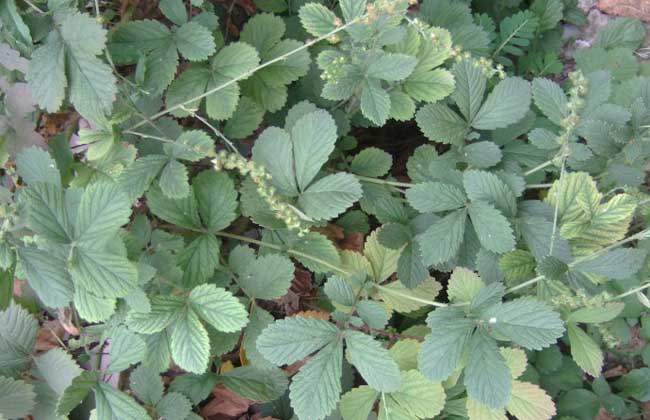
Agrimony is a perennial herbaceous plant of the genus Agrimonia in the rose family (Rosaceae), often growing by streams, along roadsides, in grasslands, in thickets, at forest edges and under open woods. It is a traditional remedy for stopping bleeding, while the Yellow Crane Tower is a Jiangnan scenic landmark renowned at home and abroad. The two seem unrelated, yet a story and legend reveals the close connection between them. Let us take a look together at the story and legend of agrimony!
Long ago, there was a small islet in the Yangtze River called Parrot Islet, and not far from the islet stood a tower, in which lived a white-haired old man. The old man knew medicine; he practiced medicine free of charge while cultivating his character and self-cultivation, and he was deeply respected by the people of the surrounding villages. One day in late autumn, a yellow crane came flying from somewhere, fluttered down in front of the tower and let out a mournful cry. The villagers gathered around and saw that the yellow crane was covered in blood, and they discussed it one after another. Some said the yellow crane wanted to fly back to its homeland, lost its way and fell down. Some said the yellow crane was injured and deliberately landed here, hoping someone would save it, and so on.
Hearing the sound, the old man came out of the tower, looked at the bleeding yellow crane, and went into the mountain forest behind the tower. After a while, he picked a handful of wild grass with feather-like leaves and blooming white flowers, and sprinkled and applied it to the yellow crane's wound, and before long the bleeding stopped. After that, the old man carefully fed the yellow crane, and the yellow crane soon recovered.
Some time later, one early morning, after taking leave of the villagers, the old man flew up into the sky on the crane. The villagers guessed that the old man had become an immortal, and that the yellow crane had been sent by the immortal realm to welcome the old man, but none of them knew where the old man had actually gone. Later, the villagers called the tower where the old man had lived the "Yellow Crane Tower", and called the wild grass the old man used to treat the yellow crane's wound "agrimony".
Many years later, in the Tang Dynasty, a poet named Cui Hao traveled to the Yellow Crane Tower, heard this legend, and was inspired to write poetry, leaving behind the timeless poem "Yellow Crane Tower": "The old one has gone riding the yellow crane; here only the Yellow Crane Tower remains. Once gone, the yellow crane never returns; for a thousand years the white clouds drift in vain. Clear and bright, the trees of Hanyang stand out; lush and green, the grass of Parrot Islet grows. At dusk, where is my hometown? The misty waves on the river bring sorrow." Even later, the great poet Li Bai also came to the Yellow Crane Tower and was likewise inspired to write poetry, but after reading Cui Hao's poem, he did not dare to write more. Of course, all of this comes later.