What Kind of Herb Is Agrimony? Get to Know This Chinese Medicinal Herb
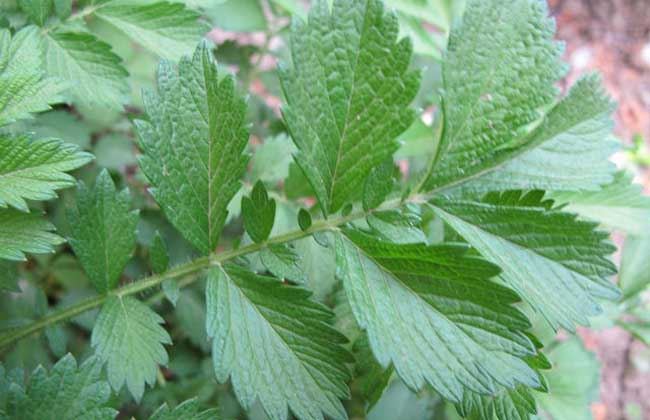
Agrimony, also known as hairy agrimony, "tuoli cao" (exhaustion herb), and "langya cao" (wolf's tooth herb), is a perennial herbaceous plant in the genus Agrimonia of the rose family (Rosaceae). The whole plant, roots and winter buds are used as medicine, and the tender stems and leaves are edible. It is not only rich in nutrients but also has strong anti-cancer properties. It grows in all provinces and regions across northern and southern China, mostly in forests, on hillsides and along roadsides, and is also distributed in central Europe, the former Soviet Union, Mongolia, Korea, Japan and northern Vietnam.
The roots of agrimony are mostly tuberous, with a short rhizome and often 1 to several underground buds at the base. The stems are 30-120 cm tall, covered with sparse soft hairs and short soft hairs, rarely with sparse long stiff hairs on the lower part. The leaves are interruptedly odd-pinnate compound leaves, with the petiole covered in sparse soft hairs or short soft hairs. The leaflets are sessile or short-stalked, obovate-elliptic or obovate-lanceolate. The stipules are herbaceous, green, sickle-shaped, rarely ovate, with an acute or acuminate apex and sharply serrate or lobed margins; the stipules on the lower stem are sometimes ovate-lanceolate.
The inflorescence of agrimony is a terminal spike-like raceme, branched or unbranched, with the rachis covered in soft hairs; the pedicels are 1-5 mm long and covered in soft hairs. The bracts are usually deeply 3-lobed, with band-shaped lobes; the bracteoles are ovate and opposite, entire or split at the margins. The flowers are 6-9 mm in diameter, with triangular-ovate sepals and yellow oblong petals. The fruit is obovate-conical, with 10 ribs on the outside, covered in soft hairs, and with several rows of hooked bristles at the apex; it is upright when young and closes together at maturity, measuring 7-8 mm long including the hooked bristles, with a maximum diameter of 3-4 mm. The flowering and fruiting period is from May to December.
Agrimony prefers a warm and humid environment, with an optimum growing temperature of 20-30°C. It has no strict requirements for soil, but deep, loose and fertile sandy loam is best. It is propagated by seed or by dividing the roots. For spring sowing, sow in late March in the south and mid-to-late April in the north; for autumn sowing, sow from late September to early October in the south and from late October to early November in the north before the ground freezes. Root division propagation can be carried out in both spring and autumn.
Agrimony is bitter and astringent in taste, neutral in nature, and enters the intestine, stomach and spleen meridians. It has the effects of stopping bleeding, strengthening the stomach, lubricating the intestines, stopping diarrhea and killing parasites. It is mainly used to treat exhaustion and fatigue, irregular menstruation in women, red flooding and white vaginal discharge, stomach cold and abdominal pain, red and white dysentery, vomiting blood, coughing blood, intestinal wind, blood in the urine, uterine bleeding, duodenal bleeding and other conditions. Agrimonin extracted from the whole plant is used as a hemostatic drug.