A Detailed Guide to the Cultivation Techniques and Management Methods of Tetrapanax papyrifer
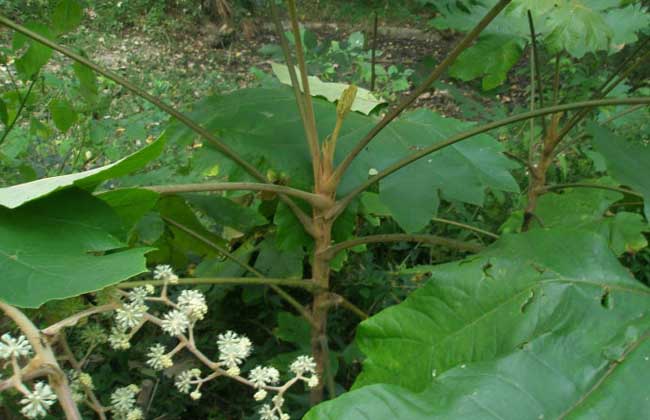
Tetrapanax papyrifer, also known as Koutuo, Linan, Huoduo, Yishang, Tongtuomu, Congcao, Baitongcao, etc., is the stem pith of Tetrapanax papyrifer, a deciduous woody vine of the genus Akebia in the family Lardizabalaceae. It is a common traditional Chinese medicinal material, and when used as medicine it has the effects of clearing heat and promoting diuresis, and unblocking qi and promoting lactation. It has very strong adaptability and can be cultivated in all provinces and regions south of the Yangtze River. Let us take a look at the cultivation techniques of Tetrapanax papyrifer below!
Growth Habits of Tetrapanax papyrifer
Tetrapanax papyrifer prefers light and warmth, and grows well in moist, fertile soil. Its roots have strong lateral growth capacity and can form a large number of root suckers. It is not very cold-tolerant, with an overwintering temperature above 5°C. It is suitable for cultivation in fertile sandy loam. It often grows in grass thickets under mountain forests at low altitudes. It grows well in slightly acidic yellow soil rich in humus, and can also adapt to neutral soil. Its stems and vines often grow prostrate on the ground. It is produced in Jiangsu, Hubei, Sichuan, Guizhou, Yunnan and other places.
Propagation Techniques of Tetrapanax papyrifer
1. Site selection and land preparation: The cultivation site for Tetrapanax papyrifer should be selected in mixed wood forests with convenient irrigation and good drainage, valley areas and gentle slope zones of secondary forest mountainous areas, with a slope not exceeding 10-15 degrees, and fertile brown forest soil or sandy soil. Land preparation should be carried out before sowing.
2. Seed propagation: Tetrapanax papyrifer is propagated by seeds. The suitable planting time is from April to October. On rainy days or sunny afternoons when the sun is slanting, sow in furrows at a row spacing of 20-25 cm. The plant spacing can be determined according to soil fertility, management intensity, and ease of irrigation and drainage. After the seeds are sown in the furrows, cover with 2-3 cm of soil and press firmly.
Cultivation Management of Tetrapanax papyrifer
1. Field management: After sowing Tetrapanax papyrifer, keep the soil moist, and attention should be paid to drainage during the seedling growth period. After the seedlings emerge, promptly remove the covering grass, and weed and thin the seedlings. After the first true leaf is fully expanded, set the seedlings at a plant spacing of 6 cm. When the seedlings are more than 30 cm tall, trellises should be set up to support the vines. When manually building trellises, various branches can be used to form fence supports, and small trees or shrubs such as Vitex trifolia and Tephrosia candida can be used. Apply farmyard manure 2-3 times per year during the growing period.
2. Pest and disease control: Tetrapanax papyrifer has fewer diseases during the growing period, mainly insect pests. The larvae of the Akebia swallowtail butterfly bite and feed on leaves and stems from July to September. During the occurrence period, spray with a 500-800 times dilution of 90% trichlorfon. Aphids damage the leaves; spray with a 2000 times dilution of 40% dimethoate emulsion.
3. Harvesting and seed retention: In autumn and winter, cut the base of Tetrapanax papyrifer, remove the head and tail and young branches, scrape off the coarse outer bark of the woody stem, and dry in the sun. During the drying process, straighten the vine stems. When they are about 70-80% dry, sort them by diameter and tie them into bundles, then continue drying until complete. For seed retention, select seeds that are large, plump, and free from pests and diseases.