What Kind of Plant Is Tongcao? Understanding the Botanical Identity of Tongcao in One Article
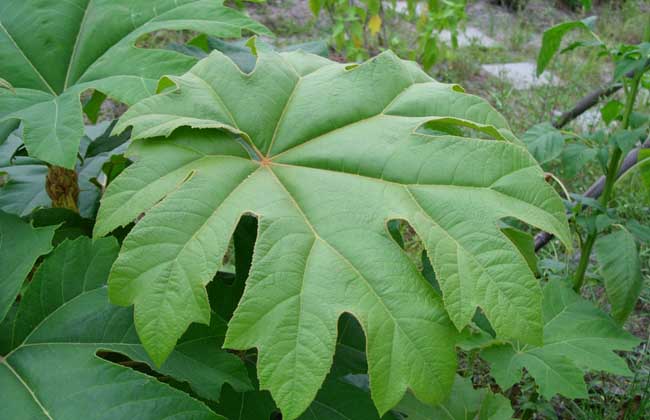
Tongcao is the stem pith of the Araliaceae plant Tetrapanax papyrifer, also known as Koutuo, Linan, Huodui, Yishang, Tetrapanax papyrifer, Congcao, Baitongcao, etc. It is distributed in Jiangsu, Hubei, Sichuan, Guizhou, Yunnan and other places. Currently, the Chinese market mostly uses Clematis armandii, Akebia trifoliata var. australis, and Tetrapanax papyrifer as substitutes, while Japan uses Akebia quinata and Akebia trifoliata. The Taiwan, China market mostly uses Clematis armandii and Akebia longeracemosa. The Chinese mainland once used Aristolochia manshuriensis as a substitute, but it was banned due to toxicity.
The stem of Tongcao is slender, cylindrical, twining, with grayish-brown stem bark, bearing round, small protruding lenticels, and bud scales arranged in an imbricate pattern, light reddish-brown. Palmately compound leaves are alternate or clustered on short branches, usually with 5 leaflets, and slender petioles. The leaflets are papery, obovate or obovate-elliptic, with a rounded or concave apex bearing a small mucro, and a rounded or broadly cuneate base, dark green above and greenish-white below. The midrib is sunken above and raised below. The petiolules are slender, 8-10 mm long, with the middle one reaching up to 18 mm.
The corymbose racemes of Tongcao are axillary, with 1-2 female flowers at the base and 4-10 male flowers above. The peduncle is 2-5 cm long, borne on shortened lateral branches, with the base enclosed by bud scales, and the flowers are slightly fragrant. The pedicels of male flowers are slender, while those of female flowers are thin and long, with 6-9 staminodes. The fruit is paired or solitary, oblong or elliptic, purple when mature, dehiscing along the ventral suture. Seeds are numerous, ovate-oblong, with brown or black glossy seed coats. The flowering period is April to May, and the fruiting period is June to August.
Tongcao prefers light and warmth, and grows well in moist, fertile soil. Its roots have strong lateral growth ability and can form large numbers of root suckers. It is not very cold-tolerant, with a wintering temperature above 5°C. It is suitable for cultivation in fertile sandy loam and often grows in grass clusters under mountain forests at low altitudes. It grows well in slightly acidic, humus-rich yellow soil and can also adapt to neutral soil. Its stems and vines often grow prostrate on the ground. It is produced in Jiangsu, Hubei, Sichuan, Guizhou, Yunnan and other places.
Tongcao is propagated by sowing, cuttings, or early spring root cuttings. In early spring, seeds are used to raise seedlings. The underground stems have very strong sprouting ability. In winter, part of the underground stems is dug and wounded to stimulate new shoots to grow in the second year. By the third year, before sprouting in early spring, these new seedlings are transplanted and planted at a row spacing and plant spacing of 1.3 m each. In autumn and winter, the base is cut, the head and tail and young branches are removed, the rough outer bark of the woody column is scraped off, and it is sun-dried. During drying, the vine stems are straightened, and when about 70-80% dry, they are sorted into grades according to diameter and tied into bundles, then drying is continued until complete.
According to different processing methods, Tongcao is divided into Tongcao and cinnabar-processed Tongcao. After processing, it is stored in dry containers in a ventilated and dry place, protected from moisture. Tongcao is sweet and bland in taste, slightly cold in nature, and enters the Lung and Stomach meridians. It has the effects of clearing heat, promoting diuresis, and promoting lactation. It mainly treats damp-heat strangury, edema with scanty urine, insufficient lactation and other conditions, but it should be taken with caution by those with deficiency of both qi and yin, middle-jiao cold, no internal damp-heat, and pregnant women.