What are the common tricks in Dendrobium officinale cultivation scams?
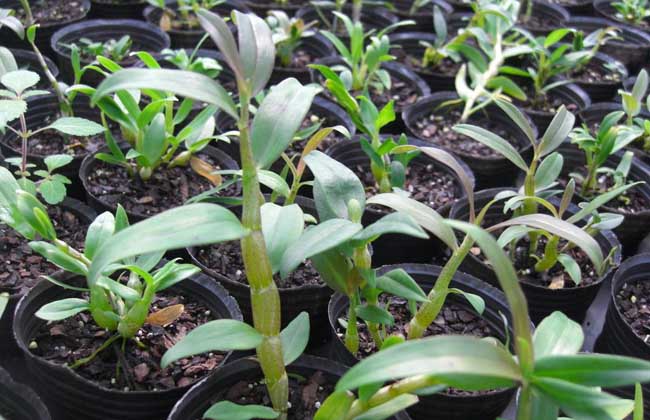
As a rare medicinal herb, Dendrobium officinale has always been ranked alongside lingzhi, ginseng and cordyceps as a top-grade Chinese herbal medicine. Wild Dendrobium officinale is a nationally protected plant in China, clearing while tonifying and tonifying while clearing, and with its unique properties superior to other Chinese herbal medicines it has become the “darling” of market consumers, while at the same time breeding many cultivation scams. Below let us take a look at how to avoid being scammed when cultivating Dendrobium officinale!
Dendrobium officinale cultivation scams
The extremely low reproductive capacity and survival ability of Dendrobium officinale, combined with reckless harvesting and felling by those blinded by greed, have pushed Dendrobium officinale to the brink of extinction, and with its unique properties superior to other Chinese herbal medicines it has become the “darling” of market consumers. Seeing this opportunity, some profit-seeking people begin to stir, using “sweet talk” and so-called “absolutely genuine Dendrobium officinale” and “we will certainly help you get rich” to deceive consumers and growers, thereby making consumers and growers feel “afraid of the real and the fake”. At the same time, some unscrupulous merchants, generally newly established shell companies, use high-priced buyback as bait to lure growers into joining, with the aim of reselling seedlings at high prices.
How to avoid Dendrobium officinale scams
1. Look at technical strength: no matter how great the prospects of any precious cultivation are, if it cannot survive or the yield is very low, it is all in vain.
2. Look at scale and strength: factories, cultivation workshops, specialty stores and planting bases are all manifestations of a truly established enterprise and a solid entity.
3. Look at actual products: Dendrobium officinale cultivation enterprises generally also sell wellness products such as dendrobium and fengdou, so check whether their sales capability is genuine.
4. Look at the business license: look at the license date, whether the company is newly opened, whether it is affiliated with other manufacturers, and whether the official seal belongs to the same entity as the planting base and the pharmaceutical factory.
5. Make on-site inspections: growers with larger scale must conduct on-site inspections and check the company's reputation.
6. Do not trust guaranteed buyback: guaranteed buyback is indeed tempting for growers of precious Chinese medicines such as Dendrobium officinale, but even for fresh stems of Dendrobium officinale of a uniform variety, the purchase price fluctuates every year. Those that advertise an extremely high floor price, offer buyback, and dare to sign a 5-year cultivation buyback contract have low credibility.
Risks of Dendrobium officinale cultivation
1. High cultivation difficulty: despite more than 10 years of research and exploration, the artificial cultivation technology for dendrobium is basically mature. However, it is still very difficult for ordinary people to master skilled cultivation techniques in a short period, and at present cultivation techniques vary from place to place, product quality and benefits differ greatly, and cultivation failures also occur from time to time.
2. High investment risk: calculated on the basis of a greenhouse intensive cultivation of 400 sq m of actual effective planting area per mu, each mu requires 30,000 to 50,000 clusters of seedlings, and calculated at the current 2.5 yuan per cluster, the seedling investment requires more than 80,000 yuan, plus the cost of facilities such as greenhouses and 2 years of labor and management fees, the investment per mu exceeds 100,000 yuan. Once cultivation fails, the losses are heavy, and such examples have appeared many times.
4. Long production cycle: from tissue culture of seedlings to acclimatization of bottle seedlings takes about 15 months; in Dehong and other places in Yunnan where temperatures are relatively high, it takes 15 to 18 months for initial harvest, while in some areas with lower temperatures the harvest period requires 18 to 30 months.
5. Hard to guarantee quality: China currently has as many as 76 dendrobium varieties, and even Dendrobium officinale alone has several seedlings of different quality such as hybrid species, origin species, soft-stem species and hard-stem species, which are difficult even for professionals to distinguish. In addition, factors such as substrate selection, planting mode, fertilization and pest and disease control all affect the quality of dendrobium. If the techniques are not mastered well, the quality of the cultivated product will be poor, and pesticide residues and heavy metals will exceed standards, making it generally very difficult to sell.
6. Principle of authenticity of origin: even though they are all dendrobium, quality varies greatly depending on the growing area. At the current stage when the industry has just started, consumers do not yet attach much importance to place of origin, but as the market expands, the principle of authenticity of origin will be taken seriously, and dendrobium grown artificially in greenhouses in some places unsuitable for cultivation will lose the market due to reasons such as quality.
7. Unstable market conditions: due to the participation of enterprises in Zhejiang, Guangdong and other places, the large one-time planting area, plus the impact of greenhouse cultivation on quality and the authenticity of origin and various other factors, the Dendrobium officinale market is unstable, and later-stage benefits are difficult to predict.
Summary: to avoid falling into Dendrobium officinale cultivation scams, you must keep your eyes open. In addition to gaining a detailed understanding of the company's brand, you must also strictly check aspects such as the company's size, production and management technology, the quality of Dendrobium officinale seedlings, after-sales service and technical support.