What are the growing conditions for Gastrodia elata? A full breakdown of its environmental requirements
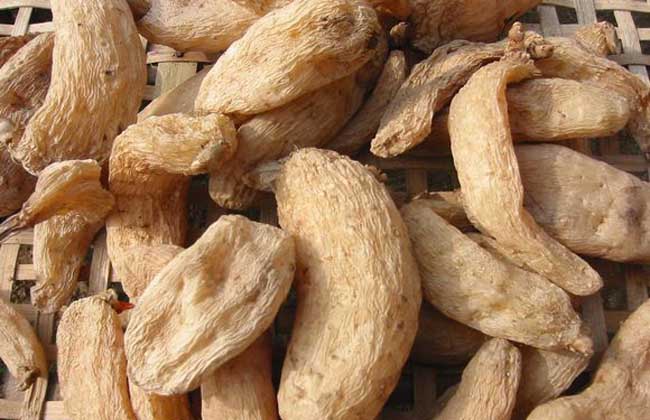
Gastrodia elata is a perennial herb in the orchid family, genus Gastrodia, and its tubers are mainly used as medicine. It is a precious Chinese medicinal herb listed in the Chinese Pharmacopoeia and holds an extremely important place among the long-term best-selling varieties in China's traditional medicine market. Gastrodia elata is suitable for growing in moist, air-permeable, well-draining, loose loam or sandy loam rich in humus. Let's take a look below at what growing conditions Gastrodia elata needs!
Temperature conditions
Temperature is the primary factor affecting the growth of Gastrodia elata. It likes to grow in an environment that is cool in summer and not too severely cold in winter, and it is quite sensitive to temperature; high or low temperatures directly affect its growth, yield and quality. The temperature requirements for the growth and development of Gastrodia elata correspond to the seasonal changes in natural temperature in its production areas. When spring temperatures begin to rise and the ground temperature reaches above 10°C-12°C, Gastrodia elata that has gone through winter dormancy begins to sprout and grow; when the ground temperature reaches above 15°C, its growth gradually becomes vigorous, and the meristematic cells at the tip of the daughter tubers divide, elongate and enlarge rapidly, forming new tubers of different sizes. Generally, from late May to early September, when the ground temperature is between 20°C-25°C, this is the vigorous growth period for Gastrodia elata. But when the summer ground temperature continuously exceeds 30°C, the growth of Armillaria mellea and Gastrodia elata is inhibited, producing “bird-head-shaped” jianma. Therefore, in hot seasons, heat protection and cooling are needed. When the temperature falls below 15°C in late autumn and early winter, the growth rate of the new daughter tubers (tubers) of Gastrodia elata slows down and gradually stalls as they enter overwintering dormancy.
Humidity conditions
Gastrodia elata is suitable for growing in rainy, humid climatic conditions. Especially during the peak growth period from June to August, it needs more water, while in late September, with more rain and low temperatures, Gastrodia elata instead suffers from Armillaria mellea damage. The soil moisture content in Gastrodia elata production areas varies greatly depending on soil type and texture. In humus-rich soil, the moisture content is often maintained above 50%. Higher soil moisture is beneficial to the growth of Gastrodia elata and Armillaria mellea, but excessively high soil moisture easily causes Gastrodia elata to rot.
Light conditions
From planting to harvest, the entire asexual reproduction process of Gastrodia elata takes place underground. Sunlight has little effect on it. It is precisely because of this characteristic that it can be cultivated outdoors, indoors, in air-raid shelters and in tunnels, with or without light. However, the sexual reproduction process requires a certain amount of scattered light. After the jianma emerges from the soil, strong direct light can harm the stems of Gastrodia elata, causing sunscald and leading to plant death, so the breeding nursery should be shaded with a shed. In addition, when introducing the crop in low mountain areas, strong direct light raises the ground temperature, so in hot summers a shade shed should also be set up to lower the temperature and help Gastrodia elata get through the hot summer.
Terrain conditions
In GAP cultivation of Gastrodia elata through asexual reproduction, if the conditions required for the growth of Gastrodia elata and Armillaria mellea can be met, summer high temperatures and winter low temperatures controlled, and a suitable planting period arranged, cultivation is not limited by altitude; it can be introduced and grown on plains, in high mountains, in hot southern regions or in cold northeastern regions. Strong winds can break the flower stalks and affect seed harvest. Therefore, in sexual reproduction cultivation, after the jianma emerges from the soil, the flower stalks must be supported with bamboo poles and tied to prevent lodging.
Soil conditions
Soil texture is closely related to the growth of Gastrodia elata. Gastrodia elata is suitable for growing in sandy soil rich in humus and moist. This kind of soil is loose, has strong water retention and good air permeability. The soil pH requirement is 5.8-6.7. Generally, clayey soil has poor water permeability and air permeability, and Gastrodia elata and Armillaria mellea grow poorly in it. When cultivating Gastrodia elata indoors, in tunnels, air-raid shelters and similar places, natural soil is mostly not used; instead, a mixture of yellow sand and rice husks is used as a substitute for soil as the filling material, with good results. Soil or filling material that has already been used to grow Gastrodia elata should not be reused repeatedly, because the metabolic products of Gastrodia elata and Armillaria mellea inhibit their growth and can even cause Gastrodia elata to rot, affecting yield and quality.