How to prevent and control green mold (Trichoderma viride) infection in reishi mushrooms?
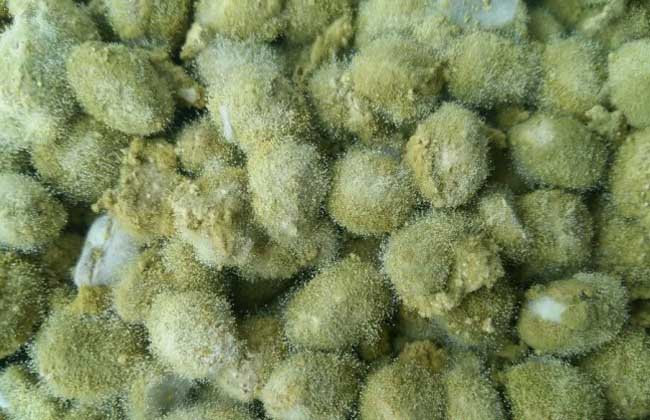
Green mold (Trichoderma viride) has the highest frequency of occurrence and degree of harm, and can occur at all stages of reishi cultivation. It can be described as a devastating, catastrophic disease and contaminant fungus, seriously affecting the yield and quality of reishi. It is the focus of disease prevention and control in reishi cultivation. Let's take a look at the prevention and control methods for green mold in reishi mushrooms!
Morphological characteristics of green mold in reishi mushrooms
Green mold (Trichoderma viride) has slender, colorless hyphae that are septate and highly branched. Conidiophores arise from the lateral branches of the hyphae, opposite or alternate, generally with 2 to 3 rounds of branching; the sterigmata bearing conidia are flask-shaped or conical. Conidia are mostly spherical, with the spore wall bearing small warty protrusions, green or blue-green in color. On PDA medium, the colony is initially white and cottony, later becoming dark green.
Damage symptoms of green mold in reishi mushrooms
Green mold (Trichoderma viride) is widely present in various organic matter and soil in nature, and often floats in the air in the form of conidia. It has strong adaptability, and is especially prone to developing on substrates rich in lignin and cellulose. Once it infects, it grows and spreads rapidly, turning the entire substrate layer green, and secretes toxins that destroy the host's hyphae and cytoplasm, inhibiting the growth of reishi hyphae. It competes with reishi hyphae for nutrients, consumes nutrients, and causes the host to die quickly.
Occurrence patterns of green mold in reishi mushrooms
1. Transmission routes: Conidia are spread through airflow, water, insects, etc. Old mushroom houses, contaminated tools, and raw materials are the main sources of primary infection. The conidia produced after infection can cause repeated re-infection multiple times.
2. Occurrence conditions: Widely distributed in soil, air, and various organic matter in nature. Any substrate that is not thoroughly sterilized or poorly composted and fermented is very easily infected. At temperatures of 15 to 30°C, green mold spores have the highest germination capacity; the hyphae can grow within the range of 4 to 42°C, with the fastest growth at 25 to 30°C. High-temperature environments are favorable for spore germination and hyphal growth. It prefers a slightly acidic environment, but does not die even when the pH rises above 7.
Prevention and control methods for green mold in reishi mushrooms
1. Select reishi varieties with good contaminant resistance and strong hyphal growth vigor. Selecting high-quality reishi varieties is the key to successful cultivation. Varieties with good disease resistance and strong growth vigor are less susceptible to green mold infection.
2. Strictly select cultivation spawn. The selected spawn should have pure genetic characteristics, strong hyphal vitality, white, dense, and robust hyphae, and an appropriate spawn age, to prevent green mold from being introduced through the spawn.
3. Maintain good sanitation in the cultivation environment. Remove spent mushroom substrate and garbage from the mushroom house, thoroughly clean the cultivation racks, and carry out spatial disinfection to eliminate places where contaminant fungi can hide, thereby reducing transmission vectors. Good environmental sanitation can achieve twice the result with half the effort in preventing contamination.
4. The substrate should be fresh and free of mold. Sun-dry it for several days before use. The substrate formula should be reasonable, with main and supplementary materials thoroughly mixed evenly. The moisture content should be controlled at around 60 to 70%, with appropriate filling amount and moderate compaction. After filling, immediately carry out high-pressure or atmospheric-pressure sterilization to prevent acidification of the medium. Sterilization must be thorough.
5. Establish a strict aseptic mindset during inoculation. Since green mold spores float everywhere in the air, one must not be negligent just because they cannot be seen with the naked eye. The operator's hands, clothing, and all inoculation tools and materials must be strictly sterilized. For example, operators using an inoculation room should wear hats to prevent green mold spores from landing on their hair. Inoculation movements should be as quick and proficient as possible to prevent introducing contaminant fungi and contaminant spores during the inoculation process. Bags damaged during sterilization should be sealed with adhesive tape, and the seal should be disinfected with 75% alcohol.
6. Appropriately increase the inoculation amount, so that reishi hyphae can rapidly occupy the territory with absolute dominance, reducing contamination by contaminant fungi and achieving the effect of suppressing contaminants through the mushroom.
7. Ensure that the cultivation room has a suitable microclimate, and manage the hyphal cultivation stage well. Control the temperature at around 25°C and the humidity at 60 to 70%, pay attention to ventilation and air exchange, and strictly guard against high temperature and high humidity. Create the most suitable environmental conditions for reishi hyphal growth, promoting rapid growth of reishi hyphae to quickly colonize the entire substrate surface.
8. After the reishi primordia emerge, promptly remove the cotton plugs or open the bags to prevent the primordia from being damaged and infected by green mold. Do a good job of heat preservation and moisture retention, while strengthening ventilation and providing a certain amount of light, to promote healthy growth of the primordia into fruiting bodies. Harvest the fruiting bodies promptly after they mature.