How to control fungus gnats on reishi mushrooms? A full breakdown of practical prevention and control methods
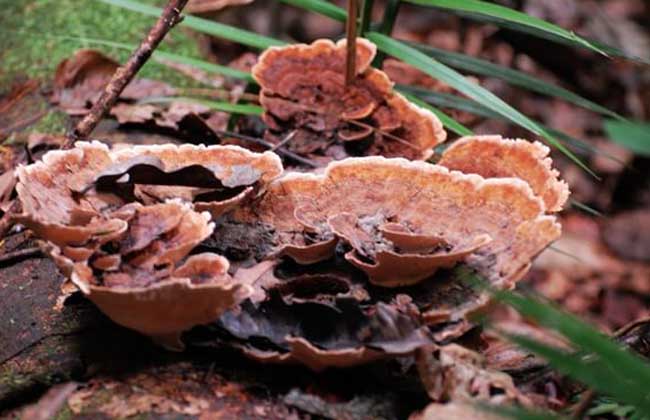
Fungus gnats, also known as reishi gnats, include more than 10 species that harm reishi mushrooms, with Lycoriella pleuroti and the small fungus gnat being the more common ones. The adult Lycoriella pleuroti is dark brown with a darker head and a body length of 2-4 mm. The adult small fungus gnat is light brown with a darker head and a body length of 4-6 mm. Let's take a look at the prevention and control methods for reishi mushroom fungus gnats!
Occurrence patterns of reishi mushroom fungus gnats
The peak emergence period for adult fungus gnats is March to April and October to November, and they have a strong attraction to decay and light. Adults mostly lay eggs on the surface of gaps in the substrate and on the casing soil, and rarely on the reishi bodies. Larvae prefer to be active at temperatures of 15-28°C, where they grow and develop well. Mature larvae mostly make chambers and pupate in gaps in the soil layer or in the substrate. Fungus gnats have omnivorous feeding habits, prefer humus, and often gather in unclean places such as garbage, waste material, dead reishi and old roots.
Symptoms of damage caused by reishi mushroom fungus gnats
The eggs, larvae and pupae of fungus gnats mainly enter the mushroom bed along with the substrate or casing soil, while adults fly directly into the reishi house to reproduce and lay eggs. Adult fungus gnats do not directly harm the mushrooms, but they often carry pathogens, nematodes and mites in and out of the reishi house. The larvae harm the mycelium and fruiting bodies of the mushrooms, mostly crawling among the hyphae and biting and feeding on them, causing the substrate to turn black, become loose and sink, and the mycelium to change from white to yellowish-brown, making it difficult for reishi to form. After reishi emerges, the larvae feed from the base of the stipe and gradually bore into the interior of the reishi body, with the primordia and young reishi suffering the most severe damage. Where the insect population is large, the development of young reishi is inhibited, and the damaged reishi turns brown and becomes leathery, or the stipes are bored hollow in clusters, causing the damaged reishi to soften into a sponge-like texture and finally rot.
Prevention and control methods for reishi mushroom fungus gnats
1. Do a good job of environmental sanitation inside and outside the reishi house to effectively reduce the source of insects.
2. Install 60-mesh gauze on the doors, windows and ventilation openings of the reishi house, and it is best to coat the gauze with a long-acting agent that repels and kills mosquitoes and flies, to block adult Lycoriella pleuroti from migrating into the room.
3. During the cultivation period, arrange the daily management work of the reishi house as much as possible during the daytime. On the principle of ensuring working light, reduce the number of times and the duration for which indoor lights are turned on. During the active period of adults, use black light lamps or incandescent lamps for day-and-night trapping and killing to reduce the number of adults and control the number of eggs laid.
4. Before the substrate is brought into the room, 40% diazinon emulsifiable concentrate can be mixed into the material while turning the pile, then covered with film and sealed for 1-2 days, using 0.1 kg of the pesticide per ton of substrate. This pesticide can also be used as a 1000-1200 times dilution for spray treatment of the reishi house, bed frames and casing soil. During the peak emergence period of adults, a 1000 times dilution of 80% dichlorvos can be used to spray the space. When larvae damage occurs on the mushroom bed, a 1500-2000 times dilution of 2.5% cypermethrin or a 1500-2000 times dilution of 50% malathion can be used for spray treatment when there is no reishi on the bed surface.