Why Doesn't Honeysuckle Bloom? Causes and Solutions
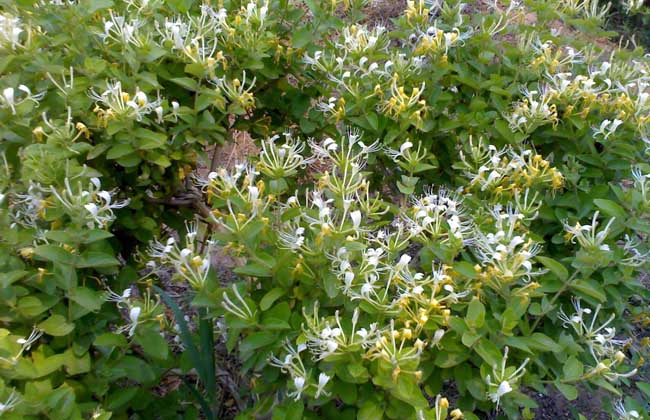
Honeysuckle has been praised since ancient times as an excellent medicine for clearing heat and detoxifying. It is the dried flower buds or partially opened flowers of Lonicera japonica and related species in the Caprifoliaceae family, genus Lonicera. It can both dispel wind-heat and effectively clear blood toxins. It gets its name because the flowers are white when they first open and then turn yellow. It has very wide medicinal value and health uses. Let's take a look below at why honeysuckle doesn't bloom!
When Does Honeysuckle Bloom?
Honeysuckle generally begins blooming in late May and ends around mid-October, with a flowering period of about 150 days. Usually the first flush of flowers is in late May, the second flush in mid-to-late July, the third flush in mid-August, and the fourth flush in mid-October, with each flush lasting about 7 days. The common peduncle of honeysuckle is usually solitary in the leaf axils of the upper part of small branches, equal to or slightly shorter than the petiole. The corolla is white, sometimes slightly reddish on the sun-facing side at the base, later turning yellow, labiate, with the tube slightly longer than the lips, and fragrant.
Why Doesn't Honeysuckle Bloom?
1. Insufficient sunlight: Honeysuckle needs good light conditions to grow well. It should not be placed in shade. Long-term placement in shade will cause honeysuckle not to bloom.
2. Poor ventilation: If honeysuckle is planted in too small a space, the air will not circulate, making it difficult to grow and develop well. It is best to set up a trellis.
3. Phosphorus deficiency in soil: If the soil lacks phosphorus when planting honeysuckle, it will also cause failure to bloom. At this time, increase the amount of phosphorus and potassium fertilizer applied and control the amount of nitrogen fertilizer applied.
4. Proper pruning: If pruning work is not done well when planting honeysuckle, it will also cause failure to bloom. At this time, remove weak small branches, diseased and pest-infested branches, etc., so that nutrients are concentrated for supply.
Honeysuckle Planting and Management Techniques
1. Seed propagation: Honeysuckle seed propagation is usually sown in April. Soak the seeds in warm water at 35-40°C for 24 hours, take them out and mix with 2-3 times their volume of wet sand to promote germination, and sow when about 30% have cracked open. On the seedbed, open furrows at a row spacing of 21-22 cm and sow, cover with 1 cm of soil, spray water once every 2 days, and seedlings will emerge in more than 10 days. Transplant after autumn or in the second spring, using about 15 kg of seeds per 1 hectare.
2. Cutting propagation: Honeysuckle cutting propagation is generally carried out during the rainy season. In cloudy and rainy weather in summer and autumn, select robust 1-2 year old branches free of pests and diseases, cut them into 30-35 cm lengths, remove the lower leaves to make cuttings, and use them as soon as they are cut. On the selected land, dig holes at a row spacing of 1.6 m and a plant spacing of 1.5 m, with a hole depth of 16-18 cm. Place 5-6 cuttings per hole, buried in the soil in a scattered, slanting, upright manner, with about 7-10 cm exposed above ground, then fill and firm the soil.
3. Timely pruning: Pruning is carried out from after leaf fall in autumn to before bud break in spring. Generally, vigorous branches are lightly pruned and weak branches heavily pruned, and every branch is pruned. When pruning, pay attention to ensuring that after new branches grow, they are conducive to ventilation and light penetration. Thin and weak branches, dead old branches, and basal branches should all be cut off. For plots with poor fertilizer and water conditions, pruning should be heavier. For aging plants, cut off old branches to promote new branches. Young plants should mainly be trained for plant shape and pruned lightly. Plants grown on mountain plots generally retain 4-5 main trunk branches, while plain plots should retain 1-2 main trunk branches. The tops of the main trunks should be cut off to make them thicker and upright.
4. Reasonable shaping: Shaping is carried out in combination with pruning. In principle, it is based on fertilizer and water management, promotes the whole plant, makes full use of space, increases the amount of branches and leaves, makes the plant shape more reasonable, and can noticeably increase flowers and yield. After pruning, the flowering time is relatively concentrated, which facilitates harvesting and processing. Generally, pruning can make the branches upright, and removing thin weak branches and basal branches is beneficial to the formation of new flowers. After picking flowers, prune again, then apply a quick-acting nitrogen fertilizer and water once to promote early development of the next flush of flowers. In this way, 4 harvests of flowers can be obtained in one year, with an average yield of 150-200 kg of dried flowers per mu.
5. Hilling and weeding: Honeysuckle planting requires hilling and weeding 3-4 times each year. Carry out the first time when new leaves appear, the second time before the second flowering period, and the last time in late autumn or early winter before frost. The purpose of hilling is to prevent flower roots from being exposed above ground, and it is recommended to carry it out together with fertilization. Weeding should start from the outer perimeter of the plant, first far and then near, and be careful not to damage the root system.
6. Reasonable topdressing: In the first 1-2 years after planting honeysuckle, during the period when the plant's development is becoming established, apply more fertilizers such as human and livestock manure, plant ash, urea, and potassium sulfate. After 2-3 years of planting, apply more fertilizers such as livestock miscellaneous manure, barnyard manure, cake fertilizer, and superphosphate in early spring each year. After the first flush of flowers is harvested, apply an appropriate amount of nitrogen, phosphorus, and potassium compound fertilizer to provide sufficient nutrients for the next flush of flowers. Each year after sprouting in early spring and when the first batch of flowers has been harvested, open ring trenches and apply human feces and urine, chemical fertilizers, etc. by watering, with 250 grams of each fertilizer applied.
7. Harvesting and processing: The best time to harvest honeysuckle is in the early morning and forenoon. At this time, the harvested flower buds are not prone to opening, have sufficient nutrients, a strong scent, and good color. Harvesting in the afternoon should be finished before the sun sets, because the opening of honeysuckle is restricted by light, and after the sun sets, mature flower buds will open, affecting quality. Do not include young buds or leaves. After picking, place them in wicker or bamboo baskets. When gathering them together, do not pile them into a large heap; spread them out instead. Do not leave them for longer than 4 hours.