When is the flowering time of honeysuckle?
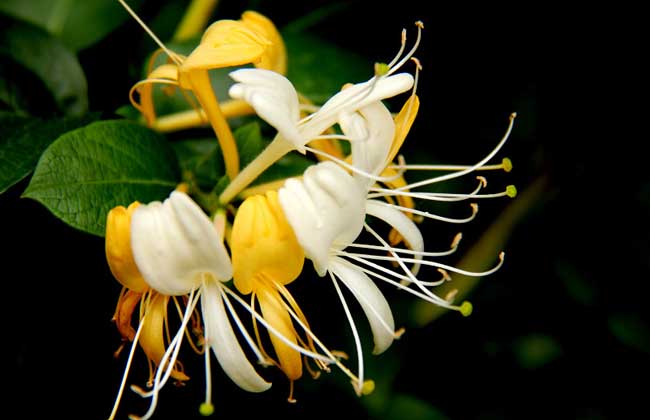
The scientific name of honeysuckle is Lonicera japonica. Medicinal honeysuckle refers to the dried flower buds or just-opening flowers of Lonicera japonica and plants of the same genus in the Caprifoliaceae family, genus Lonicera. Since ancient times it has been praised as a good medicine for clearing heat and detoxifying, as it can both disperse wind-heat and skillfully clear blood toxins, with remarkable effects on various febrile diseases such as fever, rash, macules, heat-toxin sores and carbuncles, and sore throat. Below let us take a look at when honeysuckle blooms!
When does honeysuckle bloom?
Honeysuckle generally begins to bloom in late May and finishes around mid-October, with a flowering period of about 150 days. Usually the first flush of flowers is in late May, the second flush in mid-to-late July, the third flush in mid-August, and the fourth flush in mid-October, with each flush lasting about 7 days. The peduncle of honeysuckle is usually solitary in the leaf axils of the upper part of the branchlets, equal to or slightly shorter than the petiole; the corolla is white, sometimes slightly red on the sun-facing side at the base, later turning yellow, labiate, with the tube slightly longer than the lip, and fragrant.
Where is honeysuckle produced?
Honeysuckle has strong adaptability. It likes sunlight and tolerates shade, has strong cold resistance, and also tolerates drought and waterlogging. It is not demanding about soil, but grows best in moist, fertile, deep sandy loam. It sends out new shoots twice a year, in spring and summer. It is distributed in all provinces of China, mostly growing wild in relatively moist areas. Planting areas are mainly concentrated in Shandong, Shaanxi, Henan, Hebei, Hubei, Jiangxi, Guangdong and other places, among which Pingyi County, Linyi City, Shandong Province is the main producing area of honeysuckle. It is also distributed in Korea and Japan, and has escaped and become a difficult-to-eradicate weed in North America.
The effects and functions of honeysuckle
1. Clearing heat and detoxifying: Honeysuckle has a neutral nature, and its heat-clearing and detoxifying effect is very obvious. In the hot summer, you can often brew honeysuckle in water to drink; it not only has a cooling effect, but also can effectively boost your spirits and make the body feel refreshed.
2. Clearing blood and eliminating toxins: Drinking honeysuckle tea can help the human body promptly clear fat and harmful substances from the blood, increase blood flow in the vessels, and effectively prevent dangerous cardiovascular and cerebrovascular diseases such as myocardial infarction.
3. Preventing flu: Research has found that honeysuckle can inhibit and resist a variety of bacteria that cause colds. Drinking it can increase our antiviral capacity and enhance human immunity, so it can be called the “Chinese herbal antibiotic” of traditional Chinese medicine.
4. Dispersing heat and eliminating pathogens: Honeysuckle brewed in water has a certain effect on externally contracted wind-heat or the early stage of febrile disease, with symptoms such as fever and headache, restlessness and little sleep, clouded spirit and crimson tongue, and dry mouth and throat.
5. Cooling blood and stopping dysentery: Honeysuckle brewed in water has the effects of detoxifying, stopping dysentery, cooling blood and soothing the throat for heat-toxin dysentery, dysentery with pus and blood, damp-warmth obstructing the throat, and sore throat.
6. Antibacterial and anti-inflammatory: Honeysuckle contains a substance that can effectively inhibit dysentery, typhoid, meningococcus, Pseudomonas aeruginosa, Staphylococcus aureus, hemolytic streptococcus, and influenza virus, among others. After entering the body, it can effectively promote the release of adrenal cortex hormone, and this hormone has a good inhibitory effect on various inflammations and swollen painful conditions.