Where is the production area of Danshen (Salvia miltiorrhiza)? A detailed explanation of the distribution of major production areas across the country
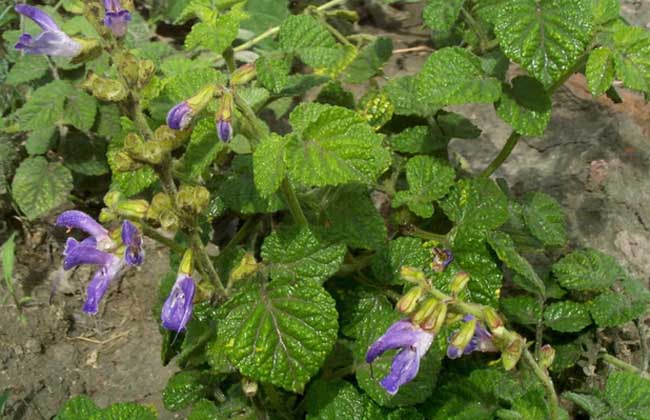
Danshen, also known as Chishen, Zidanshen, Honggen, etc., is a perennial upright herbaceous plant of the genus Salvia in the family Lamiaceae (Labiatae), a dicotyledon. Its roots are used as medicine and have effects such as removing blood stasis, promoting tissue regeneration, invigorating blood circulation, and regulating menstruation. Due to years of unchecked harvesting of wild Danshen, wild resources are now on the verge of extinction. Let us take a look below at where the production areas of Danshen are!
Where is the production area of Danshen?
The fleshy root of Danshen is thick, the stem is 40-80 cm tall, the leaves are usually odd-pinnately compound, the verticillaster has 6 flowers or more, and the small black nutlets are oval. The flowering period is from April to August, and fruit appears after flowering. In China, it is distributed in almost every province, region, and municipality except the high-cold areas of Heilongjiang, Jilin, and northern Inner Mongolia. It is produced in Hebei, Shanxi, Shaanxi, Shandong, Henan, Jiangsu, Zhejiang, Anhui, Jiangxi, Hunan, and other places, and it is also distributed in Japan.
The production environment of Danshen
Danshen likes to grow in an environment with a mild climate, sufficient light, and humid air. Areas with an annual average temperature of 17.1°C and an average relative humidity of 77% are the most excellent planting areas. It grows better in fertile sandy loam, but it has a wide adaptability to soil pH, and can grow in neutral, slightly acidic, and slightly alkaline soils. Wild Danshen is mostly seen by roadsides, on slopes, and by rivers.
Propagation methods of Danshen
1. Root division propagation: When harvesting in autumn, select current-year Danshen roots with a diameter of 0.7-1 cm, purple-red color, no pests or diseases, and full development as seed roots, and store them in moist sand until the next spring. In early spring from March to April, cut the seed roots into 4-6 cm small sections, and according to the specification of row spacing, plant spacing, and depth of 35 cm × 25 cm × 6 cm, place the cut seed roots vertically into the holes, one section per hole, with the thick end facing up, and never upside down. Cover with about 2 cm of soil, not too thick, otherwise it will affect emergence. Use about 50 kg of seed roots per mu. When planted with root sections, flowering is late, and it is difficult to harvest seeds in the same year, but the roots grow faster and the medicinal material yield is high.
2. Rhizome propagation: When harvesting Danshen, select robust and disease-free plants, cut off the thick roots for medicinal use, and use the thin roots together with the rhizome and heart leaves as seedlings for planting. Large seedlings can be divided into 2-4 plants according to the natural growth condition of buds and roots, and then planted. Wild Danshen can also be dug up, the thick roots cut off for medicinal use, and the thin roots together with the rhizome planted. The plant spacing and row spacing are the same as for root division propagation, and the time should be in late autumn or early spring. With rhizome propagation, it can be harvested in the following year after planting, with a short production cycle and good economic benefits.
3. Cutting propagation: In the north from June to July, and in the south from April to May, select robust and disease-free Danshen branches and cut them off at ground level, then cut them into 13-16 cm long sections. The lower cut should be close to the stem node and shaped like a horseshoe. Remove the lower leaves, and according to row spacing and plant spacing of 20 × 10 cm, insert the cuttings obliquely into the seedbed to a depth of 1/2-2/3 of the cutting, press the soil firmly, and leave 1-2 leaves above ground. Cut and insert as you go; they must not be left for long, otherwise the survival rate of the cuttings will be affected. After insertion, keep the soil moist and provide appropriate shading. In 15-20 days, new roots will grow from the lowest stem node. When the roots are 3 cm long, set them in the field.
4. Seed propagation: Danshen seeds are tiny, with a germination rate of about 70%. Direct sowing often results in uneven emergence, so the seedling-raising and transplanting method is mostly used. Seeds should be selected from those matured after June, and sown immediately after collection or sown in September. Generally, sow in the seedbed in March, either in drills or by broadcasting. For drilling, the row spacing and plant spacing are 30 × 20 cm, the furrow depth is 1-1.3 cm, the seeds are mixed with river sand and evenly scattered in the furrow, then covered with 0.5-0.7 cm of soil. For broadcasting, the seeds can be evenly scattered on the ground, then stepped on once with the foot so that the seeds adhere tightly to the soil, with no need to cover with soil. The sowing rate is about 0.5 kg per mu. After sowing, cover with plastic film to keep warm and moist. When the soil temperature reaches about 20°C, seedlings emerge in 15-20 days. When the seedlings have 3-5 true leaves, if they are found to be too dense, thinning should be carried out, and the thinned seedlings can be planted out and cultivated. After 2 months of growth after sowing, they can be transplanted.