Which regions are the main production areas of Angelica dahurica?
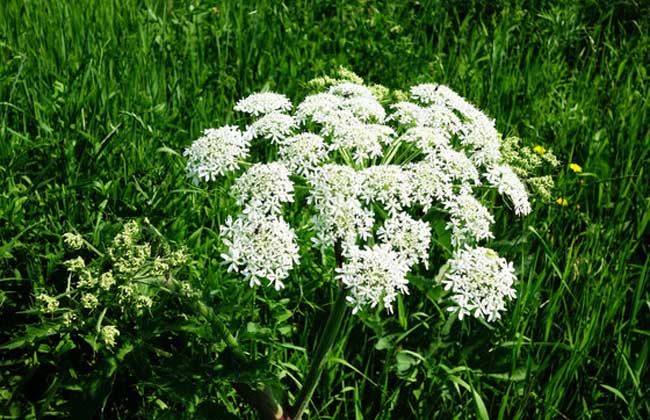
Angelica dahurica, also known as Chuan Baizhi, Fangxiang and so on, is a perennial tall herbaceous plant of the genus Angelica in the family Apiaceae. Its root is used as medicine, and it has functions such as dispelling dampness, draining pus and promoting tissue regeneration, invigorating blood and relieving pain. It mainly treats wind-cold colds, headaches, rhinitis and toothache. It is also used for leukorrhea, painful boils and swellings, and can be used as a spice. Now let us take a look at where Angelica dahurica is produced!
Where is Angelica dahurica produced?
Angelica dahurica is produced in Northeast China, North China and other places in China. In the northern provinces of China, it is mostly cultivated for medicinal use, mostly for local production and local sales, with a few transferred outside the province. It prefers a mild and humid climate and an environment with sufficient sunlight, can tolerate cold, and generally grows in places such as under forests, forest edges, beside streams, shrublands and valley grasslands at an altitude of 200 m to 1,500 m.
Medicinal value of Angelica dahurica
[Nature and flavor] Pungent in taste, warm in nature.
[Meridian entry] Lung, spleen and stomach meridians.
[Effects] Dispels wind, dries dampness, reduces swelling and relieves pain. Treats headache, pain of the supraorbital bone, toothache, sinusitis, cold-damp abdominal pain, intestinal wind and hemorrhoids, leukorrhea, carbuncles, sores and ulcers, dry and itchy skin, scabies and other conditions.
1. Dispelling wind and dispersing cold: Angelica dahurica can treat wind-cold colds, headaches, rhinitis and toothache caused by wind-cold.
2. Invigorating blood and draining pus: used for swollen and painful sores and ulcers. For example, at the early stage of acute mastitis, it can be used together with dandelion and trichosanthes fruit; if pus discharge is not smooth, it can be used together with honeysuckle and trichosanthes root.
3. Promoting tissue regeneration and relieving pain: Angelica dahurica has the effect of removing blood stasis, promoting tissue regeneration, reducing inflammation and relieving pain for lumbar muscle strain and muscle soreness.
4. Drying dampness and stopping leukorrhea: Angelica dahurica warms and dries cold-dampness, and is mainly used to treat cold-damp leukorrhea, often in combination with cuttlebone and the like. If it is damp-heat leukorrhea, it can also be used with heat-clearing and dampness-drying medicines such as phellodendron bark and ailanthus bark.
5. Blood pressure-lowering effect: The isoimperatorin and Indian quince contained in Angelica dahurica have a blood pressure-lowering effect in cats, with the effect lasting 1.5 hours.
Medicinal formulas of Angelica dahurica
1. To treat headache and eye pain: 4 qian of Angelica dahurica, 1 qian of raw aconite. Grind the above into powder, take one zi per dose, and administer with tea. If someone suffers from eye pain, first hold water in the mouth, then snort this into the nose, and the effect is even faster.
2. To treat various wind dizziness, sudden attack by wind pathogen before or after childbirth in women, heaviness and dizziness of the head and eyes, and blood-wind headache, sudden cold and sudden warmth, unclear mind, headache and dizziness from cold damage and other syndromes: fragrant Angelica dahurica (washed four or five times with boiling water) is ground into powder, mixed with refined honey into pills the size of a bullet. Take one pill per dose, often chewing it finely with schizonepeta and wax tea.
3. To treat migraine: Angelica dahurica, asarum, gypsum, frankincense and myrrh (with oil removed). Take equal parts of each of the above, grind into fine powder, and blow into the nose. If the left side hurts, blow into the right; if the right side hurts, blow into the left.
4. To treat supraorbital pain belonging to wind-heat and phlegm: skullcap (soaked in wine and fried), Angelica dahurica. Grind the above into powder, and mix 2 qian with clear tea.
5. To treat sinusitis: 8 fen each of biond magnolia flower, saposhnikovia root and Angelica dahurica, 1 qian 2 fen of Siberian cocklebur fruit, 5 fen of ligusticum chuanxiong, 7 fen of northern asarum and 3 fen of licorice. Decoct in plain water and take four doses consecutively. Avoid beef.
6. To treat intestinal wind: fragrant Angelica dahurica is ground into fine powder and administered with rice water.
7. To treat wind constipation of the stool: fragrant Angelica dahurica is fried and ground into powder. Take 2 qian per dose, with a little honey added to rice drink, and take two doses consecutively.
8. To treat swollen and painful hemorrhoids: first fumigate with Chinese honeylocust smoke, then apply Angelica dahurica powder mixed with goose bile.
9. To treat leukorrhea, with putrid pus in the intestines, continuous dripping and discharge, extremely foul and filthy, and cold pain in the umbilical and abdominal region, this is needed to drain pus: 1 liang of Angelica dahurica, 2 liang of single-leaf red hollyhock root, and half a liang each of peony root (white one) and white alum (the alum is burned until dry and ground separately). Grind into powder, together make into wax pills the size of wutong seeds, and take 10 or 15 pills on an empty stomach and before meals with rice drink. After the pus is gone, still use other medicines to tonify.
10. To treat toxic swelling with heat pain: mix Angelica dahurica powder with vinegar and apply.
11. To treat carbuncles with red swelling: equal parts of Angelica dahurica and rhubarb. Grind into powder and take 2 qian with rice drink.
12. To treat wounds from knives and arrows: chew fragrant Angelica dahurica thoroughly and apply.