Detailed Explanation of Key Techniques for Growing Lemon Verbena
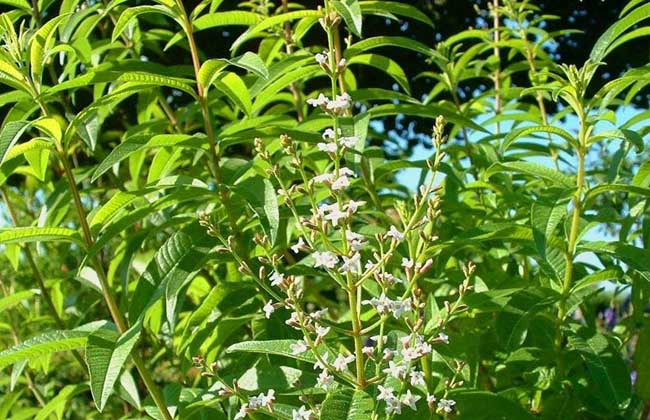
Lemon verbena, also known as anti-odor wood, perfume wood, etc., is a deciduous small shrub in the genus Verbena of the family Verbenaceae. It is native to tropical South America. In the 17th century, Spanish explorers transplanted it to the warm regions of Europe. Although it belongs to the Verbenaceae family, most plants in this family are herbaceous, while lemon verbena is a perennial shrub. Let us take a look at lemon verbena growing techniques together below!
Lemon Verbena Growth Habits
Lemon verbena is native to Central and South America and grows in the tropics. It prefers a warm and humid tropical and subtropical climate, with an average annual temperature of about 20°C, annual rainfall of 1200-2000 mm, and requires deep, loose, fertile sandy soil. It is commonly cultivated in subtropical to warm temperate regions as an aromatic and ornamental plant. There is a small amount of introduction and cultivation in southern Shaanxi, China.
Lemon Verbena Cultivation Value
The aroma of lemon verbena does not disappear after drying, so it is quite suitable for brewing tea. In France, Spain and other places, it is one of the most beloved herbal teas. In addition to brewing tea, it is usually chopped up as a stuffing, or mixed into sauces, beverages, and jelly-type desserts. Some herbal teas with special flavors that are temporarily unaccustomed to people also become more refreshing after proper blending with lemon verbena. Even pharmacists mix it with certain bitter and unbearable medicinal herbs. In addition, thanks to its rich essential oils, it was once a very popular perfume ingredient. The extracted essential oil is also used in aromatherapy, with its main effects being to relax mental tension and restore vitality.
Lemon Verbena Growing Techniques
1. Site selection and land preparation: For lemon verbena cultivation, choose loam or sandy loam with a thicker soil layer as the planting site, and plow to a depth of 18-25 cm. Apply 2000-2500 kg of fully decomposed barnyard manure per mu as base fertilizer and spread it evenly, make beds with a top width of 50 cm and a height of 15 cm, rake the bed surface flat, leave a working path of 25-30 cm between two beds, or make small field ridges.
2. Timely sowing: The sowing time for lemon verbena is from late April to early May, with drilling in furrows. First rake the bed surface soil finely, open furrows along the bed at 5 cm from the bed edge, with a row spacing of 25-30 cm and a furrow depth of 15-2 cm, tread the bottom flat, then apply a small amount of biological fertilizer as base fertilizer at 15-20 kg per mu. Cover the fertilizer with a little soil, sow the seeds evenly, cover with soil 1-1.5 cm thick, press slightly, and use 0.5 kg of seeds per mu.
3. Thinning and transplanting: Under normal temperature and humidity, seedlings emerge 10-20 days after sowing. Thin when the plant height is 5 cm. Since the whole aboveground plant is harvested, it is not necessary to deliberately leave single rows, but the spacing between plants in each row should be maintained at about 10 cm to facilitate branching and the space needed for growth and development. The thinned seedlings can be transplanted elsewhere.
4. Weeding and loosening soil: Loosen the soil in conjunction with weeding, and properly earth up around the roots. When the soil is too dry, water promptly to ensure the needs of normal plant growth. Weeding is a regular task in field management, and preventing weed overgrowth is one of the effective measures to increase yield. Therefore, weeds should be removed as soon as they appear, so that there are no weeds in the field. In rainy seasons, pay attention to field drainage, and loosen the soil promptly after rain to prevent surface soil crusting from affecting plant growth. Loosening the soil not only increases soil permeability but also reduces the occurrence of diseases, achieving twice the result with half the effort.
5. Harvesting and seed saving: Good seeds are the basic condition for obtaining high yield, so a separate seed field should be established. Plant spacing 15-20 cm, row spacing 20-25 cm. Strengthen field management, and appropriately apply more phosphorus and potassium fertilizer before flowering, which can make the grains plump and obtain more good seeds. When 75-80% of the seeds are mature, cut the plants, place them in a well-ventilated shady place for 4-6 days, then thresh, remove impurities and shriveled grains, and dry in the sun for 3-4 days.