Verbena bonariensis Planting Techniques and Management Methods
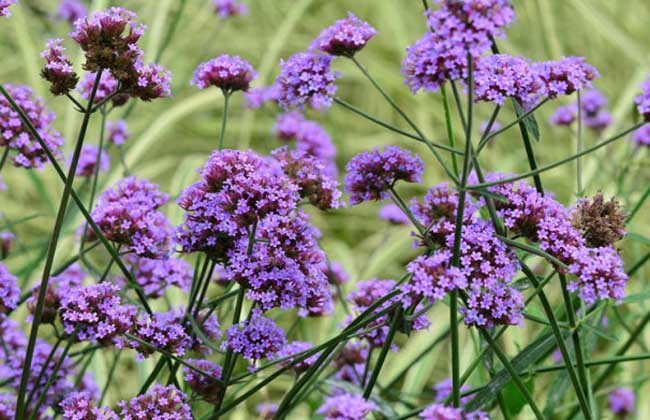
Verbena bonariensis, also known as South American verbena, long-stemmed verbena, etc., is a perennial herbaceous plant in the Verbenaceae family, Verbena genus, native to Brazil, Argentina and other places in South America. In the wild, it crosses with some plants of the Verbenaceae family that also have spike-shaped flowers, so there are often plants with inflorescences intermediate between cymes and spikes. Let's take a look at Verbena bonariensis planting techniques below!
Verbena bonariensis Growing Environment
Verbena bonariensis prefers a warm climate, with an optimum growth temperature of 20-30°C. It is not cold-tolerant, and grows relatively slowly below 10°C. It grows best in full sun; if cultivated in an environment with insufficient sunlight, it will grow poorly. It can bloom throughout the year, has a long flowering period, and high ornamental value, with spring, summer and autumn flowering being better, while in winter it is poorer or does not bloom. It is not demanding about soil, as long as drainage is good. It has strong drought tolerance and moderate water requirements.
Verbena bonariensis Propagation Methods
Verbena bonariensis can be propagated by sowing, cuttings and root division. Spring sowing gives the longest flowering and ornamental period. Each gram of seed contains about 4000 seeds, with a germination rate of about 85%. The optimum germination temperature is 20°C-25°C, and germination occurs 10-15 days after sowing. The entire plug seedling cycle is 40-45 days. Sowing in January is preferable. From sowing to flowering takes 3 to 4 months (when sowing and raising seedlings under low-temperature conditions from January to March, sowing to flowering requires 4 to 5 months). For seedling raising, 200-cell plug trays are usually used to facilitate transplanting and planting out. The medium can use Danish Pindstrup imported peat soil to ensure strong, uniform and fast seedlings. After sowing, only when true leaves reach 2 to 3 pairs and the root system forms a ball at 45 days can transplanting be done. Plug seedlings are not recommended to be planted directly in the ground, because direct planting results in slow initial growth and a relatively high mortality rate. Generally, they are first moved to 9-12 cm nutrient pots and grown for 2 months before planting out, which gives the best results.
Verbena bonariensis Planting Techniques
When planting out, use wide and narrow rows: wide row spacing of 60 cm, narrow row spacing of 40 cm, planting 6 plants per sq m. Before planting out, ensure good soil conditions; generally, preparatory work such as watering, weeding, fertilizing, plowing and harrowing level must be done first. After planting out, water thoroughly to ensure the soil layer 20 cm below the soil surface remains moist. No pruning is needed, as it has strong natural branching ability. One and a half to two and a half months after planting out, it begins to enter the flowering period, and the full flowering period can last two and a half to three months. Verbena bonariensis is very drought-tolerant. During maintenance, it should be kept alternately dry and wet, and must not be too wet. In areas with a minimum temperature above 0°C, it can overwinter safely. North of the Yangtze River, it is generally cultivated as an annual.
Verbena bonariensis Planting Value
1. Because Verbena bonariensis plants are tall, growing them as potted plants involves many management problems, such as tall stems being easily broken by wind or human collision, and difficulty in transport after flowering. In the past, few farmers were willing to grow them as a commodity for sale. Because of the popularity of tourism-oriented farms, this vigorously growing Verbena bonariensis, which looks more beautiful the more there is, has been able to stand out.
2. Verbena bonariensis is widely used in landscape arrangements. Because its mass planting effect is extremely spectacular, it is often used in landscape arrangements under open woodlands, in botanical gardens and villa areas. In the flowering season, it is like a pink-purple cloud, which is stunning. In courtyard greening, Verbena bonariensis can be planted in belts along roads, separating courtyard spaces while also enriching the roadside scenery. In the lower layer of Verbena bonariensis, evening primrose, purple flowering violet and variegated showy stonecrop can be configured, and the effect will be even better.