A Detailed Guide to the Cultivation Techniques and Management Methods of Vervain
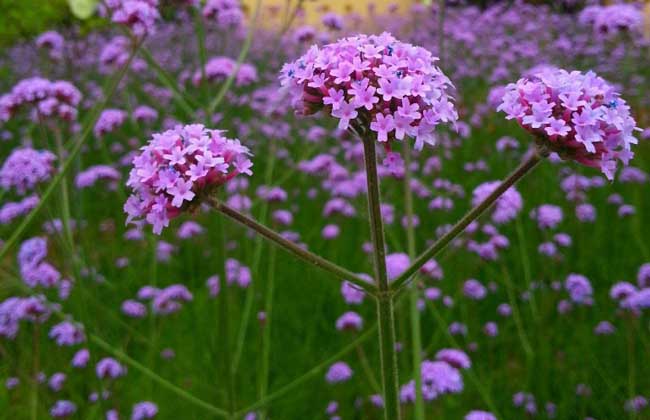
Vervain is a perennial herbaceous plant of the genus Verbena in the family Verbenaceae, also known as dragon's tooth grass, iron horsewhip, and wind-neck grass. The clean whole aerial part of the plant is used as medicine, and it has the effects of clearing heat and detoxifying, activating blood and dissolving stasis, and promoting diuresis and reducing swelling. It is distributed across most of East China, South China, and Southwest China, and has relatively high cultivation value. Let's take a look at the cultivation techniques of vervain together below!
Growth Habits of Vervain
Vervain is native to Europe and is distributed across the temperate to tropical regions of the world. It often grows along roadsides, on hillsides, by streams, or beside forests from low to high altitudes. It prefers dry, sunny environments and is not strict about soil requirements. It likes fertilizer and moisture, fears waterlogging, and is not tolerant of drought. It can grow in general soil, but grows most robustly in deep, fertile loam and sandy loam, and should not be planted in low-lying, easily waterlogged land.
Cultivation Techniques of Vervain
1. Land selection and preparation: Choose loam or sandy loam with a relatively thick soil layer as the planting site, plow to a depth of 18-25 cm, apply 2000-2500 kg of fully decomposed barnyard manure per mu as base fertilizer and spread it evenly, and make beds 50 cm wide at the top and 15 cm high, rake the bed surface flat, and leave a working path of 25-30 cm between two beds. Small field ridges can also be made.
2. Timely sowing: The sowing time for vervain is from late April to early May, by drilling in furrows. First rake the soil on the bed surface fine, open furrows along the bed 5 cm from the bed edge, with a row spacing of 25-30 cm and a furrow depth of 15-2 cm, tread the bottom flat, then apply a small amount of biological fertilizer as base fertilizer at 15-20 kg per mu, cover the fertilizer with a little soil, evenly scatter the seeds in, cover with soil 1-1.5 cm thick, press lightly, and use 0.5 kg of seed per mu.
Field Management of Vervain
1. Thinning and transplanting: Under normal temperature and humidity, vervain emerges 10-20 days after sowing. Thin when the plant height is 5 cm. Since the whole aerial part is harvested, there is no need to deliberately keep single rows, but the spacing between plants in each row should be kept at about 10 cm to facilitate branching and the space needed for growth and development. The small seedlings removed during thinning can be transplanted elsewhere.
2. Weeding and loosening the soil: Vervain is often loosened in combination with weeding, and soil should be appropriately earthed up around the roots. When the soil is too dry, water promptly to ensure the needs of normal plant growth. Weeding is a regular task in field management, and preventing weeds from running wild is one of the effective measures to increase yield. Therefore, weeds should be removed as soon as they are seen, so that there are no weeds in the field. In rainy seasons, pay attention to field drainage, and loosen the soil promptly after rain to prevent surface soil crusting from affecting plant growth. Loosening the soil both increases soil permeability and reduces the occurrence of diseases, achieving twice the result with half the effort.
3. Pest and disease control: Based on the results of cultivation, no relatively serious pests or diseases have been found in vervain, except that root rot occurs when there is prolonged heavy water accumulation in the field. Therefore, it can be avoided as long as drainage and soil loosening are done promptly. For chemical control, irrigate the roots with a 500-600 times dilution of 50% carbendazim, and in severe cases do it once more after 7-10 days.
4. Seed reservation and harvest: Good seeds are the basic condition for obtaining high yield, so a separate seed field should be established, with a plant spacing of 15-20 cm and a row spacing of 20-25 cm. Field management should be strengthened, and appropriate additional phosphorus and potassium fertilizer should be applied before flowering, which can make the grains plump and obtain more good seeds. When 75-80% of the seeds are mature, cut the plants down, place them in a well-ventilated shady place for 4-6 days, then thresh, remove impurities and shriveled grains, dry in the sun for 3-4 days, put the seeds into clean cloth bags, and place them in a ventilated warehouse for planting the following year.