When Does Verbena Bloom? A Detailed Guide to Its Blooming Period
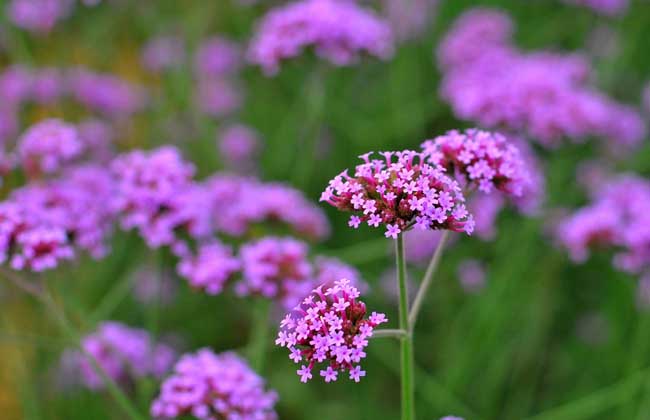
Verbena, also known by other names such as purple-topped dragon bud grass, wild fine-leaved schizonepeta, dragon bud grass, phoenix-neck grass, dragonfly grass, blood-stopping grass, and swallowtail grass, is a perennial upright herbaceous plant of the genus Verbena in the family Verbenaceae. It is native to Europe and distributed throughout temperate to tropical regions worldwide. The whole plant is used medicinally and has high medicinal value. Let us take a look below at when verbena blooms!
When does verbena bloom?
Verbena usually blooms from June to August. The spikes of verbena are terminal and axillary, slender and weak, reaching up to 25 hundred meters when in fruit; the flowers are small, sessile, initially dense and becoming separated when in fruit. The bracts are slightly shorter than the calyx and have stiff hairs. The calyx is about 2 mm long, has stiff hairs, and has 5 veins, with the pit areas between the veins thin in texture and pale in color. The corolla is pale purple to blue, 4 to 8 mm long, slightly hairy on the outside, with 5 lobes. There are 4 stamens, inserted at the middle of the corolla tube, with short filaments. The ovary is hairless.
The Growing Environment of Verbena
Verbena is native to Europe and often grows from low to high altitudes along roadsides, on hillsides, by streams, or beside forests. It prefers dry, sunny environments and is not strict about soil requirements. It likes fertilizer and moisture, fears waterlogging, and is not tolerant of drought. It can grow in ordinary soil, but grows most vigorously in deep, fertile loam and sandy loam; low-lying, easily waterlogged land is not suitable for planting.
The Flower Language and Culture of Verbena
The flower language of verbena is justice, expectation, innocence and purity (white verbena), expecting one's love to return, working together with one heart, and family harmony bringing prosperity in all things (red-flowered verbena). In Christianity, verbena is regarded as a sacred flower and is often used to decorate altars in religious ceremonies. In addition, in the past, when people generally believed that illness was caused by the curse of witches, it was often placed by the bedside of the sick to remove the curse. In ancient Europe, it was regarded as a precious sacred herb and was given the symbol of peace in religious celebration ceremonies. In literary and artistic works, it has a restraining effect on vampires.