A Detailed Guide to Luo Han Guo Planting Techniques and Management Methods
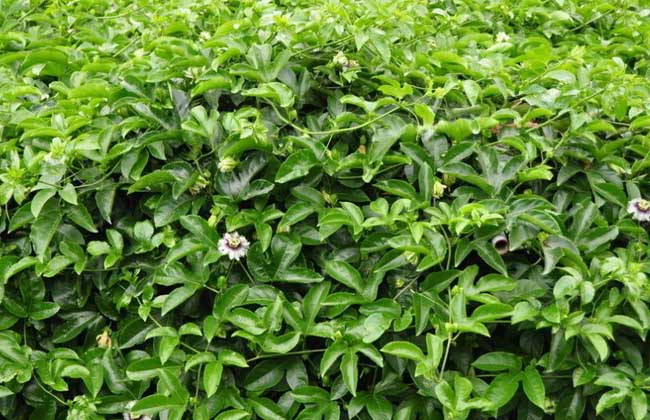
Luo Han Guo is hailed by people as the "immortal fruit" and is a commonly used Chinese medicinal herb, with the fruit used as medicine; it has the functions of clearing heat and moistening the lungs, and lubricating the intestines to relieve constipation. Besides being used medicinally domestically, it is also one of China's exported Chinese medicinal herbs. With the development of China's traditional Chinese medicine industry, demand will increase, and only by developing production can the growing need be met. Let's take a look together at Luo Han Guo planting techniques below!
Luo Han Guo's Growth Habits
Luo Han Guo likes to grow under climatic conditions of warmth, a long frost-free period and a large day-night temperature difference. Its suitable growth temperature range is 18-32°C. Under humid and foggy conditions with a soil moisture content of 25-30% and a relative air humidity of 75-85%, the plants grow and develop well. The soil is best as loam with deep soil layers, rich in humus, loose and moist, and with good drainage.
Luo Han Guo Planting Techniques
1. Site selection and land preparation: According to Luo Han Guo's requirements for climate and soil conditions during growth and development, in areas at an altitude of 1000-1200 m, sunny hillside land should be chosen for planting, while in areas at 300-500 m, north-facing hillside land on the shady side should be chosen. Plough and harrow in the winter of the previous year; after weathering through the winter, plough once more several days before planting to make the soil layer loose and crumbly. Make beds 15-20 cm high and 130-150 cm wide, and dig holes at a row spacing of 1.5-1.7 m and a plant spacing of 1-1.3 m. Apply 5 kg of decomposed stable manure per hole, mix the fertilizer thoroughly with the soil, and pile it into a mound 60 cm in diameter and 12-15 cm high, ready for planting.
2. Vine layering propagation: In production, Luo Han Guo is propagated by vine layering, carried out between July and October each year. During the plant's peak fruiting period, select high-yielding individual plants as mother plants for vine layering propagation; these individual plants are not allowed to set fruit on the trellis. By September, select vines that are thick and strong, with short internodes and flower buds, and carry out layering. The seed tubers obtained in this way can avoid flowerless plants. When layering, dig a hole 15-18 cm deep and 15-18 cm wide in the ground nearby, bend the tips of 3-5 vines into the hole, with about 12-14 cm of the tip seedlings pressed into the soil, and cover with soil to 8-10 cm above the ground.
3. Planting method: Generally plant between March and April. When digging up seed tubers, take care to place female and male plants separately. When planting, match 1 male plant for every 20 female plants so that there is enough pollen for artificial pollination. The seed tubers must not come into contact with fertilizer; first cover the fertilizer in the hole with a thin layer of soil, then place the tubers on the soil. Place 1-2 seed tubers per hole; when placing 2, the plant spacing is about 30 cm. When placing them, the bud end faces upward, exposed above the soil surface, and all facing the same direction for ease of management. Finally, cover with soil 7-10 cm thick.
Field Management of Luo Han Guo
1. Building trellises and supporting vines: Luo Han Guo is a vine plant and needs a trellis to climb on so the plants can grow well. After planting, begin building the trellis. Generally, bamboo and wood are used as supports, with the trellis about 1.7 m high. Lay small bamboo or tree branches on top of the trellis, then insert a small bamboo beside each plant so the stems and vines can climb upward. When the seedlings are 17-20 cm tall, remove the side branches growing from the vine stems, leaving the main vine to promote its rapid growth. When the seedlings are 30 cm tall, loosely tie the main vine to the bamboo with straw or hemp rope to help the stems and vines climb onto the trellis. If any vines that have climbed onto the trellis fall down, they must be promptly put back up on the trellis to favour vine growth.
2. Weeding and topdressing: Weeding and topdressing of Luo Han Guo must be carried out several times each year. In April-May, when the seedlings are 30 cm tall, apply 1 application of thin human manure water. In May, after the main vine has climbed onto the trellis, apply 1 application of decomposed stable manure and peanut bran. From June to September, during the flowering and fruiting period, apply a mixed fertilizer of stable manure, peanut bran, phosphate fertilizer, etc. once every 7-15 days to promote fruit growth. Fertilization method: open a semi-ring-shaped trench on the upper side of the hillside 25 cm from the tuber and apply it there; never apply fertilizer directly on the tuber.
3. Artificial pollination: Artificial pollination is an important technical measure in Luo Han Guo production; it can increase the plant fruiting rate and raise yield. In June-July, when the plants bloom, pick the open male flowers every morning. Scrape off the pollen with a bamboo stick and gently place the pollen on the stigma of the female flowers. The pollen of each male flower can pollinate about 10 female flowers. Artificial pollination should be finished in the morning; pollination in the afternoon has poor results. Collected pollen should be used the same day; if it is to be kept until the next day, it must be dried and stored, otherwise it will lose its germination ability.
4. Overwintering management: Every year before the Start of Winter, earth up around the root crown to a thickness of about 15 cm, then cover with a layer of grass to prevent the tuber from freezing over the winter. Around Qingming the following year, remove the covering and scrape away the soil to expose the tuber, sun it in the sunlight for 3-4 days, and at the same time cut off the withered vines to favour the growth of new buds.
Pest and Disease Control of Luo Han Guo
1. Root-knot nematode disease is a disease caused by root-knot nematodes. After infection, tumor-like growths of varying sizes form on the fibrous roots, often in a bead-like string, while tumor-like lumps form on the tuber. In mild cases, the plant roots' absorption of water and nutrients is affected; in severe cases, the roots and part of the tuber all rot. Control measures include planting on newly reclaimed land, selecting disease-free tubers as seed, and practising crop rotation. After the disease occurs, exposing the root crown, paring off the tumor-like growths and then applying tung oil has a certain control effect.
2. The yellow squash beetle is a major pest of Luo Han Guo. The larvae bite through the roots in the soil, and in severe cases the aboveground stems wither and die. The adults bite notches out of the leaves, or eat entire leaves completely, causing the plants to wither and die. When adults are causing damage, spray to kill them with 90% trichlorfon or 80% dichlorvos at 1000-1500 times dilution.
3. Fruit flies are an important pest damaging Luo Han Guo fruits. Between July and September, adults lay eggs inside the fruit, and the larvae bore into and feed on the flesh; infested fruits turn yellow and drop early. If infested fruits are found, they should be picked off promptly, and fallen fruits on the ground should be cleared away and burned in a centralized manner. During the adult activity period, use 90% trichlorfon 50 g and brown sugar 1.5 kg, diluted in 50 kg of water, and spray it on places where fruits and leaves grow luxuriantly to trap and kill the adults.
4. Red spider mites harm Luo Han Guo leaves, tender vines and fruits, and in severe cases cause leaf and fruit drop. When they occur, spray with 80% dichlorvos at 800 times dilution, or 40% dimethoate at 800 times dilution plus 20% tetradifon at 800 times dilution, to kill the adults.
Harvesting and Processing of Luo Han Guo
1. Timely harvesting: Luo Han Guo blooms and bears fruit in the second year after planting. Between August and September, when the fruit changes from light green to old greenish or slightly yellow patches, the fruit stalk turns withered yellow, and the fruit feels hard yet somewhat elastic when squeezed by hand, it can be harvested. Cut it off with scissors and place it down gently. Spread the harvested fruits indoors in a cool, ventilated place. After the moisture evaporates, spread them out for 7-15 days. When the moisture evaporated from the fruits accounts for about 15% of the fresh fruit weight and 50% of the surface is yellow, processing can begin.
2. Processing method: When processing Luo Han Guo, grade them into large, medium and small and load them into drying boxes placed on a baking oven. The baking temperature rises gradually from low to high, then lowers again. During the first 20-24 hours, maintain 45-50°C, then gradually raise the temperature to 65-70°C and bake for 48-62 hours. When the fruit weight has clearly decreased, lower the temperature to 55-60°C and bake for another 48 hours. During baking, change the boxes once each morning and evening, swapping the positions of the upper and lower boxes, and swap the positions of the fruits in the middle and at the edges. Turn each fruit over from top to bottom so it is heated evenly. Bake for about 7 days until the moisture accounting for 70%-75% of the fresh fruit weight has evaporated, and the fruit gives a sound when lightly tapped with a finger, which means it is dry. Remove the hairs from the fruits and they are the finished product.
3. Commercial specifications: Luo Han Guo is considered good when it is fully dry, brown, makes no sound when squeezed, has no rotten fruits, and is sweet in taste. According to circumference size, it is divided into extra-large fruit (circumference above 20 cm), large fruit (circumference above 18 cm), medium fruit (circumference above 16.5 cm), small fruit (circumference above 15 cm), substandard fruit (circumference above 13.5 cm), and below-substandard fruit (circumference below 13.49 cm). Sounding fruits (those that make a sound when squeezed) are treated as one grade lower than their original grade, while broken fruits are calculated by weight.