How to propagate gentian? A detailed explanation of common propagation methods
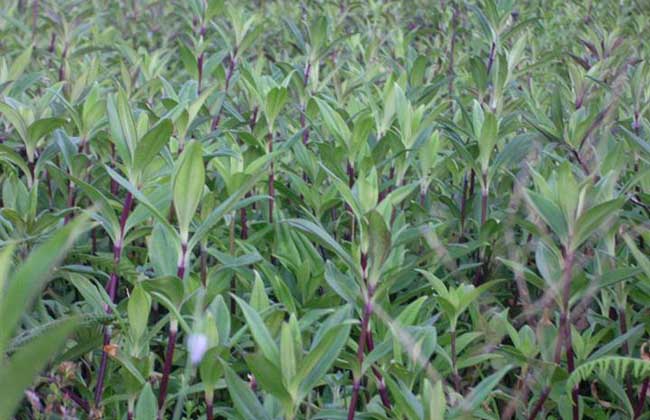
Gentian is a perennial herb of the genus Gentiana in the family Gentianaceae, found in Inner Mongolia, Hebei, Shaanxi, **, Jiangsu, Anhui, Zhejiang and other places, growing on hillside grasslands, roadsides, riverbanks, in thickets, at forest edges and under forests, and in meadows. It has high medicinal value. It can be propagated by seeds and by division. Let's take a look at the propagation methods for gentian below!
Gentian growing environment
Gentian prefers a moist and cool climate and grows wild in mountainous areas, on slopes, at forest edges and in thickets. It requires fairly high temperatures throughout the plant's growing season. After being introduced to the Beijing area, it has always grown well. Places with high, dry terrain and direct sunlight, as well as areas with overly sticky or infertile soil, are not suitable for cultivation. It likes fertilizer. When deep plowing the land, about 8000 jin of fully decomposed farmyard manure should be applied per mu. It sprouts in mid-April each year, blooms in August, with the flowering period from August to September, and the fruit matures in September. The total growing period for the year is about 180 to 210 days.
Division propagation of gentian
Division propagation of gentian is mostly carried out in early spring before the buds emerge in early April. All the roots are dug out and divided into small clusters, each cluster should have 1 to 2 small buds, and then planted at a row spacing of 1.3 chi and a plant spacing of 0.7 to 1 chi. Do not let the buds be exposed above the soil surface, so as to avoid being dried out by the wind.
Seed propagation of gentian
1. Autumn sowing: Autumn sowing of gentian is generally done in November, and it sprouts the following spring. To sow evenly, mix an appropriate amount of fine sand or humus into the seeds and use drilling.
2. Spring sowing: Before spring sowing, gentian should first undergo sand storage treatment, that is, after the seeds are collected, mix them with fine sand at 1:3, maintain a certain humidity, bury them outdoors, and after the low-temperature influence of winter, take them out and sow. Drill rows at a row spacing of 1 to 1.3 chi and a plant spacing of 0.7 to 1 chi, cover with soil 2 to 3 fen, and the sowing rate per mu is 3 to 4 liang.