Detailed Explanation of Gentian Planting Techniques and Management Methods
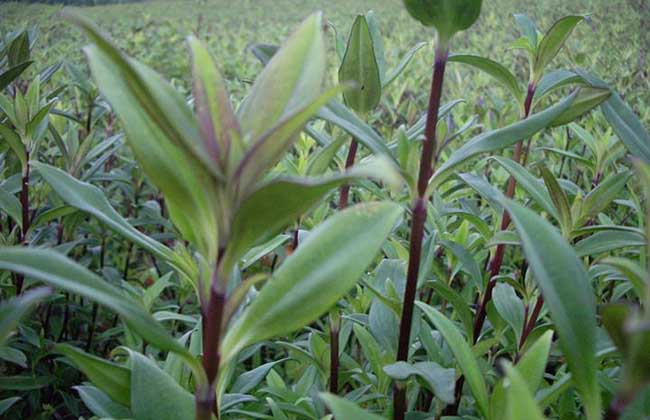
Gentian is a perennial herb of the genus Gentiana in the family Gentianaceae, also known as Cao Longdan, Ku Longdancao, Didancao, Dancao, Shan Longdan, Siye Dan, etc. It is a common traditional Chinese medicinal material, distributed in Northeast China and Inner Mongolia, Hebei, Shaanxi, **, Jiangsu, Anhui, Zhejiang and other places, and has high planting value. Let's take a look at the planting techniques of gentian together!
Growth Habits of Gentian
Gentian prefers a humid and cool climate. It grows wild in mountainous areas, slopes, forest edges and shrub thickets. It requires fairly high temperatures throughout the entire growing season. After introduction and planting in the Beijing area, it has always grown well. It is not suitable for cultivation in places with high, dry terrain and direct sunlight exposure, nor in areas where the soil is too clayey or barren. It likes fertilizer. When deep plowing the land, about 8000 jin of fully decomposed farmyard manure should be applied per mu. It sprouts in mid-April each year, blooms in August, with the flowering period from August to September, and the fruit matures in September. The total annual growth period is about 180 to 210 days.
Propagation Techniques of Gentian
1. Division propagation: Division propagation of gentian is mostly carried out in early spring before the buds emerge in early to mid-April. Dig out all the roots and divide them into small clusters, each cluster should have 1 to 2 small buds, then plant them at a row spacing of 1.3 chi and a plant spacing of 0.7 to 1 chi. Do not let the buds be exposed above the soil surface, so as to prevent them from being dried out by wind.
2. Seed propagation: Seed propagation of gentian can be divided into autumn sowing and spring sowing. Autumn sowing is generally carried out in November, and the seeds sprout in the following spring. In order to sow evenly, mix an appropriate amount of fine sand or humus into the seeds and use drill sowing. Before spring sowing of gentian, sand storage treatment should be carried out in advance, that is, after the seeds are collected, mix them with fine sand at a ratio of 1:3, maintain a certain humidity, bury them outdoors, and after the low-temperature influence of winter, take them out and sow. The drill sowing row spacing is 1 to 1.3 chi, the plant spacing is 0.7 to 1 chi, and the soil covering is 2 to 3 fen. The sowing rate per mu is 3 to 4 liang.
Planting Management of Gentian
1. Timely weeding: When planting gentian, weeding should not be limited by the number of times. Follow the principle of removing early, removing small, and removing as soon as weeds are seen. Do not wait until the weeds grow up and form a weed disaster before pulling them, as this both wastes labor and damages the seedlings.
2. Reasonable loosening of soil: The purpose of loosening the soil is to prevent the soil on the seedbed surface from becoming compacted, improve soil aeration, reduce water evaporation, and remove germinating weeds. The first year after transplanting should be the key period; in the second year, it is enough to loosen the soil once when the plants emerge. After transplanting and seedling recovery, the compacted surface layer of the seedbed caused by watering should be promptly broken up by hand or with an iron nail rake. Note that transplanted seedlings are planted obliquely, so do not loosen the soil too deeply, so as to avoid damaging the seedlings or pulling them out. Generally, after transplanting, the gentian field only needs to be loosened 2 to 3 times in combination with weeding.
3. Timely topdressing: After the transplanted gentian seedlings recover, in order to promote their rapid and smooth development, foliar topdressing should be carried out. Foliar topdressing can be done twice, from after leaf expansion to the budding stage and from flowering to fruiting, using foliar fertilizers such as potassium dihydrogen phosphate, Yemianbao, Fengchansu, etc. For the concentration, refer to the instructions, and spray on the leaves. For 3- to 4-year-old gentian, an appropriate amount of root topdressing can be applied during the growing period. Generally, 100 to 150 grams of cake fertilizer, 50 grams of ammonium dihydrogen phosphate, and 3 kilograms of farmyard manure are applied per square meter. The method is to open furrows in the spaces between rows, 2 to 3 cm deep, apply the above fertilizers into the furrows, and then cover them level with soil.
4. Thinning flowers and removing buds: When planting gentian, in order to reduce nutrient consumption, promote root material accumulation, and accelerate rhizome growth, all flower buds should be removed after budding in fields not used for seed collection.
Disease Control of Gentian
1. Soil disinfection: When soil fertility is high, the seedlings grow well, the growth amount is large, and disease resistance is strong; at the same time, economic yield can also be increased. Therefore, before transplanting, generally apply 3000 kg of organic fertilizer and 10 kg of diammonium phosphate per mu, and at the same time irrigate the seedling bed with 400-fold carbendazim or 800-fold Dexon, which can control the disease index below 20%.
2. Seed and seedling disinfection: Gentian seeds and seedlings both carry and transmit diseases, so before sowing and transplanting, soak the seeds and seedlings in 600-fold mancozeb solution for 3 to 4 hours. In addition, select disease-free plants for seed retention.
3. Reasonable close planting: In order to reduce the degree of bare ground surface, thereby reducing the contact area between plants and soil, generally 80,000 to 100,000 one-year-old seedlings are transplanted per mu, and tall crops such as corn are planted on both sides of the seedling bed at a plant spacing of 40 cm. The main function of the shade material is to reduce direct sunlight, which causes gentian leaves to turn yellow and wither and lowers the disease resistance of the plants, while also increasing the economic income per unit area.
4. Chemical control: In spring, gentian is prone to viral disease when encountering low temperatures, manifested as leaf shrinkage and loss of green. Plants infected with viral disease are first infected by leaf spot disease, so once viral disease is found, immediately spray with 800-fold Zhibingling once every 5 to 7 days, for 3 consecutive sprays, in order to improve the disease resistance of the plants and ensure stable and high yield.
5. Destroy residual plant debris: The dead diseased leaves of gentian carry a large number of pathogenic spores and are the main source of infection, so in autumn the field must be thoroughly cleaned up, field sanitation should be done well, and dead branches and fallen leaves should be gathered outside the field and burned.