How to grow Lysimachia christinae? A detailed guide to cultivation methods
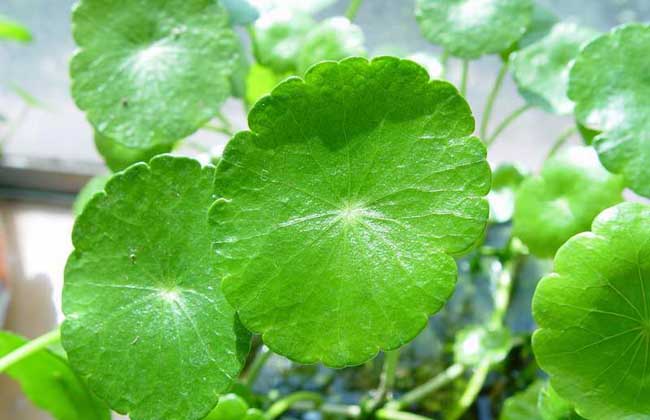
Lysimachia christinae is a plant in the primrose family (Primulaceae) and a common Chinese medicinal plant. Note that Lysimachia christinae should not be confused with Dichondra repens or Glechoma longituba. It can help prevent kidney stones and promote bile flow and stone expulsion, and has very good therapeutic and preventive effects on stones. It is distributed in all provinces south of the Yangtze River in China and in Taiwan, China, and has high cultivation value. Let's take a look below at how to grow Lysimachia christinae!
Growing environment for Lysimachia christinae
Lysimachia christinae is distributed in all provinces south of the Yangtze River in China and in Taiwan, China, and is widely found in tropical and subtropical regions of both hemispheres. It has strong adaptability to water pH, but it is best to keep it between 6.5 and 7.5. It likes warmth, avoids high temperatures, and tolerates low temperatures. It grows well within a temperature range of 16 to 24°C, and the overwintering temperature should not be lower than 5°C. When the room temperature exceeds 30°C, plant growth will be inhibited. It likes humidity and is more commonly seen where there is flowing water.
Propagation methods for Lysimachia christinae
1. Seed propagation: Because Lysimachia christinae seeds have hard seed coats, with a typical hard seed rate of 40 to 90%, before sowing the seeds need to be sand-scarified for 3 to 5 minutes or soaked in hot water at 80 to 90°C for 2 to 3 minutes, which can significantly increase the germination rate. First raise seedlings, then transplant. However, because Lysimachia christinae seeds are very small, difficult to collect, and the seedlings grow slowly, cutting propagation is mostly used.
2. Cutting propagation: Lysimachia christinae can be propagated by cuttings throughout the year, with a higher survival rate for cuttings taken in spring and autumn. When taking cuttings, cut off the creeping stems and cut them into sections of 3 to 4 nodes each as cuttings. In the south in May to June, and in the north in July to August when the plants grow vigorously, cut off the creeping stems and cut them into sections of 3 to 4 nodes each as cuttings. On a prepared bed, open shallow holes at a row and plant spacing of about 20 cm each, plant 2 cuttings per hole, with 2 to 3 nodes buried in the soil and 1 to 2 nodes exposed above the ground, press firmly with soil, then cover with a layer of heavy soil mixed with human and livestock manure and urine, about 1.5 cm thick. After cutting, if the weather is dry and there is no rain, water to keep the seedlings alive to help them survive.
How to grow Lysimachia christinae?
1. Site selection: Lysimachia christinae is suitable for planting in fertile sandy loam soil and cool, moist plots. It can also be grown in scattered small patches in idle shaded wet areas such as corners beside houses, pond dams and ditch edges. Before preparing the land, apply sufficient base fertilizer, with 2500 to 3000 kg of decomposed organic fertilizer per mu. After plowing, rake the soil fine, make beds with a width of 1.2 m, with a bed surface width of 90 cm, a ditch width of 30 cm, and a ditch depth of 20 cm.
2. Land preparation and planting: On the prepared ground, open high beds 1.3 m wide, and open shallow holes at a row and hole spacing of 16 to 20 cm each. Insert two cuttings per hole, with 2 to 3 nodes buried in the soil, the same as when planting sweet potato. Press firmly with soil, apply a handful of dry fertilizer, and water thoroughly; they will take root and survive within a few days.
3. Watering to keep seedlings alive: After cutting Lysimachia christinae, you must water to keep the seedlings alive and maintain moisture. When new leaves begin to emerge, apply diluted human and livestock manure water. When the trailing stems grow to 13 to 15 cm, apply topdressing once more. After the autumn harvest, also apply topdressing once. Do the same every year thereafter, mainly applying human and livestock manure water; you can also apply diluted urea at 1:100 as topdressing. Frequent light applications are best. Before each fertilization, carry out one intertillage and weeding to help the perennial roots grow vigorously the following year.
4. Field management: When new leaves emerge, apply diluted human and livestock manure water once. If there are missing plants, promptly cut longer cuttings to fill in the gaps. When the trailing stems are about 20 cm long, carry out one intertillage and weeding, one earthing up, and one topdressing. Apply about 15000 kg of diluted human and livestock manure and urine per hectare each time. After the autumn harvest, also carry out one intertillage, weeding, and topdressing. Thereafter, every year in March to April and after each harvest, carry out one intertillage, weeding, and topdressing with human and livestock manure and urine.
5. Harvesting and processing: Lysimachia christinae can be harvested in September to October of the year it is planted, and thereafter can be harvested twice a year, the first time in June and the second time in September. At harvest, it generally grows to more than 40 to 50 cm. Cut it with a sickle, and leave 7 to 10 cm of stubble per clump to help it sprout next time or the following year. Tie 20 to 30 plants together at the head with a longer Lysimachia christinae vine, then sun-dry them to obtain the medicinal material Lysimachia christinae. Commercial requirements are that it be qualified with no impurities, no silt or sand, and no mold, and it is best if the leaves are large, the color is green, and there are few fibrous roots.