Where is plantain grown? A list of its main production areas
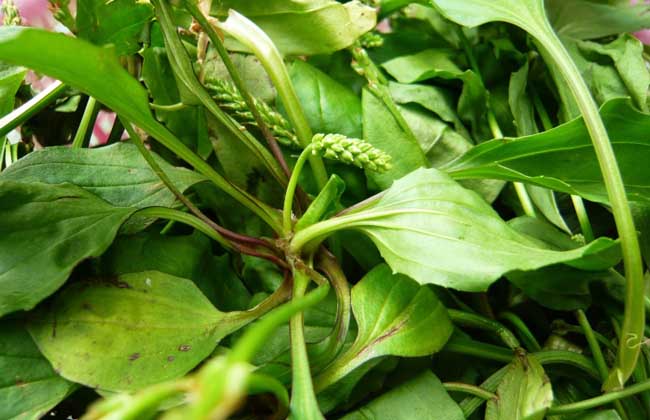
Plantain is an annual or biennial herb of the genus Plantago in the family Plantaginaceae, also known as chechacao, Plantago depressa, and other names. It grows in grasslands, riverbanks, ditch edges, meadows, fields, and roadsides. Its taste is sweet and its nature is cold, and it has the effects of promoting urination, clearing heat, improving eyesight, and resolving phlegm. The young plants are edible. Now let us take a look at the production area distribution of plantain!
The production area distribution of plantain
The main production areas of plantain in China are Heilongjiang, Jilin, Liaoning, Inner Mongolia, Hebei, Shanxi, Shaanxi, Ningxia, Gansu, Qinghai, **, Shandong, Jiangsu, Henan, Anhui, Jiangxi, Hubei, Sichuan, Yunnan, Tibet, and other places. It is also distributed in Korea, Russia, Kazakhstan, Afghanistan, Mongolia, Pakistan, Kashmir, and India.
The production environment of plantain
Plantain has strong adaptability. In China, from south to north, it can be seen everywhere in mountain fields, roadsides, and riverbanks. It is cold-resistant and drought-resistant, and has no strict requirements for soil. It grows well in warm, moist, sunny, sandy fertile soil. Its stems and leaves can grow normally within the range of 20-24°C. When the temperature exceeds 32°C, growth slows, and it gradually withers until the whole plant dies. Slightly acidic sandy alluvial loam is better for the soil. It is generally propagated by seeds.
The plant culture of plantain
According to legend, the famous Han dynasty general Ma Wu once led an army to conquer the Qiang people of Wuling. Because the terrain was unfamiliar, he suffered a defeat and was trapped in a desolate, uninhabited place. It was midsummer, and there was also a drought with no rain. The soldiers and warhorses all suffered from "hematuria" due to lack of water, and there was no local medicine to clear heat and promote diuresis. The soldiers were all extremely anxious.
A groom named Zhang Yong accidentally discovered that three horses suffering from hematuria had recovered without treatment. Feeling puzzled, he traced the cause and found that a patch of wild grass shaped like ox ears on the ground had been eaten bare by the horses. To confirm its effect, he personally tried taking it, and it was also effective. So he reported it to Ma Wu.
General Ma was overjoyed and asked where this grass grew. Zhang Yong pointed into the distance with his hand and said, "Right in front of the cart." Ma Wu laughed and said, "This is heaven helping me. What a good plantain." He immediately ordered the whole army to eat this grass, and after taking it, the hematuria was indeed cured. The name plantain has been passed down in this way.