Detailed Explanation of Mugwort Planting Techniques and Management Methods
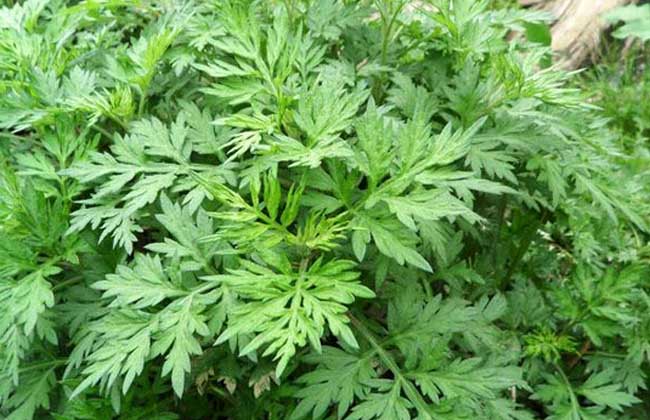
Mugwort is also known as Bingtai, Ecao, Xiang'ai, Qi'ai, Aihao, Jiucao, Yicao, Huangcao, Airong, etc. It is a perennial herbaceous or slightly subshrub-like plant of the genus Artemisia in the Asteraceae family. It is widely distributed and found almost throughout the country except in extremely arid and high-cold regions. It grows in wastelands, roadsides, riverbanks and hillsides from low to medium altitudes. Let's take a look at mugwort planting techniques below!
Growth Habits
Mugwort is extremely easy to propagate and grow, with strong adaptability to climate and soil. It is cold-resistant and drought-resistant. Field edges, field corners, hillsides and wastelands can all be selected as planting sites. Neutral soil with deep soil layers, good soil permeability and rich organic matter is preferable. To save land resources, hills and other areas should be selected for rational layout.
Site Selection and Land Preparation
The site should have irrigation water conditions, with no domestic water or industrial water pollution from nearby residents. Soil and atmospheric quality should meet national Level II standards. Production water should meet farmland irrigation water quality standards. The soil should have no toxic and harmful pesticide residues, human and animal manure, or domestic waste pollution, and should be tested regularly as required. According to the soil layer structure characteristics of the planting site, the number of ploughing and harrowing should be moderately controlled. Combined with land preparation, apply fully decomposed and pollution-free farmyard manure at 22.5-30.0 tons/hectare, evenly mix and turn into the soil layer, then build ditches and make beds for planting.
Propagation Methods
Mugwort is mainly propagated asexually by rhizome division, but can also be propagated by seeds. Generally, seed propagation is sown in March, and rhizome propagation is carried out in November. The bed width is about 1.5 m, with the middle of the bed surface higher and the two sides lower, resembling a “fish back” shape to prevent water accumulation and disease. Before sowing, apply sufficient base fertilizer, generally 4000 kg of decomposed farmyard manure per mu, deep plough and thoroughly mix with the soil, and after arranging, immediately water once with sufficient bottom water.
Planting Density
In February to March, when seedlings are 5-10 cm tall, select ground that is moist (preferably after rain or on cloudy days). Take seedlings separated from the stem base of the mother plant and plant them at a spacing of 30 cm × 40 cm, with 2-3 plants per hole, cover with soil and press firm. If there is no rain within 2-3 days after planting, drip water to preserve moisture.
Field Management
After planting and survival, when seedlings are 30 cm tall, apply urea at 90 kg/hectare as a seedling-promoting fertilizer, broadcast on cloudy and rainy days, and spray on leaves on sunny days. In early April, carry out one cultivation and weeding at a depth of 15 cm. In early to mid-June, after harvesting Qi'ai, turn and sun the garden plot, remove residual branches and fallen leaves, and thin out excessively dense stem bases and perennial roots at a depth of 15 cm. In early November, apply farmyard manure, stable manure, cake fertilizer, etc. as base fertilizer. In dry seasons, use leaf surface sprinkler irrigation when seedlings are below 80 cm tall, and flood irrigation of the whole garden when seedlings are above 80 cm tall.
Harvesting and Processing
Mugwort leaves are harvested in summer. Before the plants are in full bloom and before flowering, cut the above-ground stems and branches with leaves, remove impurities and dead leaves, spread in the sun to dry until 50-60% dry, tie into small bundles, then spread in the sun again to dry fully, tie into bundles, or use a twisting machine to press into large rectangular bundles, reinforce with straw rope, and store in a dry place to prevent moisture and mildew. The commercial product is best when fully dry, shrivelled, with many leaves, small branches, green in color, aromatic in odor, bitter in taste, free of sand, free of impurities and free of mildew damage.